
Your cart is currently empty!
100% Secure Delivery Without Contacting The Courier
Apple’s Touchscreen MacBook Pro Could Finally Be Real
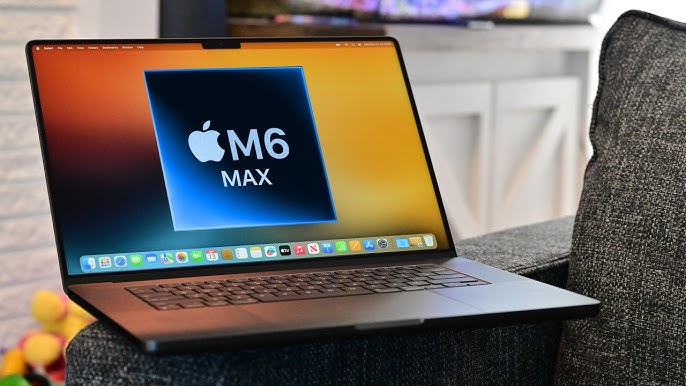
After years of speculation and false starts, Apple may finally be preparing to launch a touchscreen OLED MacBook Pro – but the rumor mill is splitting Apple fans right down the middle.
According to a new report from Bloomberg’s Mark Gurman, Apple is working on a redesigned MacBook Pro powered by the upcoming M6 chip, complete with an OLED display and full touchscreen functionality. Gurman suggests the device could debut in late 2026 or early 2027, marking one of the biggest hardware shifts in MacBook history.
A Reinforced Design to Support Touch Controls
One of the biggest engineering challenges for touchscreen laptops is screen wobble — something Apple is reportedly addressing. To make touch input feel stable, the company is said to be adding a reinforced hinge and upgraded screen hardware to the MacBook Pro lineup.
Alongside touchscreen support, the next-gen MacBook Pro is also expected to ditch the display notch, replacing it with a “hole-punch” camera cutout similar to the Dynamic Island seen on iPhones. The notebook will also reportedly feature thinner bezels, lighter materials, and next-generation M6 silicon for improved performance and efficiency.
A Controversial Upgrade -Touchscreen vs. Tradition
The idea of a touchscreen Mac has long divided the Apple community. The late Steve Jobs famously dismissed the concept, arguing that using a vertical touchscreen would cause arm fatigue. But others believe Apple is simply playing catch-up with Windows laptops that have embraced touch input for years.
On social media, reactions are predictably mixed.
- On Reddit, user qwasdcv said, “I really want an OLED MacBook Pro but I don’t wanna pay for a touchscreen I’ll never use.”
- On X, user Kaustubh Katdare joked, “I absolutely love fingerprints on my screen. Makes me more productive.”
- Meanwhile, others welcomed the change. “If this is real it’s an insta-buy for me,” wrote user goldblumspowerbook, adding that they “miss the hell out of Surface hardware.”
Despite the excitement, early sentiment leans skeptical — many long-time Mac fans worry that a touchscreen could add cost without improving the overall MacBook experience.
Price Bump Expected with Touchscreen Models
According to Gurman, the new touchscreen hardware will likely make the next MacBook Pro more expensive, adding “a few hundred dollars” to the base price.
With current M3-powered MacBook Pro models starting at $1,999, the new M6 OLED version could easily surpass the $2,000 mark, pushing Apple’s flagship laptop further into premium territory.
What’s Missing: Face ID Still Years Away
While the addition of touchscreen support may be Apple’s headline innovation, not every long-awaited feature is arriving soon. Gurman reports that Face ID for MacBooks remains “years away”, meaning users will still rely on the familiar Touch ID sensor for authentication.

The Verdict: A Bold Move That Could Redefine the Mac – or Miss the Mark
If Apple does bring a touchscreen OLED MacBook Pro to market, it would mark a historic design shift for a product line that has famously resisted touch controls.
Whether this change signals a new era of hybrid Mac computing or simply a costly gimmick remains to be seen. For now, the rumor alone is enough to spark a heated debate across the Apple community — and perhaps, quietly, inside Apple’s own design labs.
Related Posts :-
-

Facebook Introduces AI Writing Tools and Animated Profile Photos to Refresh the Social Experience
Facebook is rolling out a fresh set of features powered…
-
LG Boosts Dolby Vision Brightness on Flagship OLED TVs With Free Firmware Upgrade
LG has rolled out a free firmware update for its…
-

PocketBook’s InkPad One Challenges Kindle Scribe With Open Linux Platform and Note-Taking Power
PocketBook has unveiled the InkPad One, a new Linux-powered e-reader…
Leave a Reply