
Your cart is currently empty!
100% Secure Delivery Without Contacting The Courier
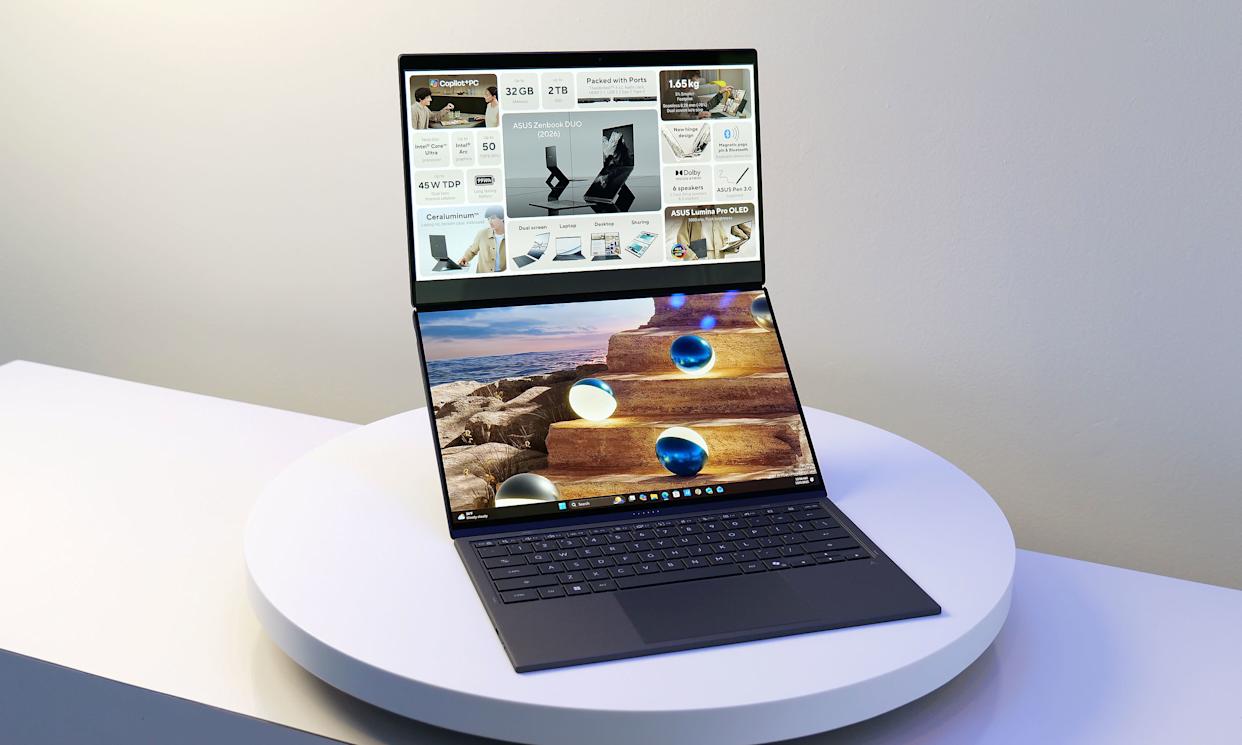
ASUS’s bold experiment with dual-screen laptops is no longer a novelty. It’s a polished, productivity powerhouse. The Zenbook Duo (2026) refines the company’s original concept with smarter engineering, stronger performance, and surprisingly good battery life. While its unconventional form factor once raised concerns about usability and endurance, this year’s redesign addresses nearly every hesitation.
With an expert score of 90/100 and a starting price of $2,100 ($2,300 as reviewed), the Zenbook Duo remains a premium device. But for users who crave more screen real estate on the go, it may be worth every dollar.
Refined Design: Compact, Flexible, and More Practical
ASUS hasn’t dramatically altered the Duo’s core layout. But it didn’t need to. Instead, the 2026 model refines it. The laptop now measures 12.1 x 8.2 x 0.77–0.92 inches, about five percent smaller than its predecessor, while maintaining a manageable 3.6-pound weight.
Key design highlights include:
- A built-in kickstand for flexible positioning
- A fully detachable keyboard
- A new “hideaway” hinge that reduces the gap between screens
- Slimmer 8.28mm bezels (70% smaller than before)
The hideaway hinge allows the device to lie completely flat. It is ideal for drawing or sharing content across a table. ASUS also improved keyboard connectivity with new pogo pins that keep it charged automatically via the main system battery. Even after full battery drain tests, the keyboard never required separate charging.
Port selection is generous:
- 2x USB-C with Thunderbolt 4
- 1x USB-A 3.2
- HDMI 2.1
- 3.5mm combo audio jack
The only noticeable omission is an SD card slot. ASUS’s upcoming Pen 3.0 stylus will reportedly be bundled in the US, adding further value
Dual OLED Displays: The Star of the Show
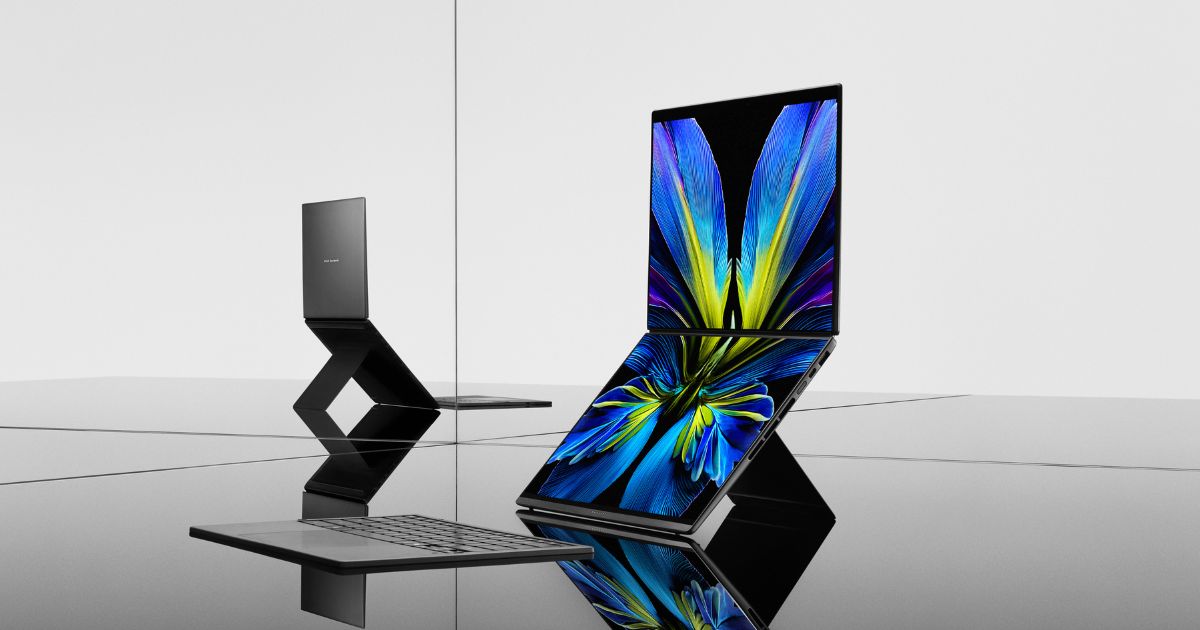
The Zenbook Duo’s defining feature remains its two stunning OLED displays. Both panels offer:
- 2,880 x 1,800 resolution
- 144Hz refresh rate
- 100% DCI-P3 color coverage
- 500 nits SDR brightness
- Up to 1,000 nits HDR peak brightness
For users accustomed to dual monitors on a desktop, having that functionality built into a laptop is transformative. Whether multitasking, editing video, coding, or managing spreadsheets, the second screen dramatically boosts productivity.
You can use the lower display as:
A widget panel for weather, news, or system info
A full secondary monitor
A virtual keyboard and touchpad
Performance: Strong, With Gaming Surprises
Powered by Intel’s latest Core Ultra 7 and Core Ultra 9 processors, including the Ultra 9 388H in the review unit, the Zenbook Duo delivers smooth everyday performance. ASUS limits the chip’s TDP to 45W, which tempers some benchmark results compared to rivals running higher power limits.
Still, real-world performance remains impressive:
- Geekbench 6 multicore score: 17,095
- PCMark 10 score: 7,153
The integrated Intel Arc B390 GPU adds unexpected versatility. In Elden Ring at 1,920 x 1,200 on high settings, the Duo sustained 55–60 fps. It is excellent for a system without discrete graphics. It’s more than capable for video editing and even modern AAA gaming with some tweaks.
Battery Life: Surprisingly Excellent
Dual displays typically mean heavy battery drain, but ASUS countered that by upgrading to a 99WHr battery (up from 75WHr).
Battery results:
- 18 hours 33 minutes (single-screen mode)
- 14 hours 23 minutes (dual-screen mode)
Those numbers rival many traditional ultraportables. Even in full dual-screen mode, you can comfortably work for most of a day without being plugged in. The included 100W charger is compact and easy to carry.
Verdict: Expensive, But Worth It for Power Users
At $2,100, the Zenbook Duo isn’t cheap. However, similarly specced competitors with just one screen cost nearly as much. Pairing a standard ultraportable with a portable monitor also gets close to this price, but adds bulk and inconvenience.
The 2026 Zenbook Duo proves that two screens really are better than one. With refined design, powerful performance, vibrant OLED panels, and excellent battery life, ASUS has turned an ambitious concept into one of the most compelling productivity laptops available today.
For multitaskers, creatives,s and professionals who live in multiple windows at once, this may be the future of portable computing.
Related Posts :-
-

Facebook Introduces AI Writing Tools and Animated Profile Photos to Refresh the Social Experience
Facebook is rolling out a fresh set of features powered…
-
LG Boosts Dolby Vision Brightness on Flagship OLED TVs With Free Firmware Upgrade
LG has rolled out a free firmware update for its…
-

PocketBook’s InkPad One Challenges Kindle Scribe With Open Linux Platform and Note-Taking Power
PocketBook has unveiled the InkPad One, a new Linux-powered e-reader…
Leave a Reply