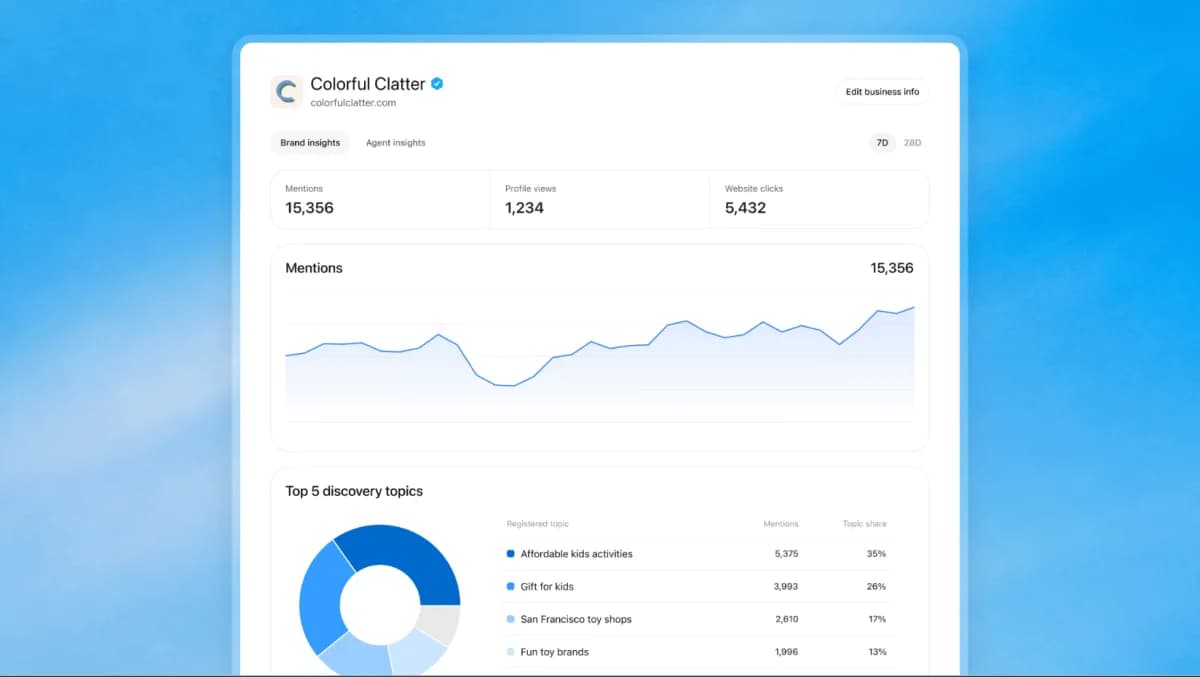
OpenAI has launched a beta feature called “Businesses in ChatGPT” — a directory of verified companies embedded directly inside the ChatGPT interface. It’s live now for US-based e-commerce and online service providers, and it lets businesses register, update profiles, add product feeds with real-time pricing and stock status, and track mentions or website clicks from ChatGPT users.
No Indian or UK rollout date is announced. No global pricing model is disclosed, the service is free to join, at least for now. So far, only Shopify merchants can connect their stores automatically. Others must manually upload product data or manage listings via the new Business Hub dashboard.
OpenAI says conversations between users and ChatGPT are not shared with businesses, a key distinction from how some ad-supported platforms handle user queries. The move positions ChatGPT not just as a chatbot, but as a discovery layer: a place where people ask questions like “Where can I buy wireless earbuds under $100?” and get answers powered by live inventory and pricing from registered sellers.
That’s a direct challenge to Google My Business, which relies on search and maps visibility, and to Amazon’s storefront model, which funnels traffic through its own checkout. But unlike those platforms, ChatGPT doesn’t host transactions. It routes users out, to websites, booking pages, or support agents. And it doesn’t charge businesses to appear.
Not yet. OpenAI confirms the feature is in beta and will expand “to more markets and industries over time.” It does not say when. It does not say whether fees, verification tiers, or ad auctions will follow. What it does say: ChatGPT now reaches 1.2 billion users per week.
That’s the scale, and the use, behind this pivot. The feature won’t show up for everyone yet. It’s rolling out gradually to US users. And it won’t help someone searching “chatgpt free” find a cheaper version of the app.
It’s not about access. It’s about attention, and who controls the first answer.
ADFiled by The AI Desk
Models, assistants and the companies and chips behind them, reported from what was released and what was claimed, with the difference kept clear.
More from this desk →

Be the first to comment
Join the argument. No password, just your email or a passkey.