Granting Anthropic's Claude read-only inspection access to a dual-machine homelab uncovered three silent system problems that routine monitoring had overlooked for months.
The setup, documented by How-To Geek, runs across two machines powered by the Proxmox virtual environment: an initial mini PC alongside a repurposed Dell OptiPlex desktop. Between them, the hardware hosts core household utilities including an Immich personal photo archive, media streaming via Jellyfin, smart home automation, and network-wide DNS filtering through Pi-hole. While daily dashboards signaled normal operations, an automated configuration audit revealed critical gaps in storage safety, network routing, and software maintenance.
Silent Backup Omissions
The most severe blind spot involved scheduled storage routines. Proxmox executed automated backups nightly at 3:00 AM, reporting clean status logs that created a false sense of security. Because manual service exclusions had previously been swapped for an explicit selection list to conserve drive space, newly deployed containers received no backup coverage whatsoever. Resolving the flaw required flipping the configuration back to an exclude-by-exception rule, guaranteeing that future containers are preserved by default.
Broken IPv6 Routing
A second failure stemmed from an unannounced change by an internet service provider. The local network router directed traffic to Pi-hole using both IPv4 and IPv6 addresses. When the provider altered the external IPv6 network prefix, internal devices attempting DNS resolution over the modern protocol began querying an inactive address.
Because internal local network operations remained functional and most traffic defaulted to IPv4, the outage went undetected. Core tasks such as local video streaming operated normally, while secondary background functions — like automated fetch operations for online media lists, failed silently.
Stalled Hypervisor Packages
Human oversight caused the final discrepancy on the secondary OptiPlex node. Proxmox installations point to a paid enterprise update channel straight out of the box. Users without a commercial license typically disable that feed and enable the free community repository.
While the operator had disabled the enterprise repository during setup, the free community mirror was never activated. Because underlying Debian operating system patches continued to download normally, the interface appeared healthy. In reality, the OptiPlex remained frozen on Proxmox version 9.1.1, missing subsequent maintenance releases and the broader version 9.2 milestone.
Turning an artificial intelligence model loose on configuration directories provides a straightforward sanity check for self-hosted infrastructure. Provided the assistant has strictly read-only permissions, letting an external parser scan config files can expose the routine oversights that human eyes tune out over time.
SDFiled by The Software Desk
Apps, platforms, operating system releases, security fixes and the features arriving in them.
More from this desk →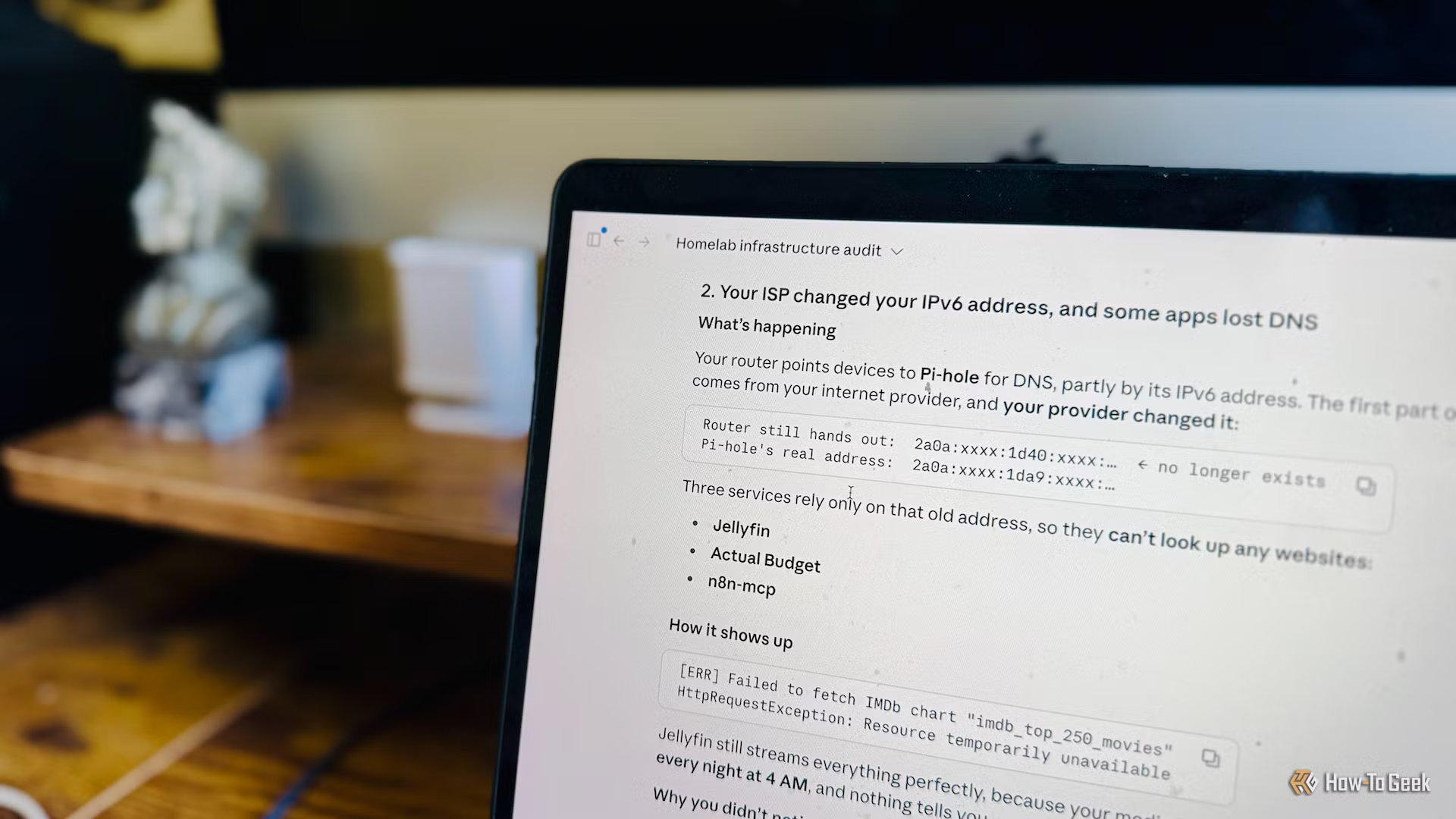


Be the first to comment
Join the argument. No password, just your email or a passkey.