Moonshot AI has shipped Kimi K3.1 Pro, a reworked version of its Kimi K3 model that leans on far more post-training compute, and it lands at number four on the Artificial Analysis Intelligence Index with a score of 55. That's an 11-point jump over K3, and it puts the model just three points behind the current leader, Claude Opus 5.5, which scores 58. Claude Sonnet 5.5 and a model called Muse Wonder Full both sit at 56, according to Artificial Analysis, a third-party benchmarking group.
Moonshot says it plans to release K3.1 Pro's weights openly by November 4, 2026. If that happens on schedule, it would become the highest-scoring open-weights model on the index, narrowing the distance between open and proprietary systems from 12 points to 3, assuming no one else ships in the meantime.
The model is live now on Kimi.ai, Kimi Work, Kimi Code, and through the Kimi API, alongside a faster variant called K3.1 Pro Highspeed that Moonshot says runs two to three times quicker than the standard version.
Where the gains show up
The biggest jumps are in agentic work, tasks where a model has to plan and act rather than just answer. On GDPval-AA, a benchmark Artificial Analysis uses to rate real-world task performance, K3.1 Pro hits an Elo of 1,846, up 312 points from K3 and just behind Claude Opus 5.5's 1,866 and Muse Wonder Full's 1,857.
On Terminal-Bench 4.0, which tests command-line and coding agent work, Moonshot reports 65.7 percent for K3.1 Pro, ahead of GPT-6 Astra's 58.2 percent and close behind Claude Opus 5.5's 66.4 percent. K3 scored just 13 percent on the same test, so the improvement is steep.
Hallucination rates fell too, according to Moonshot's own internal Kimi Hallu Bench Hard test, from 23.4 percent on K3 to 8.3 percent on K3.1 Pro. Moonshot describes that benchmark as a stress test rather than a measure of everyday error rates, and notes GPT-6 Astra still does better at 5.5 percent.
The model also picked up ground on finance tasks, gaining 7.2 points on an internal Financial Modeling benchmark and 11.6 points on Financial Research, and Moonshot says it leads all tested models on a general office-work benchmark called OfficeQA Pro v2.
Pricing and the CAD angle
Token prices dropped by about a third. Input runs $2 per million tokens, down from $3. Output costs $10 per million, down from $15. Cached tokens cost $0.20, down from $0.30. Because the model produces roughly 14 percent more output tokens than K3, the actual cost of running a full Intelligence Index task comes out to $1.98, barely different from K3's $2.00.
Moonshot is also pitching K3.1 Pro at engineers and designers. The company says it works directly with Unity, Unreal Engine and Godot, and scores 92.7 percent on a CAD-focused benchmark called BenchCAD when given tool access, close to Claude Opus 5.5's 96.2 percent and GPT-6 Astra's 95.9 percent. A new feature called 3D Make on Kimi.com lets people preview, edit and export 3D models directly.
K3.1 Pro keeps K3's underlying size, 2.8 trillion total parameters with 104 billion active at any one time, a one-million-token context window, and support for both text and images.
The security tradeoff
Moonshot devoted a section of its release notes to cybersecurity, saying it noticed vulnerability-finding ability rising on its own as post-training scaled up. For the open-weights version, it stripped cyber-related material from training data, which cut performance on an internal vulnerability benchmark from 90.5 percent down to 81.0 percent, still well above K3's 33.3 percent and a bit behind DeepSeek-V4.1-Flash's 85.7 percent. Moonshot says it wants open models capable enough to help with defensive work, like auditing old code, without pushing the frontier of offensive capability. Whether that line holds once the weights are actually public is something only time, and other researchers, will settle.
ADFiled by The AI Desk
Models, assistants and the companies and chips behind them, reported from what was released and what was claimed, with the difference kept clear.
More from this desk →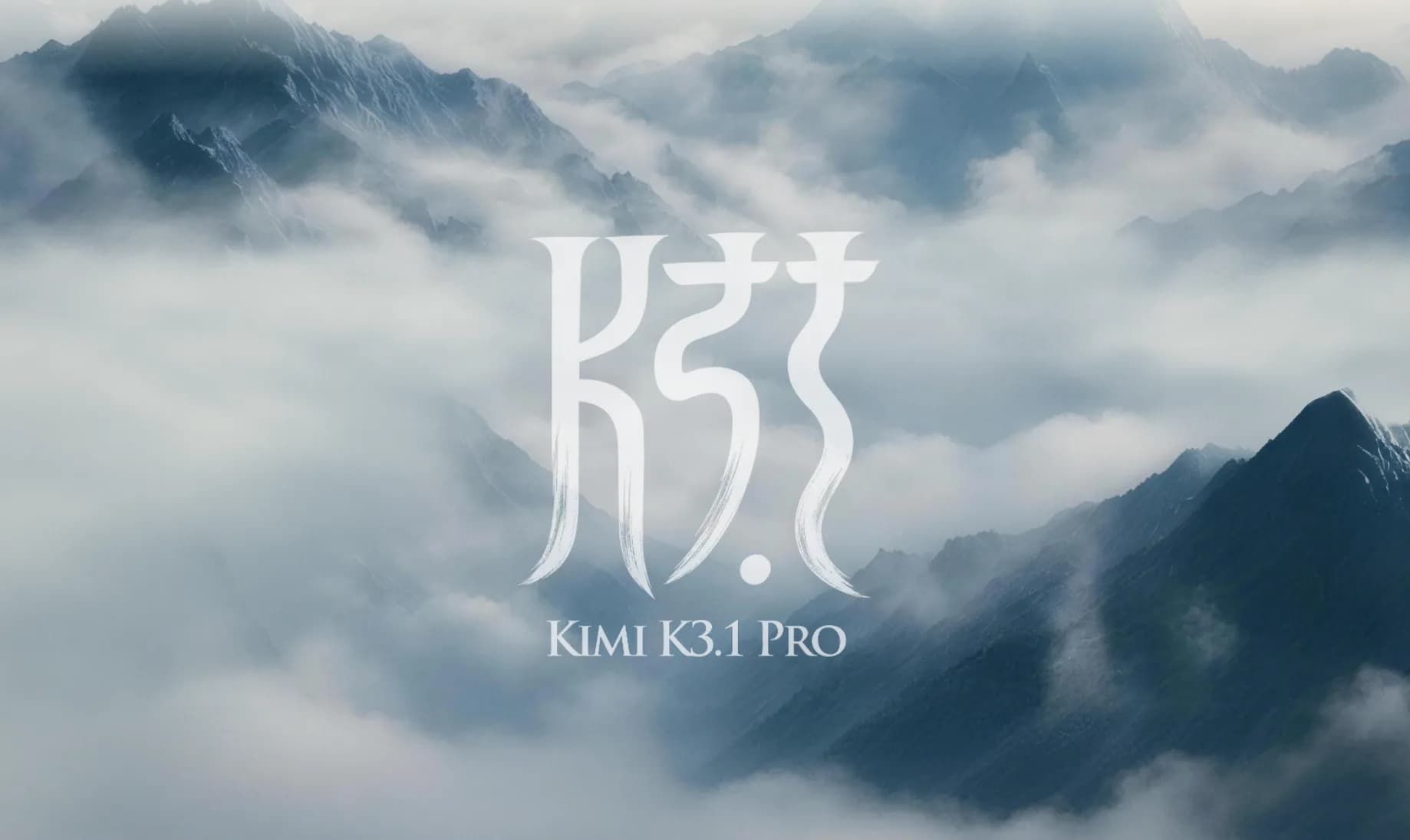

Be the first to comment
Join the argument. No password, just your email or a passkey.