A kingfisher frozen mid-air, water flying off its wings, a fish clamped in its beak. That's the shot Dave Newman, an amateur wildlife and pet photographer based in Lincolnshire, submitted to Digital Camera World's Rate My Photo feature, and it's the kind of image that takes patience as much as gear.
Newman worked with a Sony A9 paired with a Sony FE 400mm GM f/2.8 OSS lens, shooting at 1/8,000 sec, f/2.8 and ISO 800, with exposure dialed down by -0.3 stops. He positioned himself near a perch the bird was known to hunt from and tracked it through the full sequence: the dive, the plunge, and the moment it burst back into the air.
"In this image, I captured a kingfisher emerging from the water with a freshly caught fish, freezing a split second of precision and power," Newman said. "I tracked the bird from the dive, into the water and then back out, and used a fast shutter speed to freeze motion. The goal was to reveal the bird's hunting skill, timing and the dramatic beauty of its everyday survival instincts. This is my best kingfisher capture to date."
Digital Camera World's breakdown of the shot credits the fieldcraft behind it as much as the settings. Knowing where the bird would perch, dive and resurface mattered more than any single camera setting, the outlet's analysis notes, though the technical choices did their part too.
That 1/8,000 sec shutter speed froze individual water droplets as the kingfisher broke the surface, giving the splash a sharp, sculpted shape. The cost of shooting that fast was a higher ISO of 800, which introduced some noise that Newman handled in post-processing software. Running the lens wide open at f/2.8 also threw the background into soft, pastel-colored bands, keeping the eye on the bird rather than the reeds and water behind it.
The trade-off of that wide aperture shows up in the depth of field. The outlet's review notes the bird's head and neck are sharp, but its feathers, feet and tail drift out of focus. A narrower aperture might have held more of the bird in focus, but only by sacrificing either the shutter speed or pushing the ISO higher still.
There's also a compositional note: the kingfisher's head sits at a slight tilt rather than dead-on, which the outlet suggests gives the photo more connection than a perfectly symmetrical pose would. Newman had already cropped the frame tighter on the bird. A vertical crop was an option too, to emphasize the upward motion, though shooting landscape likely made it easier to keep a fast-moving subject in frame.
The image and its breakdown ran in issue 308 of Digital Camera magazine, part of a regular series where the publication critiques photos submitted by its readers.
GDFiled by The Gadgets Desk
Audio, wearables, cameras, tablets, chargers and every other device worth carrying or plugging in.
More from this desk →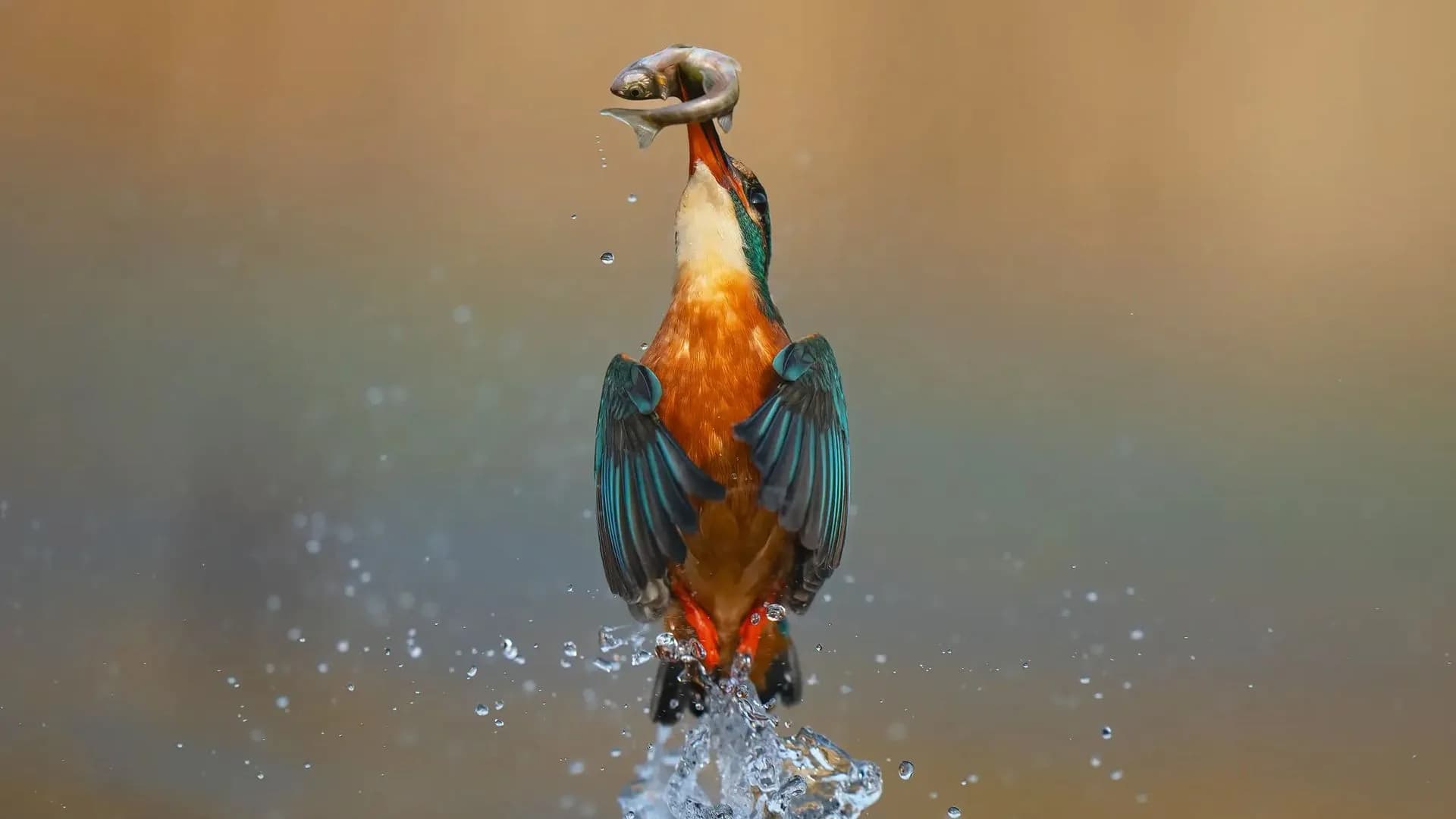

Be the first to comment
Join the argument. No password, just your email or a passkey.