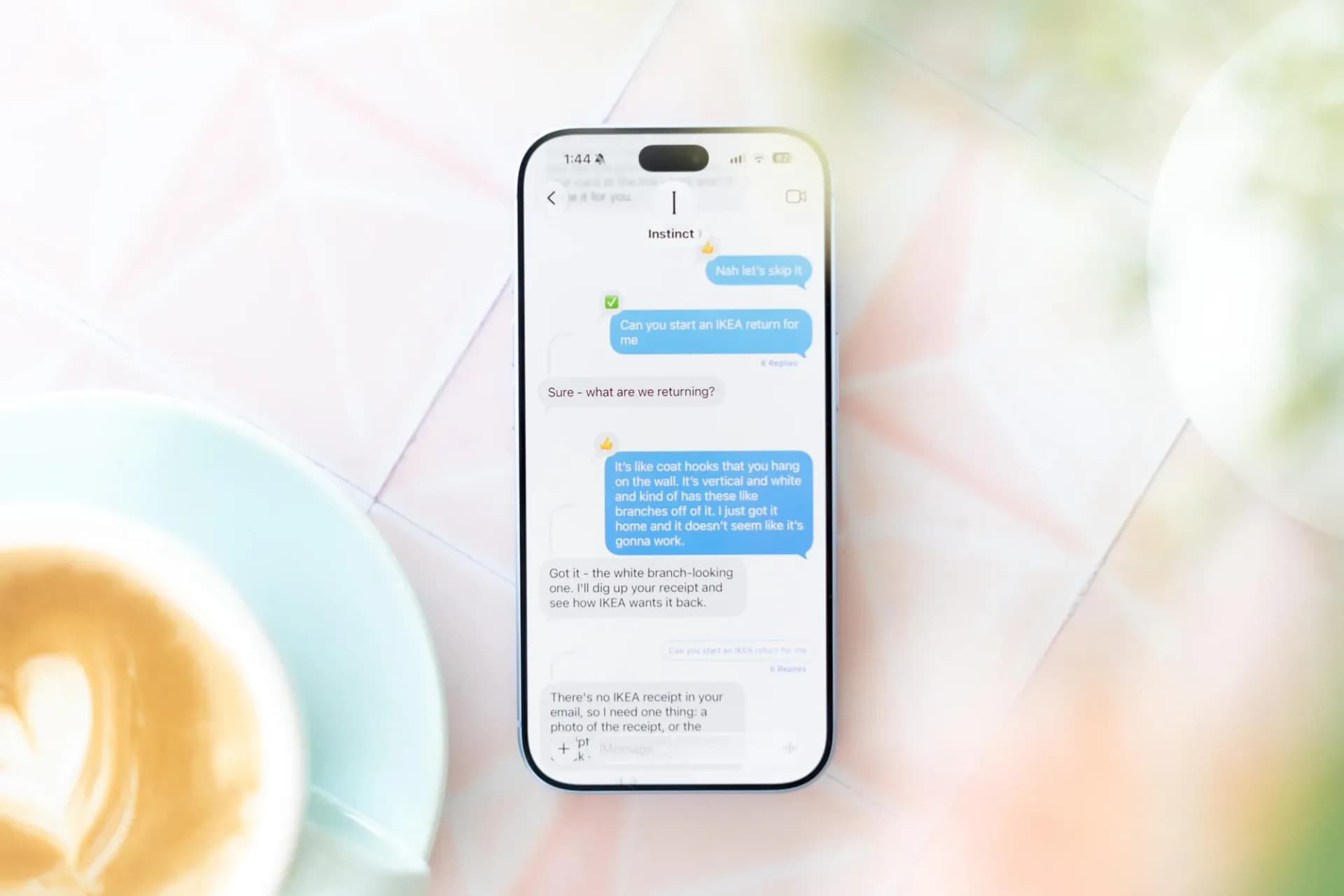
You no longer need to download an app to get an AI assistant. A growing number of them just live in your phone's messages app, waiting for a text.
TechCrunch rounded up six of these agents on Friday, and the differences between them say a lot about where this category is headed. Some are general-purpose helpers. Others are built for one job, like running a household or clearing a work inbox. All of them promise to remember context, connect to apps you already use, and act on your behalf instead of just answering questions.
The best-funded of the group is Instinct, which TechCrunch says raised $350 million at a $2.5 billion valuation before pulling in another $1 billion in September 2026, pushing its valuation to $10 billion. Instinct works over text or voice and hooks into email, calendar and Google Workspace. In September it started giving users a dedicated email address for their assistant, so the agent can sign up for services and follow up with businesses without cluttering a personal inbox. TechCrunch notes that level of autonomy has already drawn privacy and security concerns.
Agents built for a niche
Ask Proxy pitches itself as an assistant that "thinks like a woman," according to the company's own site, meaning it tries to anticipate requests before they're typed out. It works as a plain SMS chatbot, texting "start" to 820-732-2625 to begin, and can take a photo of an empty table and suggest how to decorate it for a dinner party. Personal access runs $1 a day. A business version costs $15 per employee monthly for large companies and $23 for teams under 49 people.
Fambot targets family logistics specifically, sending a nightly text summarizing the next day's school pickups, practices and packing lists, and letting parents reply to adjust the calendar. It connects to Gmail, Google Calendar, Outlook and WhatsApp, with Apple Calendar support still to come. The company launched its beta in early September 2026 on $3.5 million in pre-seed funding and is free for now, though it expects to eventually charge something close to a Netflix subscription.
Caddy sits inside iMessage on iPhones and RCS on Android, scanning conversations and emails for things that need action, like an appointment buried in a message thread, and has been in public beta since April 2026. Folk reaches users through iMessage, WhatsApp and Telegram and runs tasks on what TechCrunch describes as its own private cloud computer rather than just chatting. It's been in beta since May 2026, free by default with an $8.33-a-month Pro tier for unlimited background tasks. Comma works across Signal, Telegram and WeChat, checking its own output before marking a task done and surfacing anything that needs a human call.
What ties them together is the bet that texting is a better front door for AI than another app icon. Whether that bet pays off probably comes down to the same questions every assistant eventually faces: how much access people are willing to hand over, and whether an agent with its own email address and a line to your bank app is a convenience or a liability. TechCrunch's report doesn't say which of these will still be running a year from now, but expect the list to keep growing before it gets shorter.
ADFiled by The AI Desk
Models, assistants and the companies and chips behind them, reported from what was released and what was claimed, with the difference kept clear.
More from this desk →
Be the first to comment
Join the argument. No password, just your email or a passkey.