Instinct reached a $10 billion valuation in late September, betting that the future of autonomous personal software belongs inside a text thread rather than a standalone app.
The startup, led by former Sierra staffer Noah Shinn, launched quietly in August without broad advertising or a formal storefront. Instead of downloading software, users interact through SMS, iMessage, WhatsApp, or regular email. Access remains limited to an invite system and an online waiting list, with no subscription charges attached for now.
That setup puts Instinct on a collision course with Meta and OpenAI, both of which recently fielded consumer agents of their own. While Meta gave Muse a bear avatar and OpenAI fronted Dots with cartoon characters, Instinct avoids visual personas altogether. The software handles instructions through short text replies, virtual machine instances, and integrations with Notion, Slack, and Google Workspace. Whenever a task requires third-party account credentials, the system sends an encrypted web link to an external vault.
Real world chores and data hurdles
Hands-on impressions published by The Verge show the software holding pace with corporate alternatives on daily scheduling while still stumbling over messy website design. In testing, the assistant pulled past Ikea receipts based on loose physical descriptions, drafted return paperwork, and arranged an optometrist visit through email exchanges.
Yet the system also showed familiar agent blind spots. When tasked with locating children's swim sessions at a local community recreation facility, Instinct retrieved accurate class schedules and open slots. It failed, however, to flag an enrollment prerequisite buried inside a site pop-up. Early location guessing proved erratic too, as the software initially mapped regional news and flight options based purely on an old phone area code until manually corrected.
Big Tech competitors hold massive data advantages, but Shinn argued in an email exchange with The Verge that focusing strictly on personal task automation gives his team an edge over broader corporate platforms.
Instinct is expanding access gradually as waitlisted users clear, while pricing details for future commercial tiers have yet to be disclosed.
ADFiled by The AI Desk
Models, assistants and the companies and chips behind them, reported from what was released and what was claimed, with the difference kept clear.
More from this desk →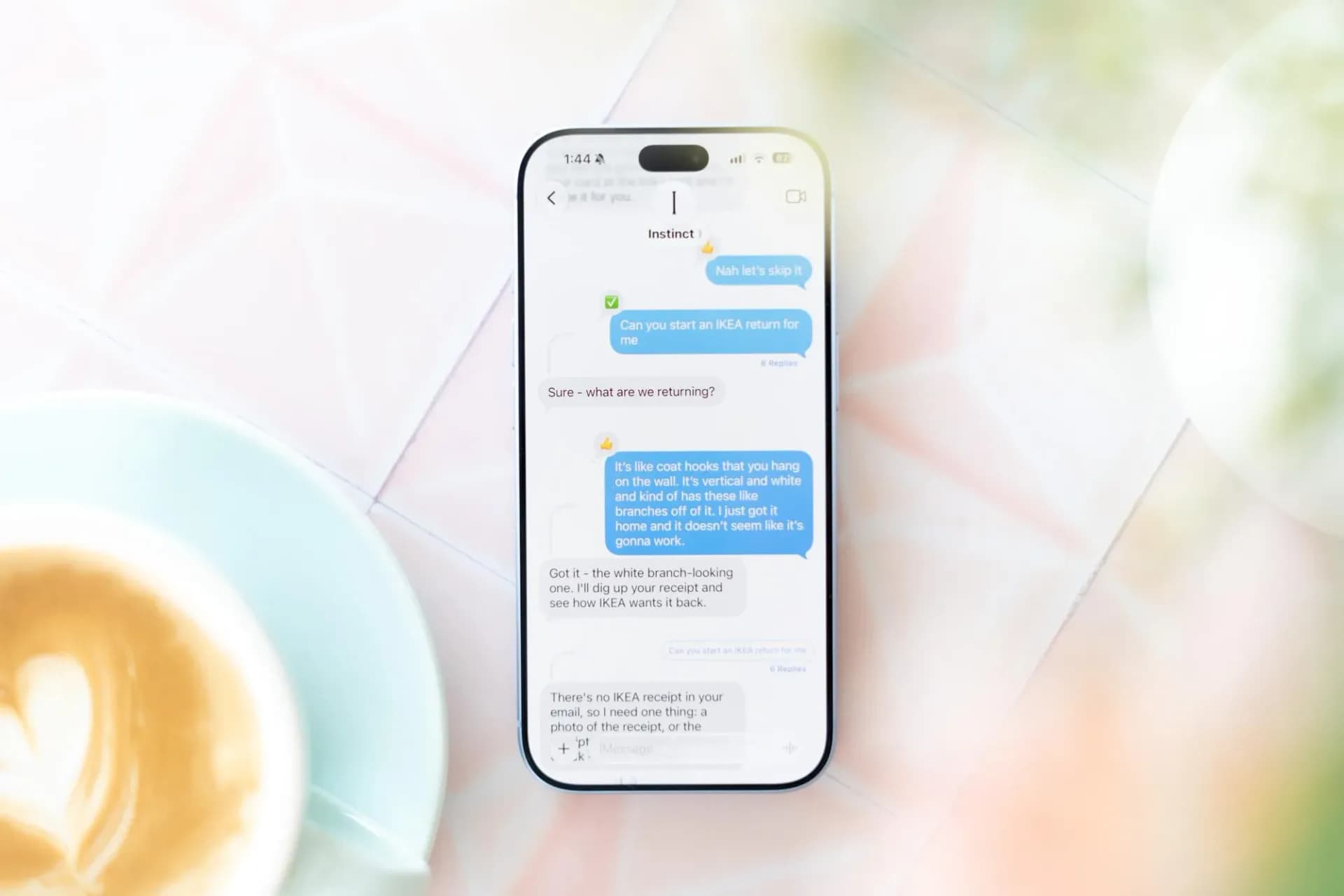
Be the first to comment
Join the argument. No password, just your email or a passkey.