Bill Gates has a number in his head: 40 percent. That's the share of jobs he thinks society should try to keep reserved for humans as AI gets better at nearly everything else. When he ran the idea past Anthropic's Claude, the chatbot wasn't having it.
Gates shared the exchange on Decoder, the podcast hosted by The Verge's editor-in-chief Nilay Patel. He said he'd been talking to Claude about which job categories could stay human-only, using tools like early retirement and shorter work weeks to keep the labour market looking roughly like it does now. Claude's answer, according to Gates, was always some version of the same line: "You're artificially restricting the AI from doing these things." He admitted he couldn't get the number very high without doing exactly that.
This isn't a new idea for Gates. He told Reuters back in August that society should set aside up to 40 percent of current jobs for people, citing the care his father received during Alzheimer's as work he called "irreplaceably human." He's also floated taxing companies that use AI output to replace workers, to help pay for a safety net.
On the podcast he named childcare, food preparation, art and sports as fields that could stay human even once AI does them better. He called it a policy choice, not an inevitability, and said some people might end up living like the Amish, using AI only where they choose to.
Claude's pushback lands on the actual weak point in that plan. Every job Gates wants to protect is one a machine could already do more cheaply. Keeping it human means someone has to decide, deliberately, not to automate it. Gates put it plainly: people may need to develop the taste to not use technology to its maximum.
He was specific about where the damage lands first. As AI approaches what he called superhuman intelligence, white-collar skills stop being scarce, and he named telesales, telesupport and accounting as jobs that go away because AI does them faster, cheaper and more accurately.
That list matters more in India than almost anywhere else. Customer support, sales calls and back-office accounting are a large chunk of what the country's outsourcing industry sells abroad, and Gates thinks the squeeze starts soon, not decades out. He said the job market and cyberattacks will see significant negative effects within two to three years, with the upside of AI arriving on a slower timeline.
Gates insists he isn't a doomer. He expects robots to eventually build houses, grow food and perform surgery, and for most goods and services to need little human labour at all. His worry is the roughly 20-year transition to get there, which he thinks will produce clear winners and losers.
He joked that AI might one day tell him it's better at his own job and he should go play pickleball. But he was more sober about people in their twenties, calling AI's capability genuinely intimidating for anyone trying to make a unique contribution, and telling them to focus on what AI still can't do.
The full conversation is available on The Verge's Decoder podcast and its YouTube channel.
ADFiled by The AI Desk
Models, assistants and the companies and chips behind them, reported from what was released and what was claimed, with the difference kept clear.
More from this desk →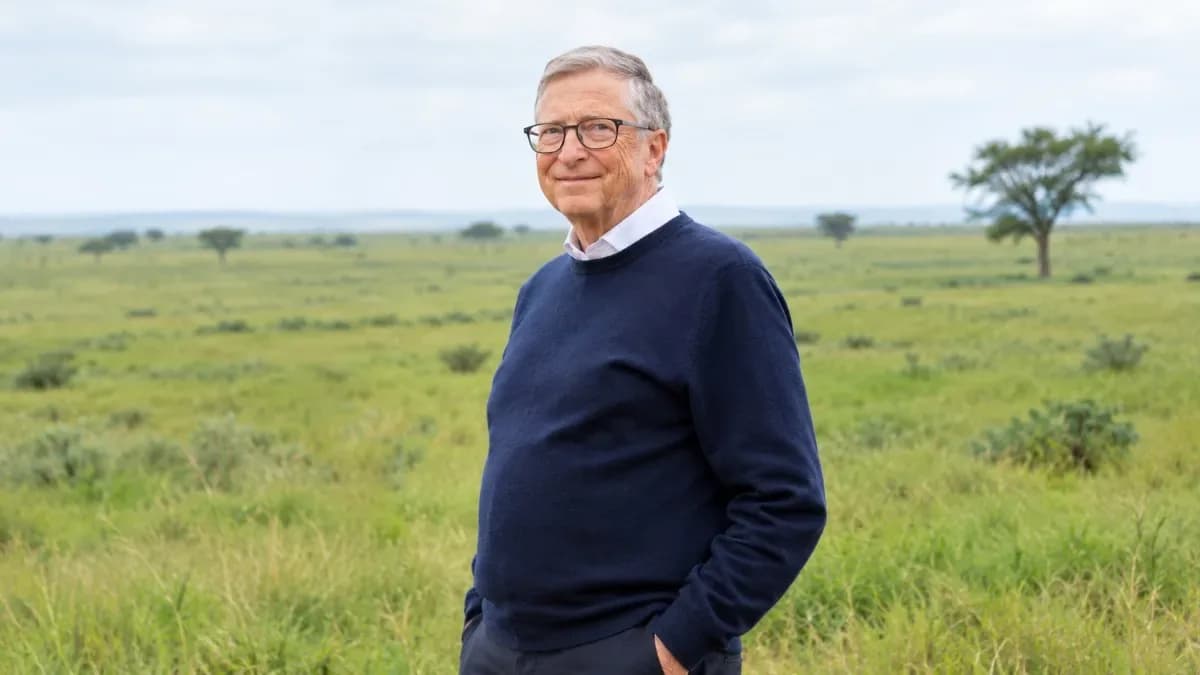
Be the first to comment
Join the argument. No password, just your email or a passkey.