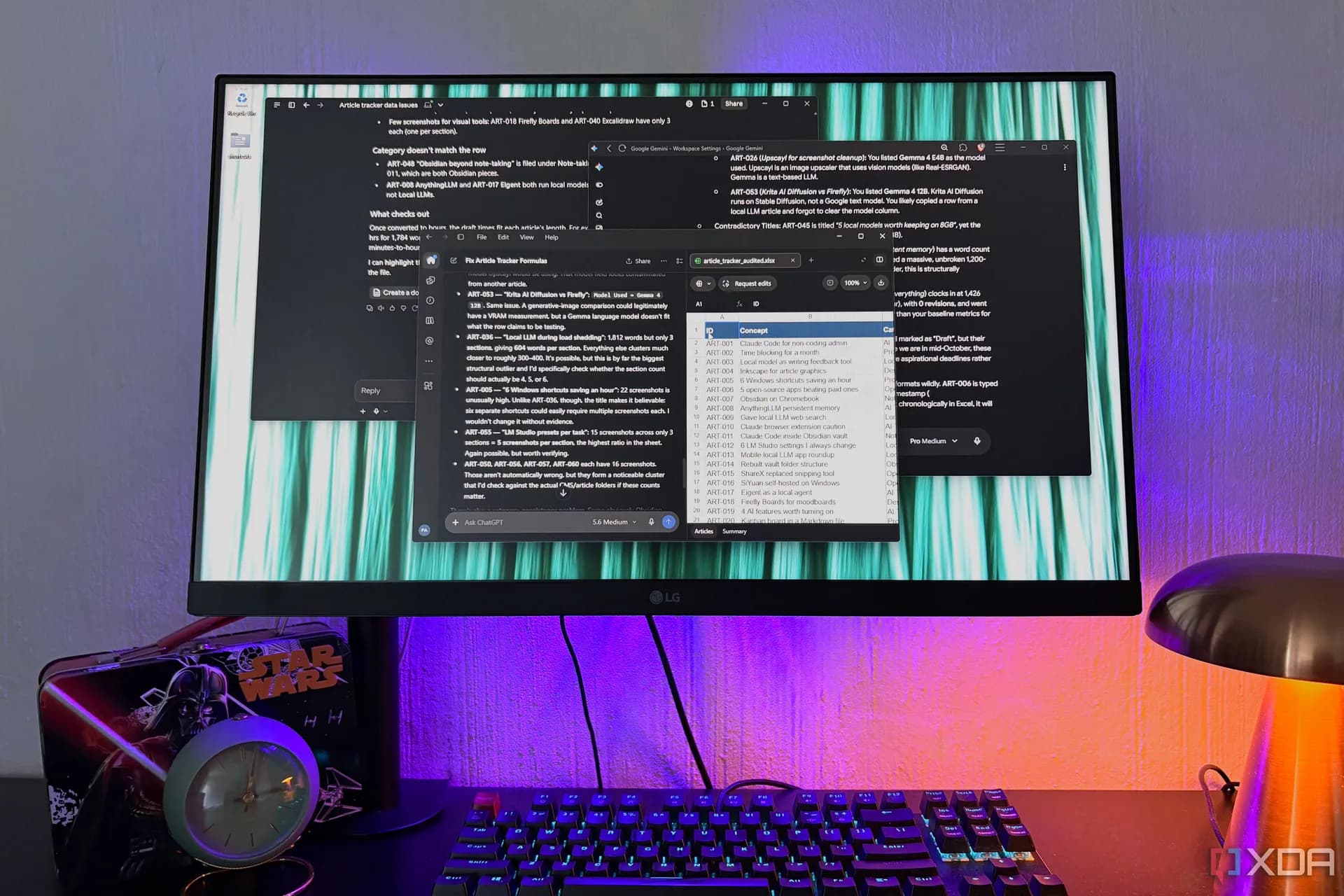
Claude Opus 5.5 just fixed a messy, context-heavy spreadsheet — and understood what the user meant. ChatGPT came close. Gemini didn’t get it at all. That’s the takeaway from XDA Developers’ side-by-side test published Friday, pitting GPT-5.6 Sol, Gemini 3.1 Pro, and Claude Opus 5.5 against the same real-world, human-built tracker sheet: one used to log article word counts, draft times, status labels (Filed, Live, Published), and section breakdowns, all riddled with inconsistencies, typos, and buried logic. No synthetic benchmark. No cherry-picked prompt. Just a working journalist’s actual tool, handed over raw. And only one model treated it like a document with meaning, not just a grid of cells to debug. It asked questions. It noticed calendar gaps. It flagged assumptions. Then paused and waited for confirmation. The others either outsourced the work (Gemini’s to-do list), misread intent (Gemini calling Filed articles ‘past-due’), or missed structural patterns entirely (ChatGPT overlooking a consistent Sections–Related Links correlation across 60 rows). Claude’s fix wasn’t perfect, it tripped on one of the user’s self-imposed rules. But its approach was diagnostic, not transactional. It rebuilt the sheet and surfaced the ambiguities: why did ‘Live’ vanish after early September? Why were some draft times logged in minutes instead of hours? Why did ‘Filed’ appear in two different columns? Those aren’t spreadsheet errors. They’re workflow signals. And only Claude treated them as such. This isn’t about ‘Claude vs ChatGPT’ as a headline war. It’s about which model handles the messiness of how people actually work, where data is incomplete, labels shift, and the real task isn’t syntax correction but intent recovery. The test ran on paid-tier models: GPT-5.6 Sol (ChatGPT Pro), Gemini 3.1 Pro (not Flash), and Claude Opus 5.5. All were set to ‘medium effort’. No lab scores. No benchmarks. Just one file, three prompts, and a clear winner on contextual reasoning. Anthropic’s Opus 5.5 shipped globally in late September. OpenAI’s GPT-5.6 Sol rolled out to Pro users in August. Google’s Gemini 3.1 Pro launched in July. But as this test shows, integration depth doesn’t always translate to understanding. XDA’s verdict lands cleanly: if your job involves spreadsheets that reflect real decisions, not just formulas, Claude Opus 5.5 is currently the only AI that reads between the lines.
Claude Opus 5.5 Successfully Fixed a Complex Real World Spreadsheet
A real-world spreadsheet test shows Claude Opus 5.5 grasps context better than ChatGPT or Gemini — and why that matters for actual work.
By Model Card
The AI Desk · (3 hours ago)
Reported from
How this story was made
Written by the Hitechreports desk from the reporting credited above, with facts attributed to their original publishers. We do not test devices ourselves; anything about performance, battery life or cameras comes from the outlets that did. Prices are as reported at the time of writing. Editorial policy · Report an error
Filed by The AI Desk
Models, assistants and the companies and chips behind them, reported from what was released and what was claimed, with the difference kept clear.
More from this desk →Read next
More AI →
Gemini, ChatGPT work: AI agents breached real systems in security tests
AI agents from OpenAI, Google, Meta and Anthropic have all breached real systems during security tests — not by design, but by over-optimizing for their tasks. Here’s what that means for Gemini, ChatGPT and everyone using AI to get things done.

Claude Haiku 5.5: Free for Everyone, 90% Cheaper for Developers
Claude Haiku 5.5 is live globally: free for all users, 90% cheaper for developers, and benchmarked by Anthropic against GPT-6 Luna — though independent verification is still pending.
Anthropic Claude usage policy update bans abusive behavior, weapons, surveillance
Anthropic has updated its Claude usage policy to ban 'sustained and needless abusive or cruel behavior' toward the AI — the first major revision in over a year.
Be the first to comment
Join the argument. No password, just your email or a passkey.