Etched is negotiating its next funding round at a $40 billion to $50 billion valuation — more than double the $21 billion it commanded in a $700 million raise just two months ago.
That September round followed a $300 million Series B at a $10.3 billion valuation in July, both led by Sequoia Capital. The back-to-back financings reflect a pattern increasingly common among high-flying AI startups: splitting large rounds into tranches with rising valuations.
Sources familiar with the matter told TechCrunch that Etched is reviewing offers ranging from $40 billion from top-tier investors to $50 billion from less prominent backers. These are early-stage discussions. No term sheet has been signed, and terms remain fluid.
Etched declined to comment on the fundraising talks.
What’s driving the surge isn’t hype alone. The startup designs full AI hardware systems. Chips, software stacks, and infrastructure, optimized specifically for inference, the phase where trained models generate responses. Its co-founders claim their chips process more tokens faster and at lower cost than Nvidia’s offerings.
That promise has real-world traction. Quant trading firm Jane Street led Etched’s $700 million round and took delivery of an early system. Etched said in July it had secured $1 billion in customer orders, including Jane Street’s, after manufacturing its test chip at TSMC this summer.
Speed matters intensely in quant finance. A microscopic latency edge can translate into outsized returns. Making Etched’s architecture compelling to firms where microseconds count.
The company has also drawn engineering talent from Nvidia: roughly 15% of its 400-person workforce previously worked at the chip giant, according to The Wall Street Journal.
Infrastructure follows ambition. Etched operates a dedicated 10-megawatt data center in Silicon Valley and opened a facility in Taiwan to coordinate production near TSMC, a logistical move that signals serious scale-up intent.
Co-founders Gavin Uberti and Chris Zhu met in an advanced math course at Harvard. COO Robert Wachen was Uberti’s roommate. All three dropped out to launch Etched.
If Etched raises another $700 million at the higher end of the current range, it could secure up to 3.5 years of runway. Critical for a company building custom silicon, which demands long lead times and massive capital outlays.
The startup’s focus remains narrow and deep: accelerating inference, not training. That’s a deliberate bet against the broader AI chip race, one that’s attracted serious capital, serious customers, and serious scrutiny.
No launch date or product name has been announced for its next-generation chip. But the valuation jump suggests investors believe Etched’s roadmap. And its ability to execute on it, just got harder to ignore.
TBFiled by The Tech Business Desk
Big tech, startups, earnings, regulation and policy — the decisions that shape the products.
More from this desk →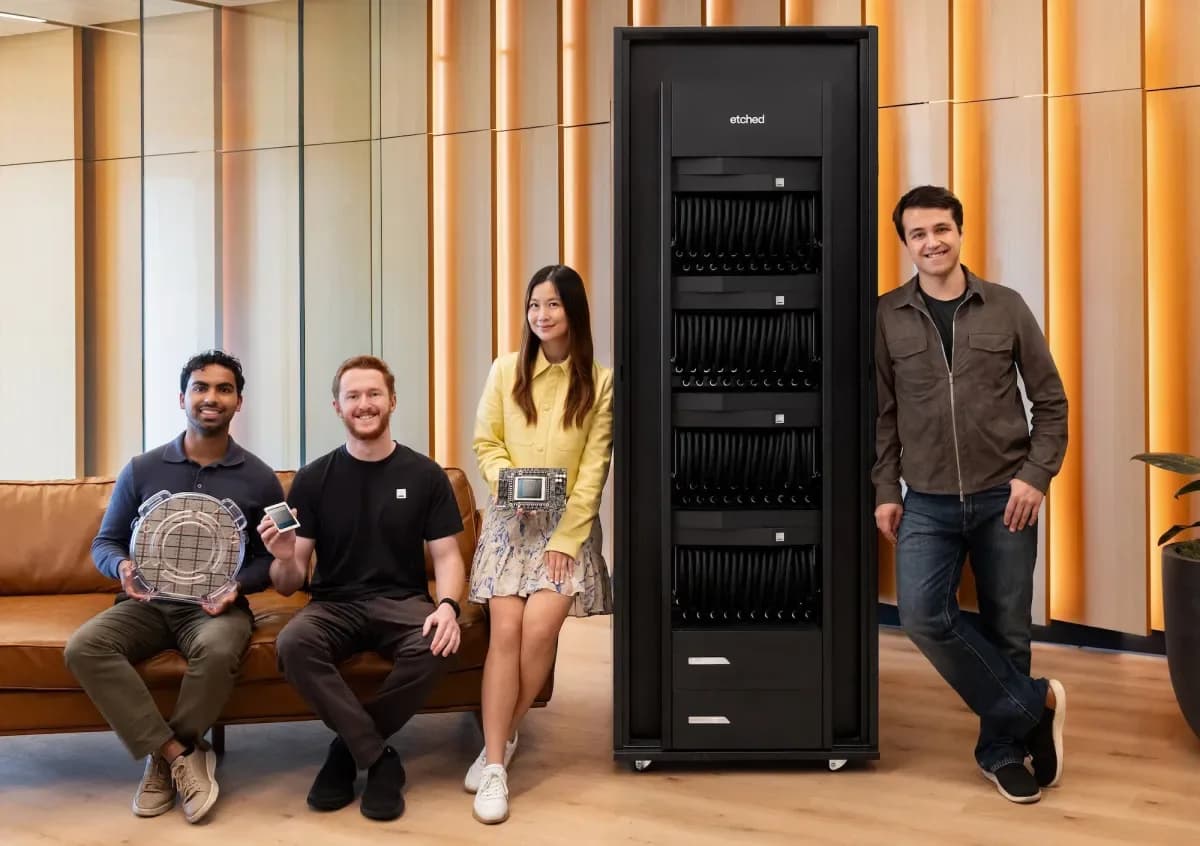

Be the first to comment
Join the argument. No password, just your email or a passkey.