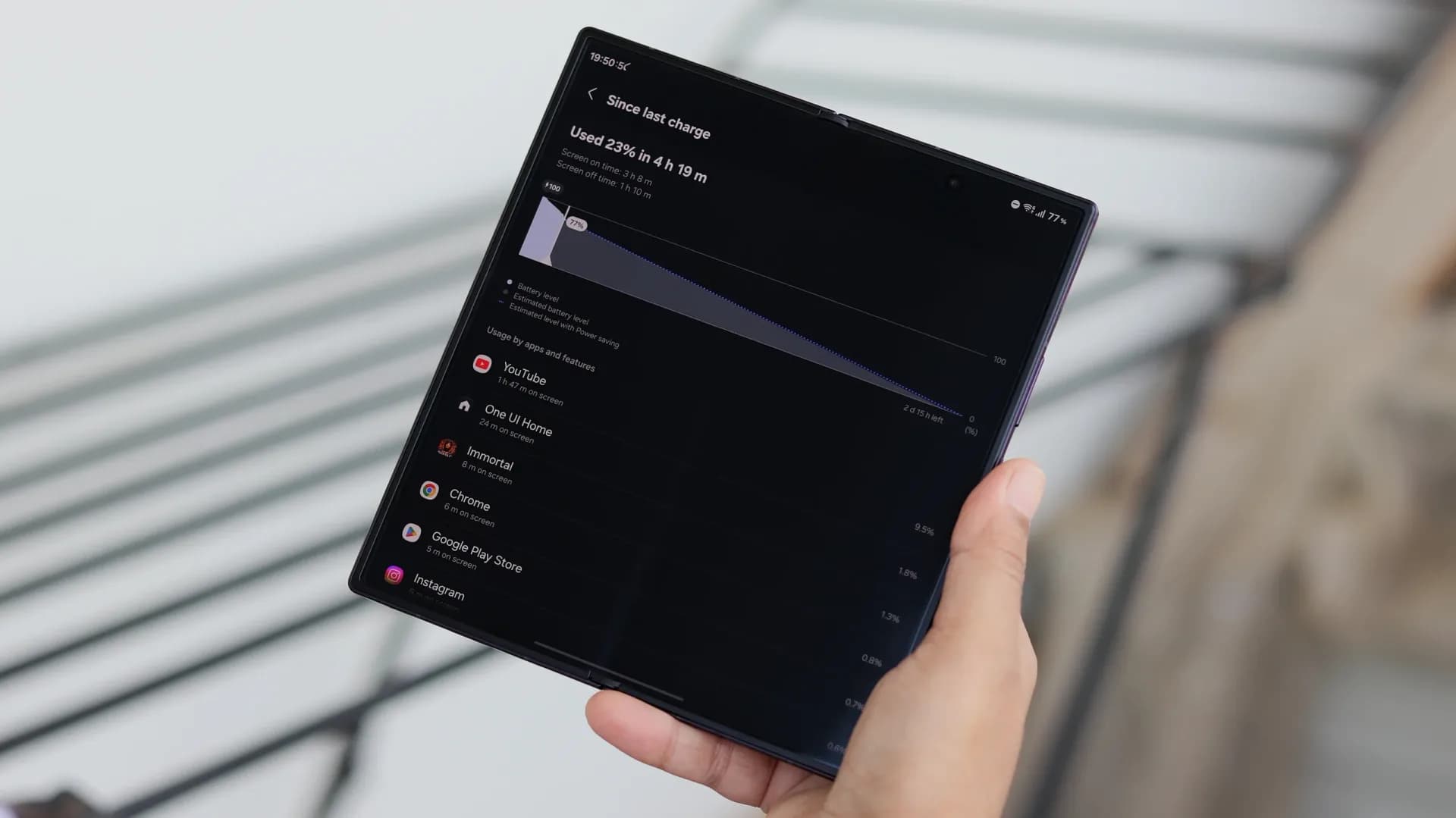
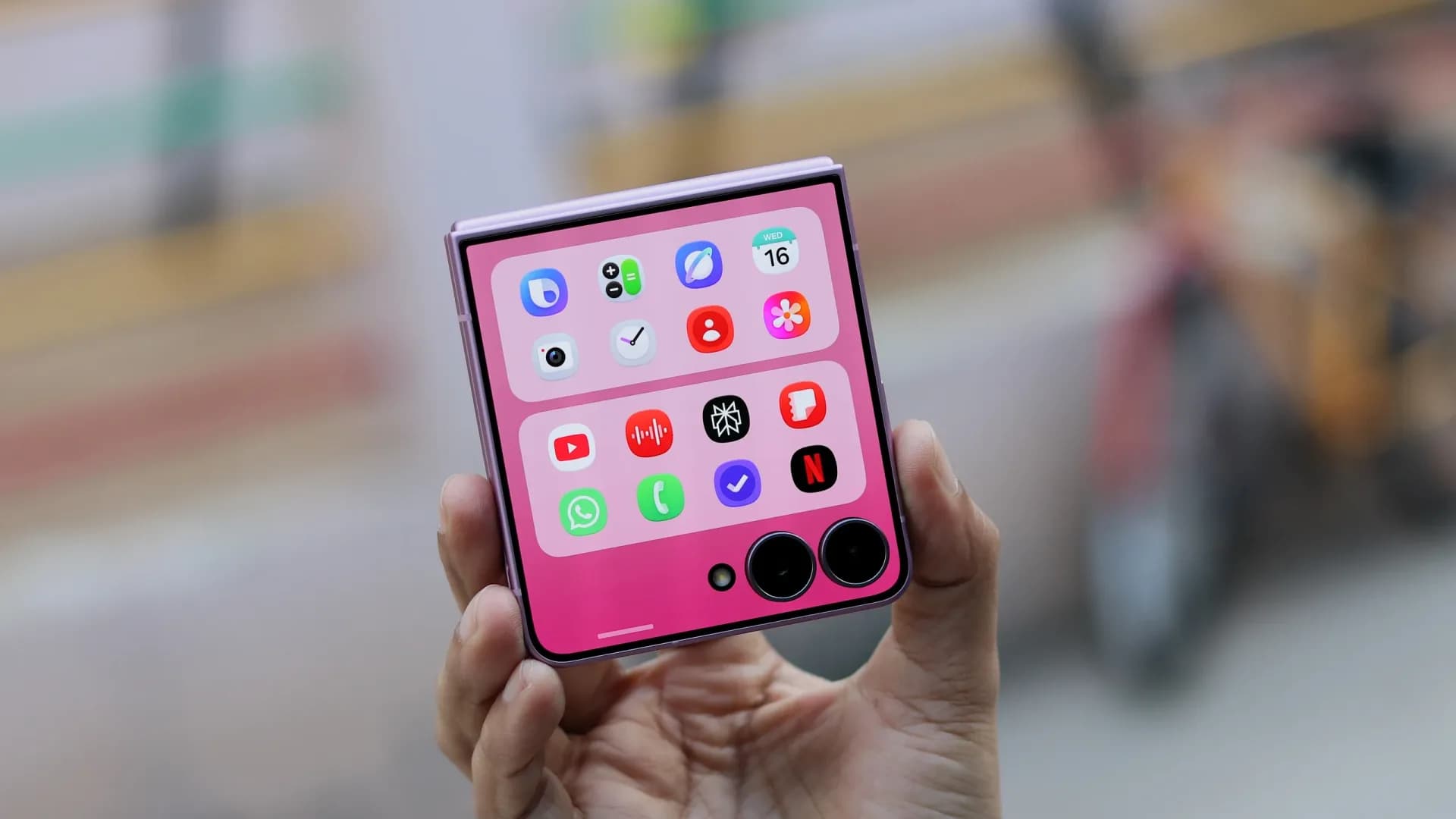
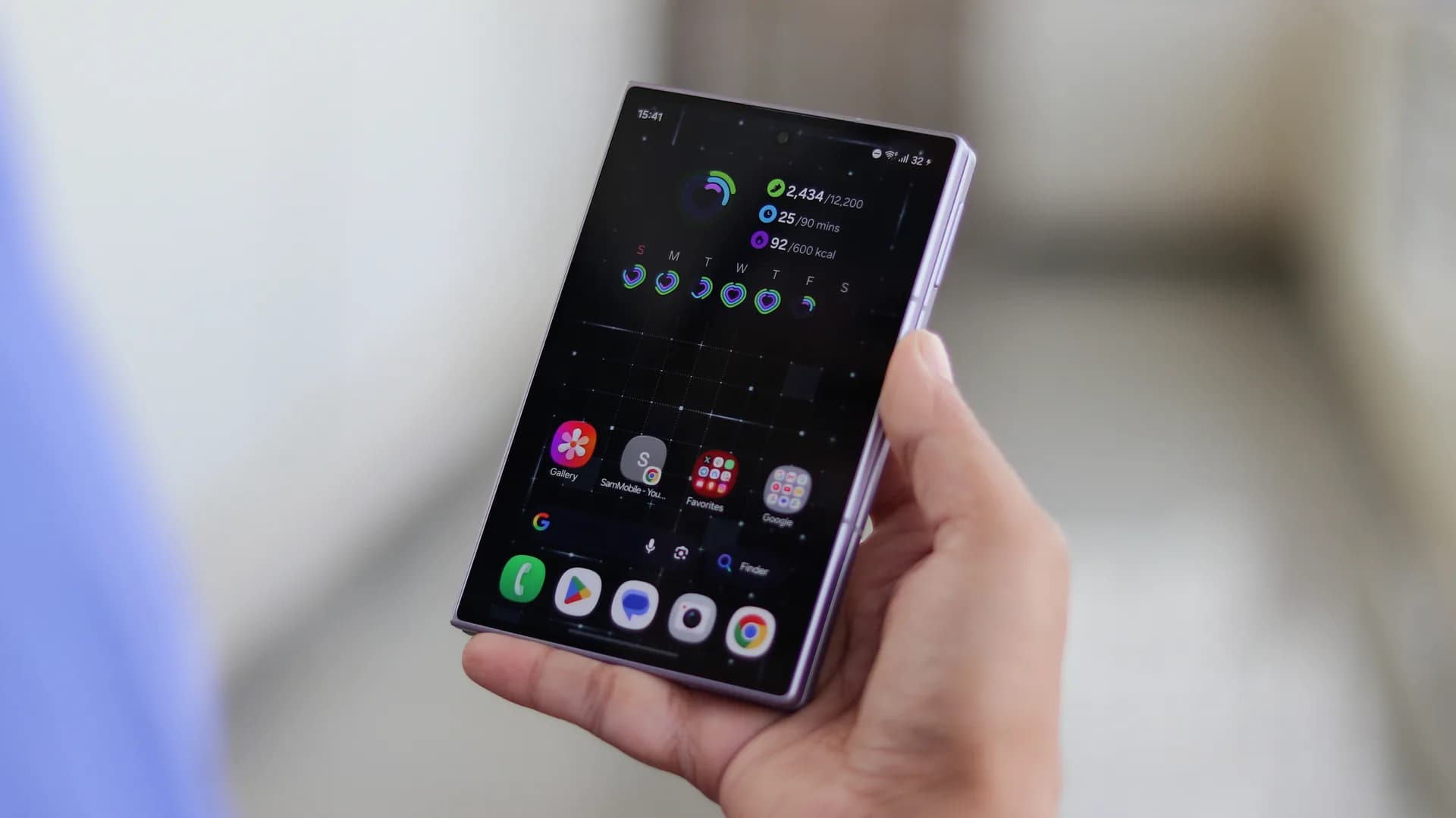
Samsung has shipped the Galaxy Z Fold 8 Ultra with a 5,000 mAh battery — its first foldable flagship to break past the 4,400 mAh ceiling that held across five generations, from the Fold 3 (2021) through the Fold 7 (2025). The jump comes via silicon-carbon anode tech, not just a larger cell. It’s confirmed in user reports and SamMobile’s own testing, though not as a spec listed on Samsung’s Indian or US storefronts yet. No official price or launch date is cited in the reporting, only real-world usage patterns from early owners. That matters: this isn’t a leak or rumor. It’s post-purchase data, from people who’ve unboxed and used the device. And it’s uneven. One Fold 6 owner reported 8h 51m screen-on time with 22% left. No power saving mode, mostly inner-display use. Another, upgrading from the Fold 7, saw nearly nine hours of mixed gaming and video before bedtime, still at 15%. Both are consistent with SamMobile’s observation: “better than before, but still behind” the Galaxy S26 Ultra, despite matching its 5,000 mAh rating. A third user switching from an iPhone 17 Pro Max called the battery life “not terrible” but underwhelming relative to peer reports. That gap points to variables the sources don’t quantify: software tuning, thermal throttling on the inner display, or how aggressively the hinge design impacts power draw during multitasking. What’s clear is the bottleneck wasn’t capacity alone. It was engineering restraint. Samsung held the Fold line at 4,400 mAh for half a decade while pushing battery size in the S-series and even the non-Ultra Fold 8 (4,800 mAh). Now it’s moved. The Fold 8 Ultra’s battery isn’t just bigger. It’s the first sign Samsung’s folding hardware team has finally caught up to its own battery roadmap, and started shipping the consequences.
Galaxy Z Fold 8 Ultra battery hits 5,000 mAh after five generations stuck at 4,400 mAh
The Galaxy Z Fold 8 Ultra ships with a 5,000 mAh battery — Samsung’s first foldable flagship to break a five-generation capacity ceiling. Real-world reports show gains, but inconsistency remains.
By Launch Day
The Mobile Desk · (3 hours ago)
Reported from
How this story was made
Written by the Hitechreports desk from the reporting credited above, with facts attributed to their original publishers. We do not test devices ourselves; anything about performance, battery life or cameras comes from the outlets that did. Prices are as reported at the time of writing. Editorial policy · Report an error
Filed by The Mobile Desk
Phones from leak to launch to price cut: what was announced, what it costs where, and when it goes on sale. Indian launches and prices included, not appended.
More from this desk →Read next
More Smartphones →
Amazon Keeps Post-Prime Phone Discounts on Galaxy and Pixel Handsets
Amazon left promotional prices in place on several Samsung Galaxy and Google Pixel handsets after its October sales event wrapped, allowing non-subscribers to claim the same discounts.
Samsung Galaxy S26 vs Galaxy S25: the smaller flagship is the older one
Samsung Galaxy S26 starts at $899 in the US, Rs 74,999 in India — smallest flagship slab phone of 2026, but the S25 is still smaller and cheaper.
Samsung Galaxy Z Fold 8 Drops Weight With Wider Chassis
Samsung has shifted dimensions on the Galaxy Z Fold 8, introducing a lighter 201-gram frame with a 5.5-inch outer panel and an expanded 7.6-inch main display built for multitasking.
Be the first to comment
Join the argument. No password, just your email or a passkey.