Gemini 4 Argon is live for Google AI Pro and Ultra subscribers — the first of Google’s new long-horizon reasoning models, built for multi-step coding projects that run for minutes, not seconds. It launched in the Gemini app on October 13, following a limited rollout to vetted cybersecurity teams after its September 30 announcement.
No standalone pricing or consumer-tier access has been announced. It remains gated behind Google AI Pro ($19.99/month in the US, ₹1,699/month in India) and Ultra plans only. There is no Plus-tier access anymore, XDA Developers confirms the author upgraded from Google AI Plus to Pro specifically to use Argon. No Indian or US launch date for wider availability has been given.
No hardware tie-in: this is a cloud model only, running via API or the Gemini app. No benchmarks, scores, or comparative latency figures beyond what Google itself disclosed, namely, that Argon scored 50 on the Artificial Analysis Intelligence Index at default settings, versus Hydrogen’s 51. That index is described as an independent ranking combining multiple benchmarks, but no source for it is named in the reporting.
Google positions Argon and Carbon as siblings built for deep, long-horizon reasoning, meaning tasks where the model works autonomously across many steps without human interruption. Hydrogen, by contrast, is tuned for speed and everyday utility. The million-token response limit (shared between prompt and output) is new for Gemini, up from 64,000 on earlier versions, but only available via API with long responses enabled.
In-app, users get Low/Medium/High thinking settings, and Google advises testing all three before settling on the lowest effective level. One novel workflow highlighted: record your screen while interacting with Argon’s output, narrate bugs aloud, then feed the video back to the model for diagnosis. That capability is unique to the Gemini interface as described, not available in Claude or ChatGPT per XDA’s comparison.
Argon isn’t for quick fixes. It fumbled a drum machine demo because the task was too narrow and fast, exactly the wrong fit. But when given a full groovebox spec, including pattern sequencing, song arrangement, audio export, and domain-aware design decisions, it delivered working code on first run, complete with self-assessment of assumptions and limitations.
It even loaded a demo track with real arrangement. Minor flaws remained: playback-from-bar logic defaulted to start-of-song, low-end translation varied across speakers, master volume needed manual adjustment, and UI label sizing lacked variation. None of those broke core functionality. If your AI use is bug triage, one-off scripts, or conversational Q&A, Argon won’t replace Hydrogen, or your existing subscriptions.
But if you regularly hand an AI an entire app architecture and expect it to plan, build, test, and document in one flow, Argon changes the calculus. Google hasn’t said when Carbon arrives, or whether it will share Argon’s million-token ceiling or interface features. Nor has it confirmed if Argon will ever land outside Pro/Ultra tiers.
For now, it’s a narrow tool, powerful, precise, and priced accordingly.
ADFiled by The AI Desk
Models, assistants and the companies and chips behind them, reported from what was released and what was claimed, with the difference kept clear.
More from this desk →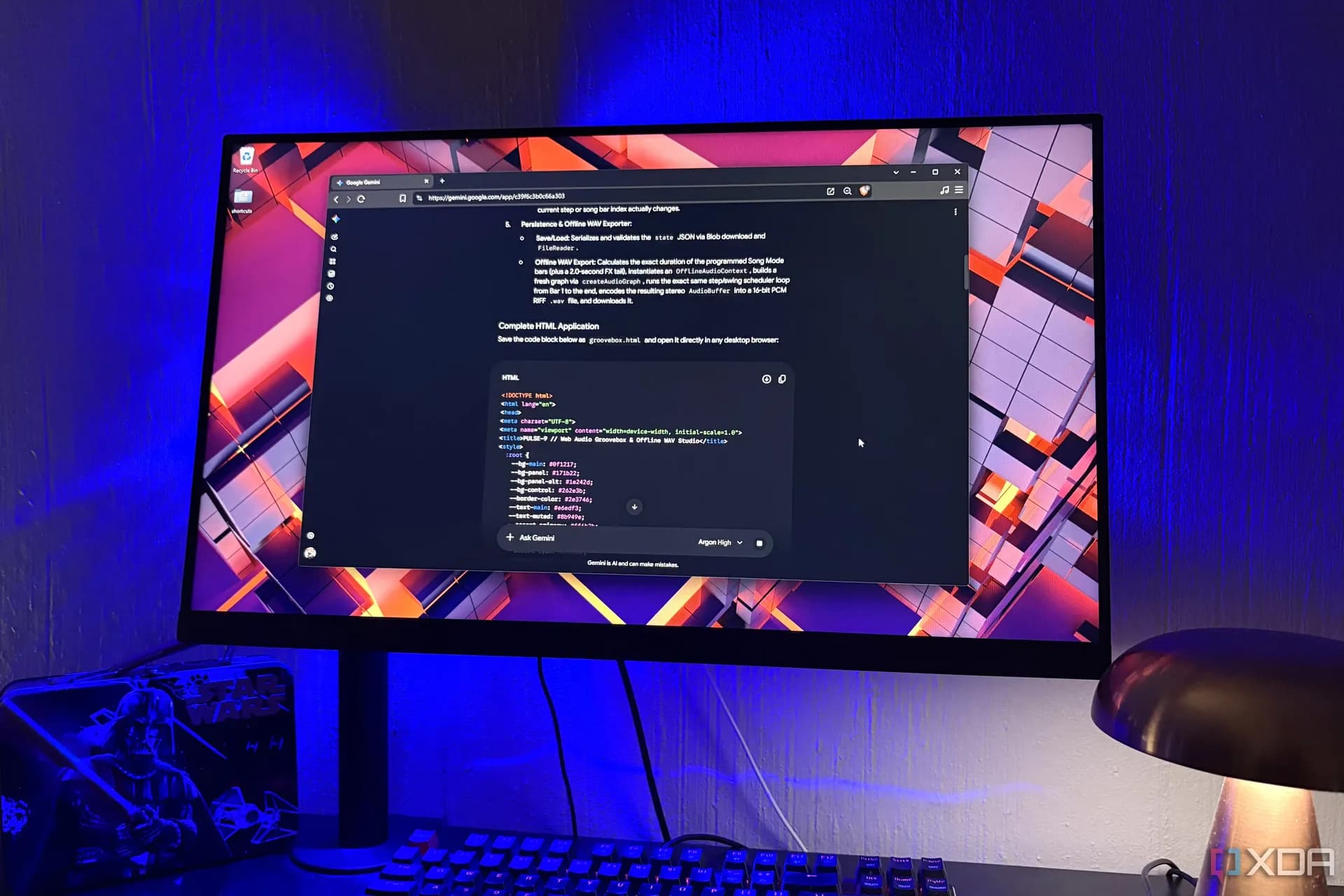
Be the first to comment
Join the argument. No password, just your email or a passkey.