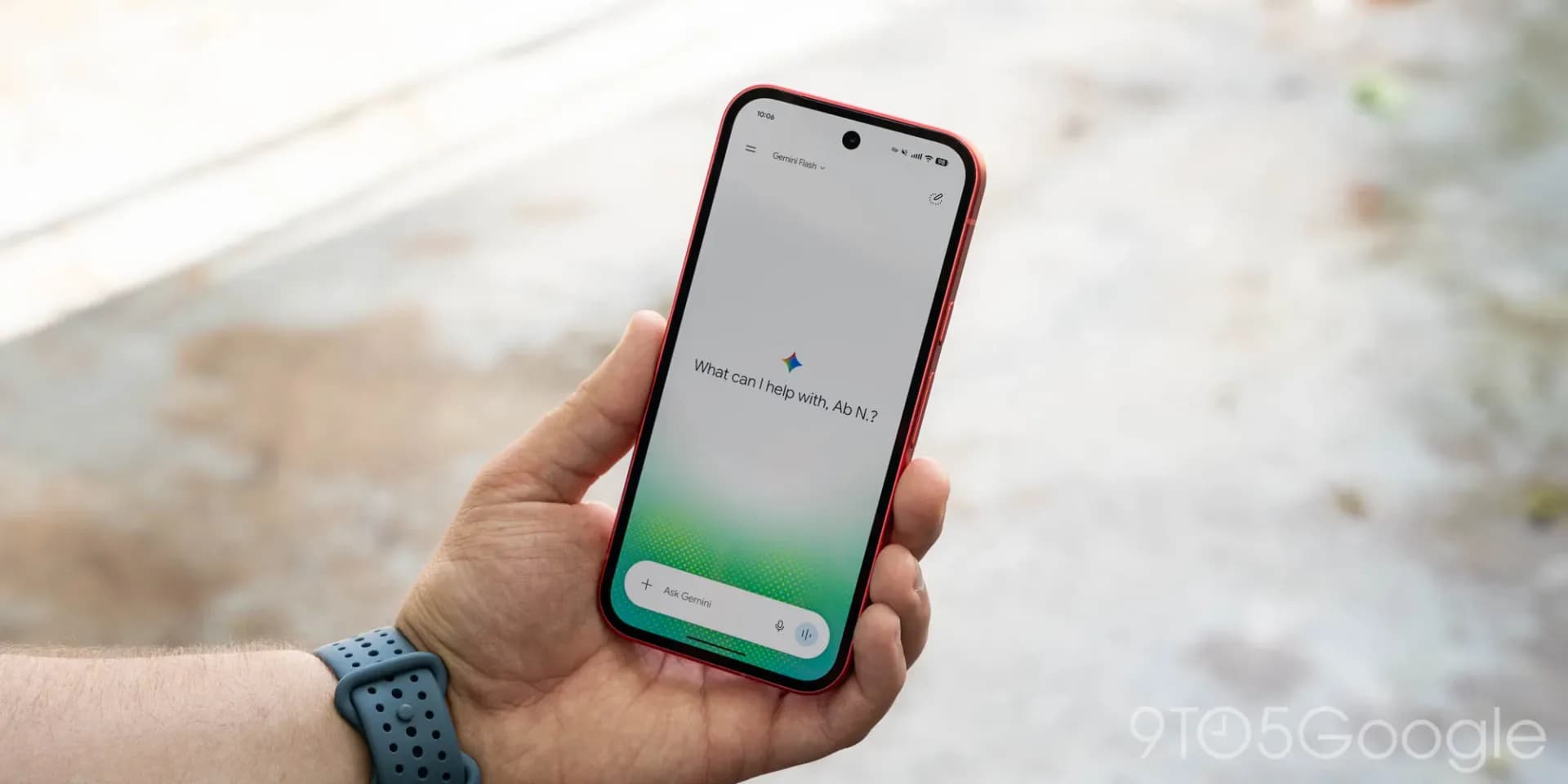
Google's own yardstick for AI coding assistants has an awkward result in it this week: Gemini 4 Argon, the company's newest model, lands in fifth place.
The ranking comes from Android Bench, a tool Google launched earlier this year so developers could see which AI models handle Android-specific coding tasks best. The test checks how models deal with Android development practices, not general programming, and it tracks an average cost per task alongside pass and completion rates so developers can weigh quality against price.
The October 26 update added a new reasoning-level metric and folded in results for four models that weren't on the board before: OpenAI's GPT-6 Sol and GPT-6.1 Sol, Anthropic's Claude Sonnet 5 and Claude Sonnet 5.5, plus Google's own Gemini 4 Argon.
Claude Sonnet 5.5 now sits at the top, with a 40% pass rate and an 80.9% completion rate. Claude Opus 5.5, added to the list in early October, holds second place.
Gemini 4 Argon comes in fifth, behind Claude Fable 5.1, which posted a 21.3% pass rate, an 81.8% completion rate and an average cost of $267.70 per task. Google's post didn't break out Argon's own pass-rate figure, only that it finished behind that result on the leaderboard.
Price tells its own story here. GPT-6.1 Sol posted a 29.3% pass rate and an 82.8% completion rate, both short of Claude Sonnet 5.5's numbers, but it did it for an average cost of $99.50 per task. Claude Sonnet 5.5's chart-topping run cost $1,574.90 on average. For a developer choosing between the two, that's a roughly sixteen-fold price gap for a nine-point pass-rate difference, and it's the kind of tradeoff Android Bench was built to surface.
The bigger embarrassment is that Gemini 4 Argon is Google's model, running on Google's own benchmark, and it isn't close to the top of either the quality list or the value list. 9to5Google reported that unnamed internal voices at Google said the model "struggles to handle certain coding tasks." Google has stood by Argon's capabilities, according to the same report, but hasn't offered a rebuttal of the specific benchmark numbers it published itself.
Android Bench doesn't claim to measure general intelligence or everyday chatbot usefulness. It is narrow by design, built around the kind of code an Android app developer actually writes, which is part of why its results carry weight with that audience even when they're unflattering to the company running the test.
Whether Gemini 4 Argon improves in a future update, or whether Google ships a revised model to answer the complaints reportedly circulating inside the company, isn't something Google has said yet. The leaderboard, for now, stands as published.
ADFiled by The AI Desk
Models, assistants and the companies and chips behind them, reported from what was released and what was claimed, with the difference kept clear.
More from this desk →
Be the first to comment
Join the argument. No password, just your email or a passkey.