Apple’s iPhone Duo and Samsung’s Galaxy Z Fold 8 are now on the market — and while they occupy the same category, they’re built for different users, with different trade-offs.
The iPhone Duo weighs 254 grams. The Galaxy Z Fold 8 comes in at 201 grams, 53 grams lighter than Apple’s foldable, and just 10 grams heavier than the iPhone 18 Pro. That difference is immediately noticeable in daily carry. The Z Fold 8’s aluminum chassis contributes to its lightness. The iPhone Duo uses titanium, which adds heft but improves dent resistance over last year’s aluminum iPhone 17 Pro.
Both devices have visible creases, but only off-axis. Head-on, neither shows a distracting line across the inner display. Apple applied a nano-texture layer to reduce crease visibility on the iPhone Duo. The Z Fold 8 achieves similar results with a glossy display. The reviewer notes that removing the nano texture isn’t advisable, but speculates Apple could drop it in future iterations if Samsung’s approach proves durable enough.
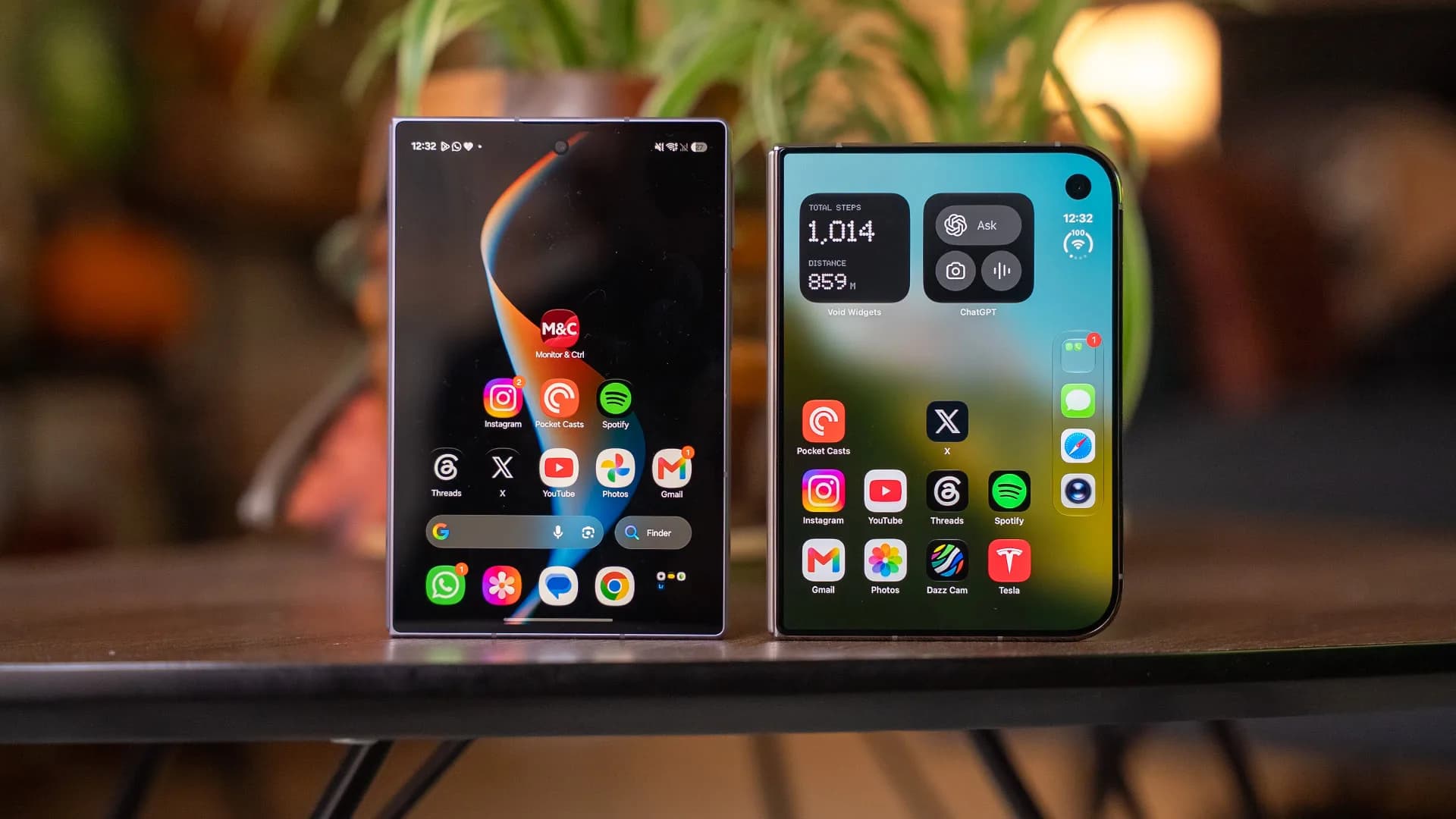
Screen real estate matters. The Z Fold 8 is taller than the iPhone Duo, letting more content fit above the keyboard without scrolling. That’s useful for messaging, email, and web browsing. But iOS’s transparent navigation bars and OneUI’s opaque ones effectively neutralize that advantage, when font size and toolbars are adjusted, readable area ends up nearly identical.
The iPhone Duo’s horizontal rear camera bar makes gripping easier: you can rest your finger underneath it. On the Z Fold 8, the camera module sits where your finger naturally lands, creating an awkward hold. And while the iPhone Duo’s rounded corners improve ergonomics, left-handed users still feel a sharp edge on the outer screen’s corner.
Apple’s under-display selfie camera on the inner screen delivers uninterrupted visuals, a major win for media consumption and multitasking. It sacrifices low-light selfie quality, but the reviewer points out that two better alternatives exist: the front-facing outer screen camera and the main rear array. Face Unlock isn’t available on the inner display due to sensor limitations, though Apple may fix that in later hardware.
The Z Fold 8’s hinge supports infinite positioning, useful for propping the phone on a desk or using it hands-free. The iPhone Duo’s hinge doesn’t offer that flexibility. And while OneUI isn’t the reviewer’s preference, its software-level adaptability (like adjustable keyboard height and font scaling) helps compensate for hardware constraints.
There’s no verdict. The reviewer explicitly says cross-shopping between the two is unlikely, OS loyalty dominates hardware preferences. Still, if forced to choose between a Galaxy Z Fold 8 running iOS and an iPhone Duo, they’d pick the Z Fold 8: lighter, thinner, taller, and more versatile in posture.
But the ideal device, they say, would merge the best of both: the iPhone Duo’s rounded corners and cleanly inner display, plus the Z Fold 8’s weight, height, and hinge.
Neither phone is a replacement for the other. They’re parallel experiments, one from a company entering foldables for the first time, the other from one refining them for eight years. What comes next will depend less on who wins today, and more on how quickly each learns from the other’s compromises.
MDFiled by The Mobile Desk
Phones from leak to launch to price cut: what was announced, what it costs where, and when it goes on sale. Indian launches and prices included, not appended.
More from this desk →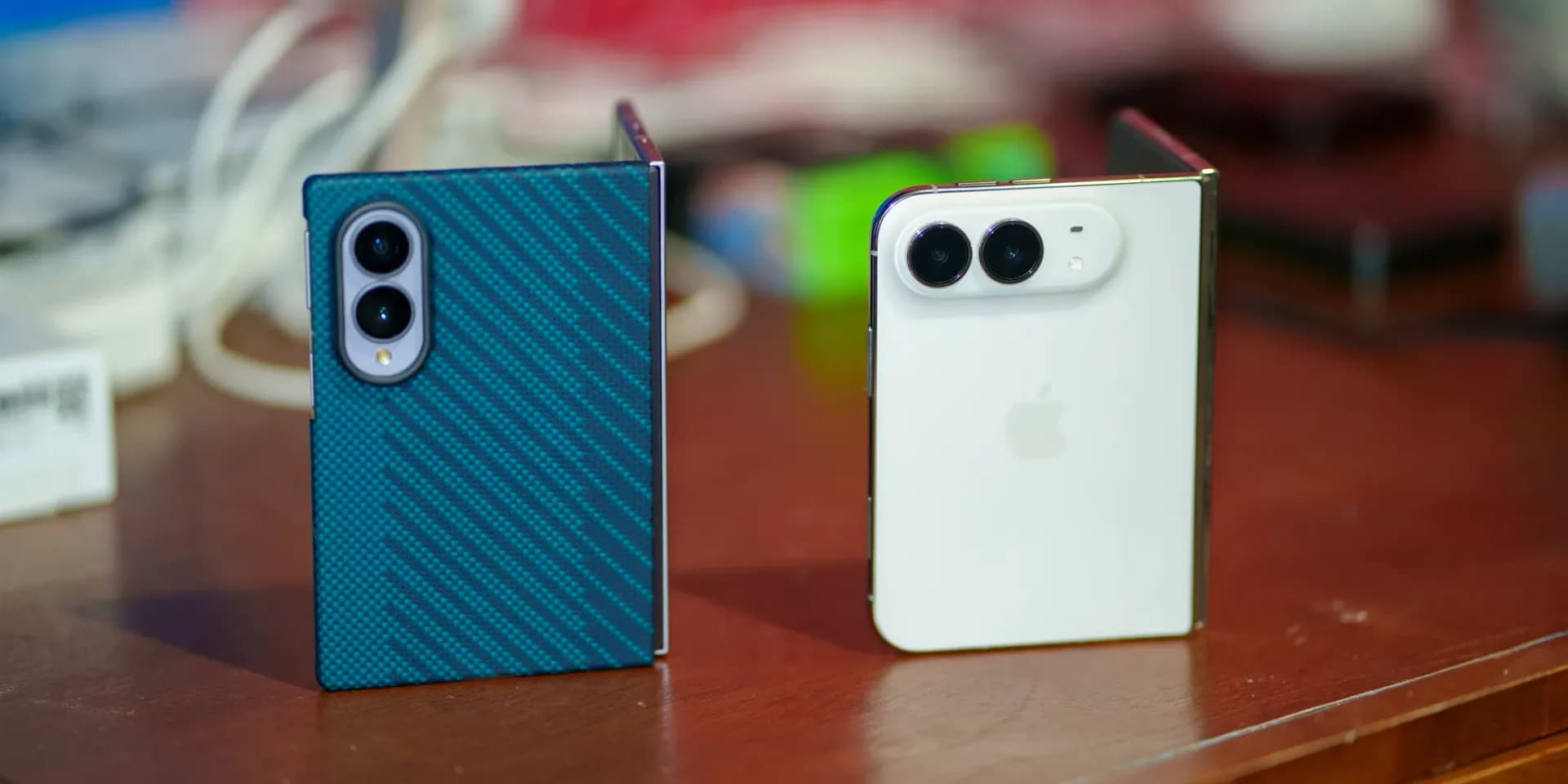
Be the first to comment
Join the argument. No password, just your email or a passkey.