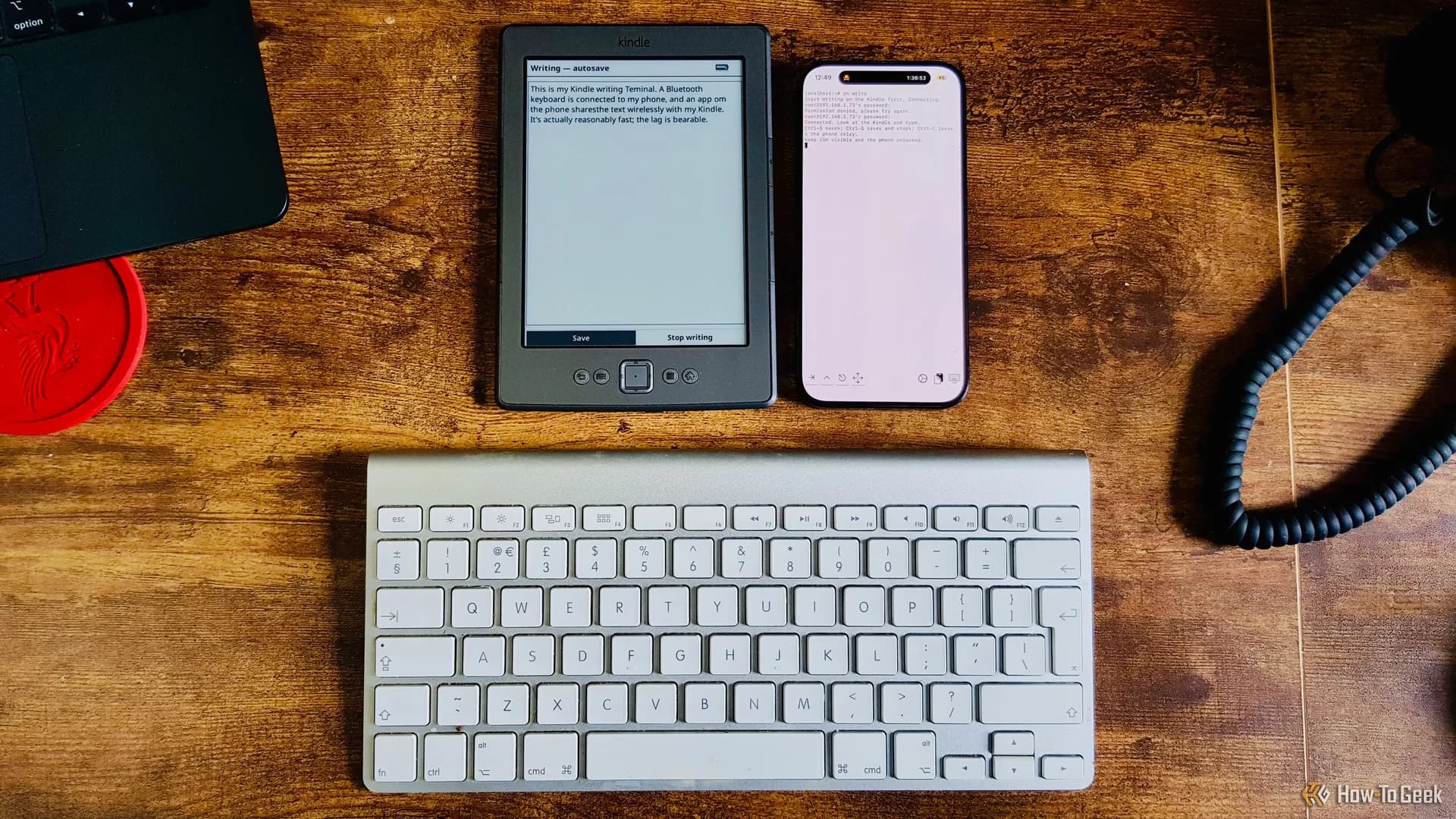
The Kindle app isn’t the story. The story is what people are doing with the Kindle hardware — specifically, jailbreaking older Kindles to run custom writing environments. A How-To Geek report published Sunday details one user’s setup: a fourth-generation Kindle, long abandoned by Amazon’s software updates, now running KOReader with an SSH-based typing pipeline from a Bluetooth keyboard via an iPhone running iSH (a Linux shell app). No cloud sync. No notifications. No browser. Just keystrokes → Kindle screen → autosaved text file → manual export to laptop for editing. It’s not an app launch. It’s a quiet, low-tech revolt against attention economics, using obsolete hardware as a deliberate constraint. The Kindle 4’s E-Ink display refreshes slowly, yes. But that slowness is part of the point. Characters appear with a slight delay, cursor movement feels deliberate, and the screen stays readable in direct sunlight where laptops wash out. The phone stays in a pocket, dimmed, running iSH in the foreground only to relay input. Distraction isn’t reduced. It’s physically removed from the workspace. This isn’t about replacing word processors. It’s about separating drafting from editing: first draft on Kindle, polish on laptop. The setup requires no new hardware, just an old Kindle, any Bluetooth keyboard, and an iPhone with iSH. Amazon doesn’t support it. There’s no official app, no store listing, no update path. It works because the Kindle’s Linux-based firmware remains accessible, and because tools like KOReader and iSH keep evolving outside Amazon’s control. No price. No release date. No roadmap. Just a working proof that distraction-free writing isn’t a feature. It’s a configuration.
Kindle app: no new app launched, but users jailbreak old Kindles for distraction-free text
No new Kindle app launched. But users are jailbreaking old Kindles to build bare-metal writing terminals—and it’s working.
By Patch Notes
The Software Desk · (4 hours ago)
Reported from
How this story was made
Written by the Hitechreports desk from the reporting credited above, with facts attributed to their original publishers. We do not test devices ourselves; anything about performance, battery life or cameras comes from the outlets that did. Prices are as reported at the time of writing. Editorial policy · Report an error
Filed by The Software Desk
Apps, platforms, operating system releases, security fixes and the features arriving in them.
More from this desk →Read next
More Apps & Software →
Amazon Launches New Android Tablets With Alexa, Starting at $230
Amazon has introduced a new family of Android tablets built around Alexa and a built-in Kindle feature, with prices starting at $230, per a 9to5Toys report published Sunday.

Amazon Kindle Reader Brightness Memory Solves Daytime Battery Drain
A handy setting trick on the Amazon Kindle reader ties front light levels directly to dark and light modes, preventing accidental battery drain during daytime reading sessions.
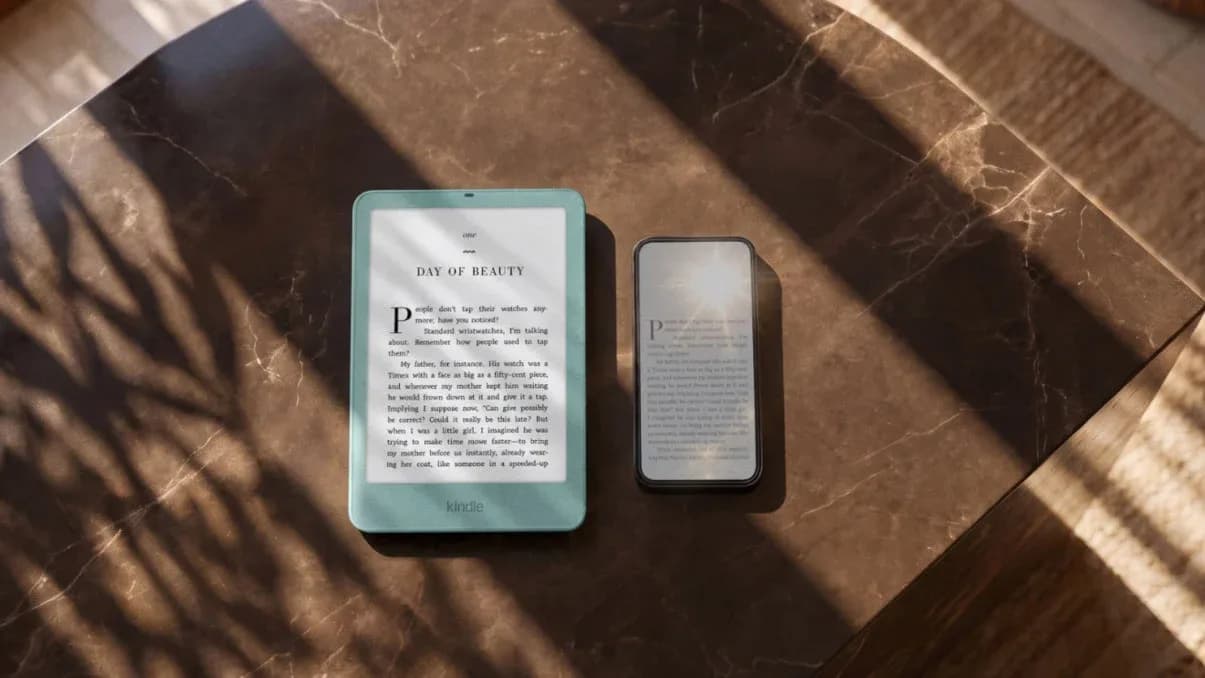
Kindle 2026 light bleed confirmed: Amazon offers free replacements for base model
Amazon is replacing early units of the base Kindle 2026 due to a hardware-level light bleed defect — visible LED spill along screen edges, especially in dark mode or at high front-light settings.
Be the first to comment
Join the argument. No password, just your email or a passkey.