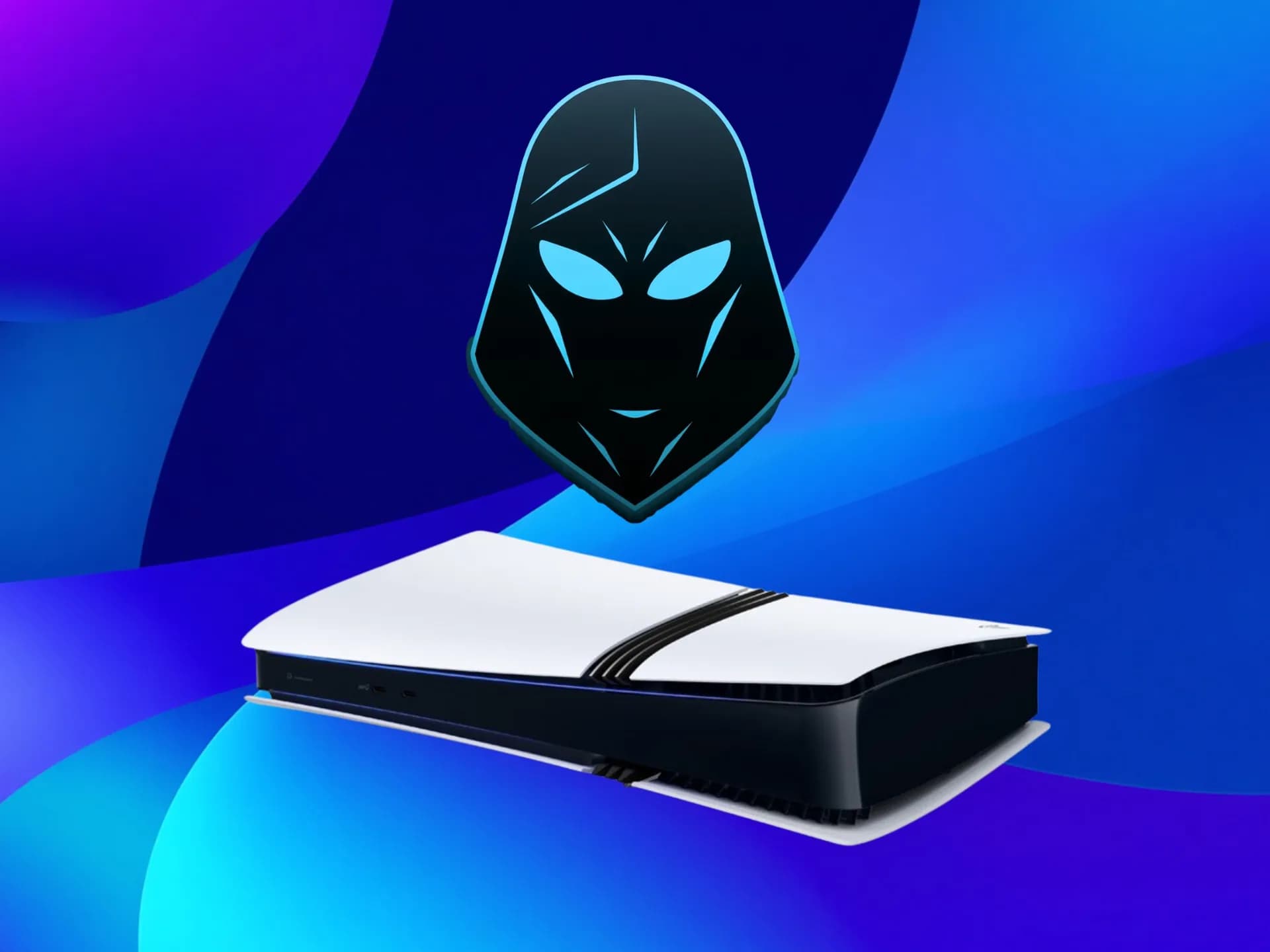
A modified Sony PlayStation 5 can now act as a dedicated home artificial intelligence rig. Community tinkerers found a way to repurpose the console's unified memory and graphics silicon, squeezing enough performance out of the system to run large language models locally while sipping less than 90 watts of electricity.
The experiment began when a Reddit user going by u/metover released an unofficial build of llama.cpp tailored for hacked PlayStation 5 hardware. That initial iteration relied on the console's main processor, a setup that locked down memory allocations and left barely 6GB of usable space for models to load. For anyone hoping to host anything larger than tiny test scripts, that limit proved too tight.
Another homebrew developer, posting as u/AdIllustrious7246, bypassed the bottleneck by rewriting the execution pipeline. Instead of leaning on the CPU, the project shifted processing duties onto the console's AMD graphics architecture. Running llama.cpp natively over Vulkan through Mesa's open-source RADV driver expanded usable memory capacity to 11.4GB.
Pushing the Silicon
That extra headroom allowed the console to fit Qwen3.8-27B, an ambitious 27-billion-parameter model that would typically demand 54GB of RAM at uncompressed 16-bit precision. To make it squeeze into the PlayStation 5, the model was crushed down with aggressive 2-bit quantization under the IQ2_XXS profile, occupying about 6.8GB.
Paired with a 64,000-token context window, memory saturation reached 91 percent. The console sustained 20.9 tokens per second on the 27B model, maxing out the GPU at 100 percent load while the CPU sat nearly idle at 2 percent. Lighter architectures performed faster still. Gemma 4 E4B posted 61 tokens per second, and Llama 3.2 3B reached 124 tokens per second.
Thermal behavior stayed remarkably subdued throughout the stress test. The modified hardware drew roughly 86W from the wall and hovered around 54 degrees Celsius, backed by the 448GB/s bandwidth of the console's 16GB GDDR6 memory bus. It highlights how consumer gaming boxes compare against desktop rigs, where achieving similar memory bandwidth often requires costly workstation GPUs.
Yet the stunt comes with sharp trade-offs. Severe 2-bit quantization strips out nuanced reasoning and elevates error rates, meaning text outputs will stumble where full-precision weights shine. Getting this running also requires an exploited firmware version, which voids the console warranty and risks permanent bans from the PlayStation Network.
It sits alongside other wild DIY computing setups, including an earlier experiment where someone linked six separate gadgets, including a Samsung Galaxy S24+, to run a massive 120-billion-parameter model. Developers in the homebrew community continue to refine the Vulkan driver pipeline, testing how far custom Mesa patches can push memory allocation before hitting hard system walls.
CDFiled by The Computing Desk
Laptops, desktops, processors, graphics cards and the operating systems that run on them.
More from this desk →


Be the first to comment
Join the argument. No password, just your email or a passkey.