Android phones have enough computational headroom to host language models without routing queries through a remote server. Open-source software is making that process accessible without requiring command-line tools.
PocketPal AI, an open-source client available through GitHub and the Google Play Store, enables handsets to run quantized language models directly on device. The app relies on llama.cpp to execute GGUF format model files using the phone's CPU, GPU, or supported neural processing hardware. That lets users download open-weight models from Hugging Face, switch off their wireless connections, and converse with an AI assistant in total isolation from the internet.
Running models locally presents steep hardware demands compared to standard mobile apps. PocketPal recommends a minimum of 6GB of system RAM for entry-level small models, stepping up to 8GB or more for heavier architectures. Newer handsets packing faster processors and generous memory pools handle the workload best, because the model weights must reside directly in working memory during generation.
Inside the app, users can pull down models directly or import files from Hugging Face repositories. Supported architectures include Google's Gemma series, Qwen, and Phi. In real-world phone setups, small models like Gemma 3 1B can be loaded into memory for prompt handling. PocketPal also provides preconfigured assistant profiles called Pals. Pip is a general-purpose text helper, while Lookie handles real-time visual analysis using the phone's camera feed. Audio feedback is supported through voices such as Kokoro, Supertonic, Kitten, and standard Android system speech engines.
Local inference eliminates data transmission, which ensures user prompts never land on advertising or corporate training servers. It also guarantees functionality in airplane mode, during flights, or across areas with patchy cellular reception. Handset owners retain full control over which model weights they install or swap.
The compromises remain evident. On-device generation speeds are noticeably slower than the rapid-fire output delivered by cloud clusters powering Google Gemini or ChatGPT. Smaller parameter models cannot match the reasoning depth of multi-billion-parameter cloud systems. Because the models operate entirely offline, they cannot pull live web links, deliver breaking news, or reference recent information.
PocketPal is not the sole tool exploring on-device execution. More technical options exist across Android, including MLC Chat for hardware-tailored inference, Google AI Edge Gallery for company-built mobile models, and Ollama deployed through terminal environments like Termux. Handset memory configurations continue to expand, making local model management a viable privacy measure for sensitive mobile queries.
ADFiled by The AI Desk
Models, assistants and the companies and chips behind them, reported from what was released and what was claimed, with the difference kept clear.
More from this desk →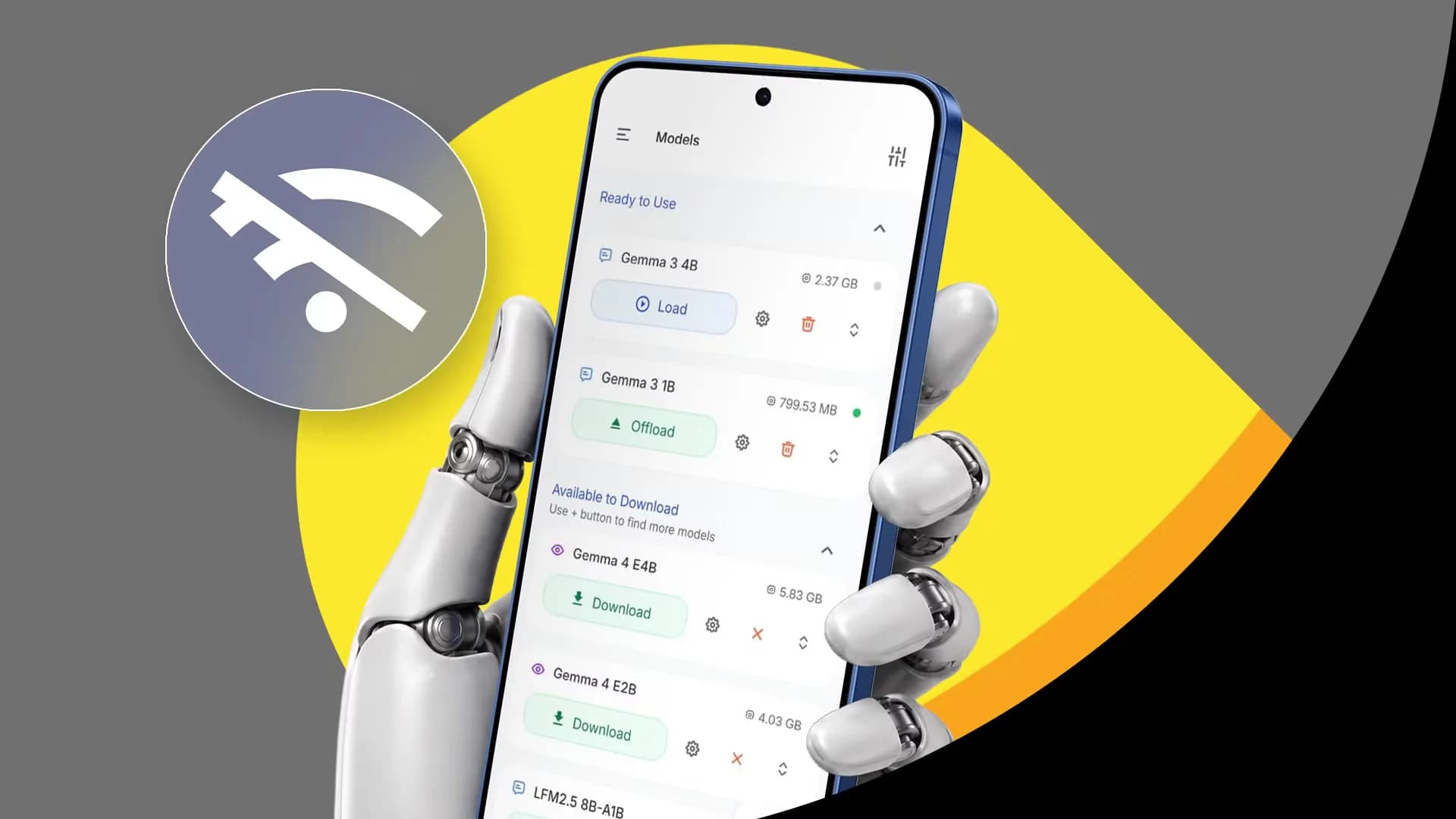
Be the first to comment
Join the argument. No password, just your email or a passkey.