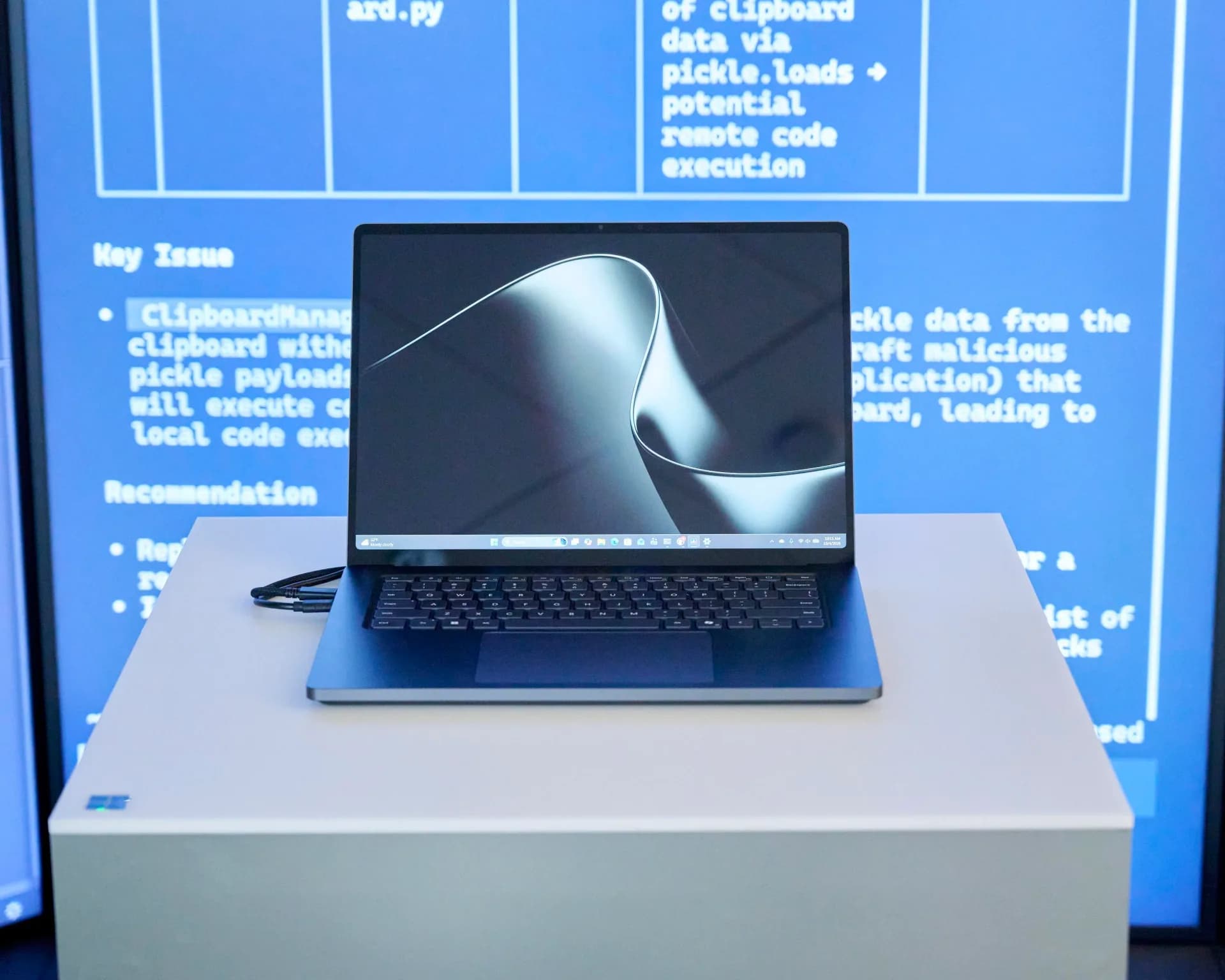
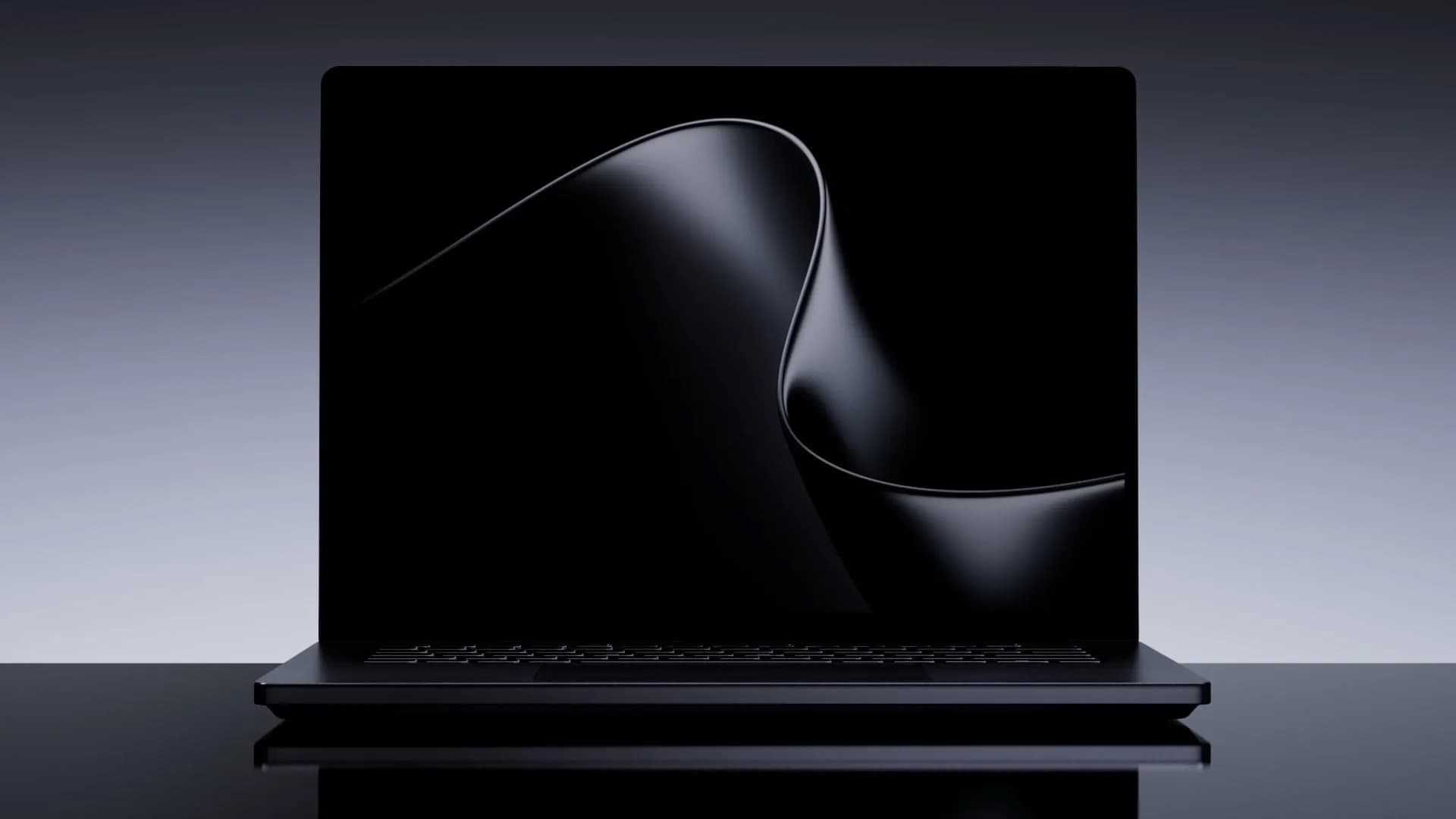
Microsoft Surface Laptop Ultra launches globally at $2,599.99 — a Windows on Arm laptop built not for portability, but for local AI workloads. It runs Nvidia’s RTX Spark platform, the first consumer device to ship with the N1X chipset and a 6,144-core GPU. No Intel or AMD version is planned.
This is Arm-only, and it’s designed around unified memory and GPU acceleration, not CPU muscle. The CPU is a MediaTek part, not Qualcomm’s Oryon, not Apple’s M-series, not custom silicon. That’s by design. And it shows up in the numbers: Geekbench 7 scores 2,630 single-core and 23,678 multi-core when plugged in.
The GPU test hits 116,055. For comparison, Apple’s M5 Max outperforms it across CPU benchmarks, and dominates battery life. A base-spec M1 MacBook Air handles dev, Lightroom, and light video editing on battery just fine. The Surface Laptop Ultra does not.
Its real-world battery life is two hours under AI or GPU-heavy loads. Ten hours only if you’re browsing, typing, and keeping the power profile locked to ‘Efficient’. So yes: keep it plugged in. Always.
The included 140W wall adapter is the highest-wattage power supply ever shipped with a Surface. The cable is comically short. Microsoft sells a longer one separately. Fans spin loud.
The chassis gets hot. But no thermal throttling yet, at least not in early testing. Storage and RAM are tightly coupled: 128GB RAM only ships with 1TB storage ($5,899.99). Want 2TB?
You drop to 64GB RAM, and save $1,200. Gaming works, Cyberpunk 2077, Gears of War: E-Day, but it’s running in emulation, and the unit reviewed wasn’t meant for that. Nvidia’s own positioning is clear: the 24GB and 32GB RAM configurations target gamers and creators. The 128GB model targets developers fine-tuning Qwen3.6 35B and Qwen3.8 27B models locally.
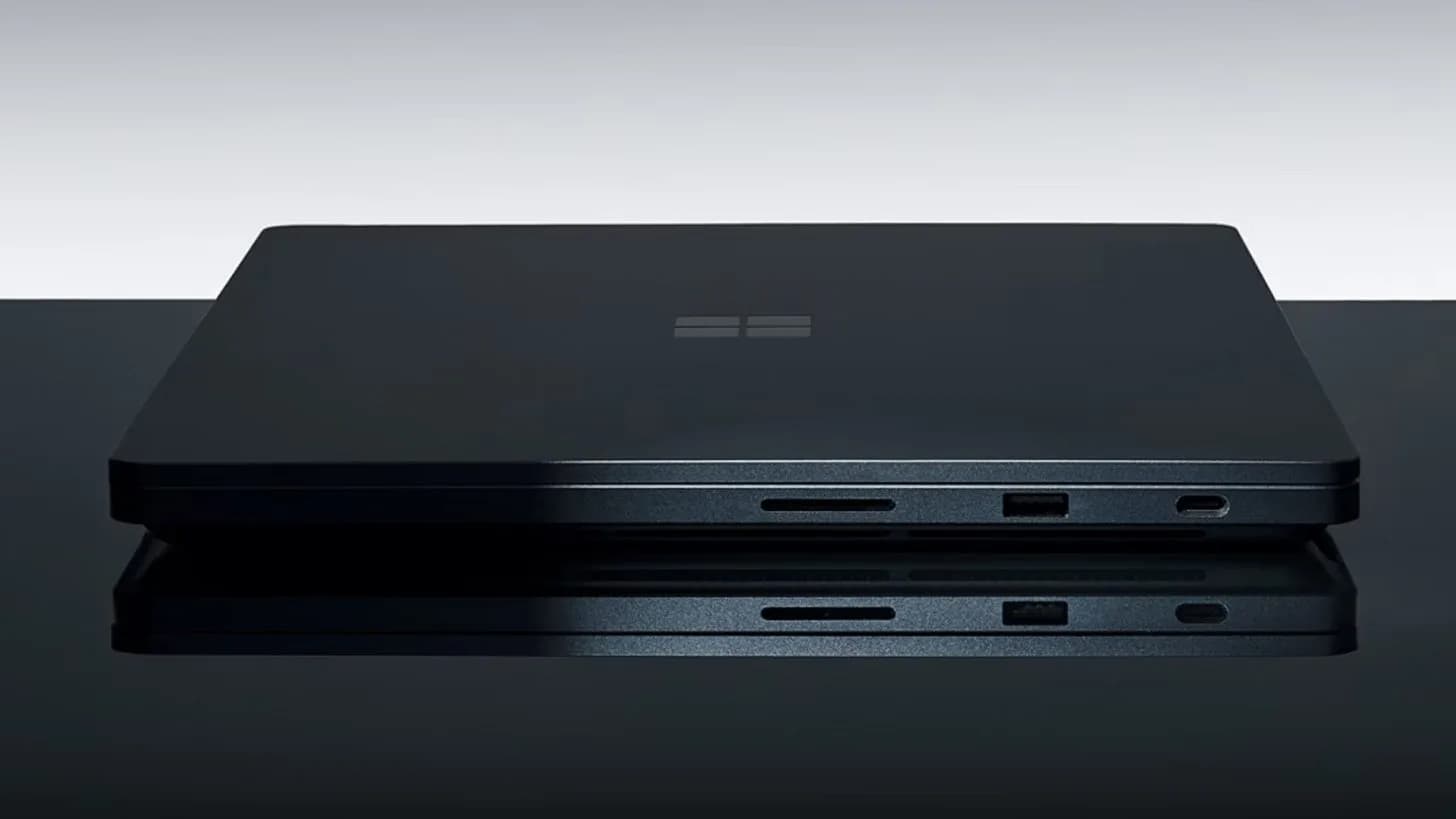
No cloud API tokens. No subscription fees for inference. Just raw, local, power-hungry AI. It ships with Microsoft’s new Magnetic Connect port, also a USB-C, and supports haptic trackpad gestures.
No software compatibility red flags yet: Nvidia claims every Windows app and game runs. No confirmed exceptions. Price in India? Not stated in sources.
US launch is confirmed. Availability? Not specified, but pre-orders are live. Next step: Adam Conway’s DGX Spark comparison on XDA, and the full review, which will include token-per-second metrics, sustained thermal behavior, and how it stacks up against Apple Silicon in real developer workflows.
Not as a laptop. As an AI workstation you carry.
CDFiled by The Computing Desk
Laptops, desktops, processors, graphics cards and the operating systems that run on them.
More from this desk →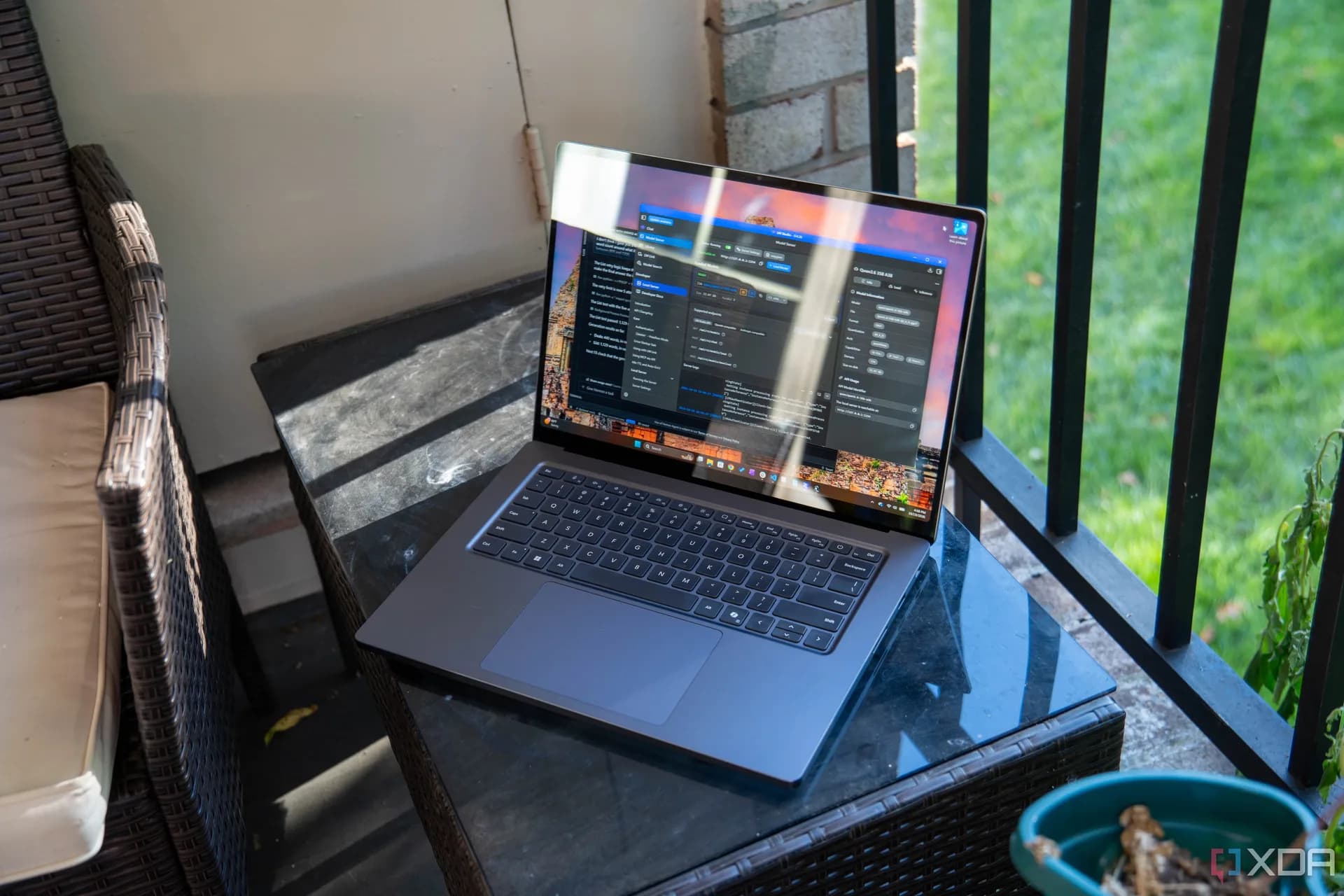
Be the first to comment
Join the argument. No password, just your email or a passkey.