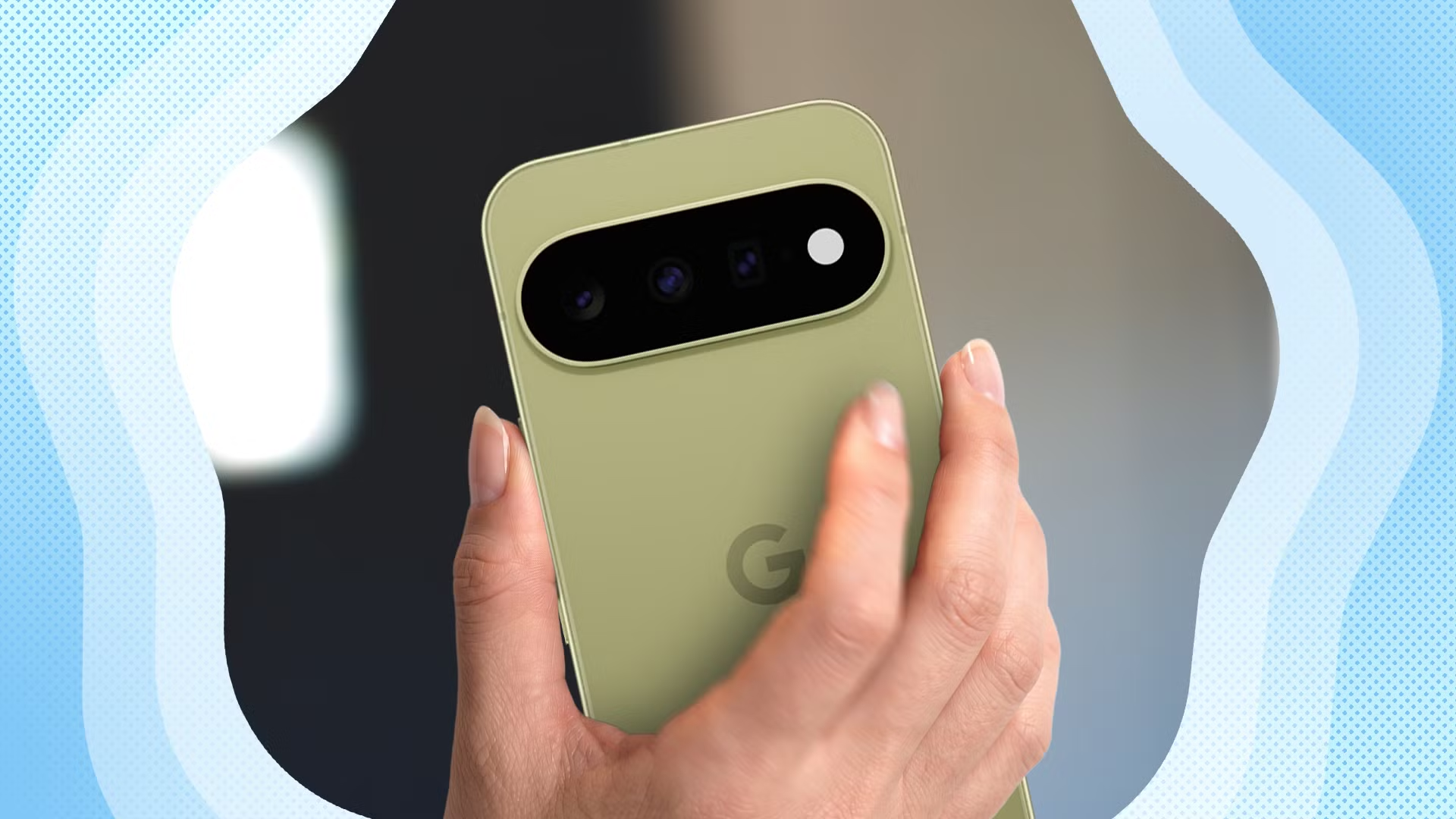
Tap, Tap — an open-source Android app, brings Pixel-style back-tap gestures to any Android phone running 7.0 or later. It’s not a mod, not a kernel patch, and not tied to Google’s proprietary sensors: it uses the phone’s existing accelerometer and gyroscope to detect double- and triple-taps on the back of the device. No Pixel required. No $1,999 upgrade needed. Just install, configure, and tap. The app is free, MIT-licensed, and hosted on GitHub. It supports over 50 actions out of the box: launching apps, toggling flashlight, simulating button presses, taking screenshots, opening Gemini (or any assistant), and triggering Tasker tasks. Unlike Google’s Quick Tap. Which ships only on Pixel 4a and newer, Tap, Tap adds flexibility Pixel doesn’t offer: conditional “Gates” that let you restrict gestures by screen state (e.g., only when screen is on), active app (e.g., never during a call), or even time of day. You can chain multiple actions per tap, adjust sensitivity per device model, and fine-tune false-positive triggers. Critical for phones with thick cases or curved backs. Setup is manual: no Play Store listing, no auto-install. Users download APKs from GitHub releases, enable Install Unknown Apps, then configure actions in-app. Double-tap defaults to nothing. Triple-tap defaults to nothing. You choose. That means Tap, Tap isn’t just a clone, it’s a toolkit. A double-tap can open Gemini and mute notifications and dim the screen, if you’ve wired it up in Tasker first. A triple-tap can screenshot, save it to a private folder, and send a Telegram alert. All without touching a single UI element. Google’s implementation remains hardware-bound and limited to two gestures (double-tap only) with no conditional logic. Tap, Tap has neither constraint. Availability is immediate: the latest release works on Android 7.0+. No carrier approval. No OEM permission. No waiting for a software update. What’s next? The GitHub repo shows active development, recent commits add support for vibration feedback tuning and improved low-power detection. No roadmap is published, but the maintainer has confirmed plans to explore gesture calibration via on-device machine learning in a future release. That won’t change the fact that, as of today, anyone with a five-year-old Samsung Galaxy A51 or a Xiaomi Redmi Note 10 can now do what only Pixel owners could last year. And do it more precisely.
Tap, Tap App Brings Pixel Back-Tap Gestures to All Android Phones
An open-source app called Tap, Tap replicates — and extends — Google’s Pixel Quick Tap for any Android phone running 7.0 or later. No Pixel required.
By Launch Day
The Mobile Desk · (2 hours ago)
Reported from
How this story was made
Written by the Hitechreports desk from the reporting credited above, with facts attributed to their original publishers. We do not test devices ourselves; anything about performance, battery life or cameras comes from the outlets that did. Prices are as reported at the time of writing. Editorial policy · Report an error
Filed by The Mobile Desk
Phones from leak to launch to price cut: what was announced, what it costs where, and when it goes on sale. Indian launches and prices included, not appended.
More from this desk →Read next
More Smartphones →
Google Messages App Adds Cloud Gemini Scanning for Unknown Senders
Google Messages is adding an opt-in Enhanced protection mode that routes suspicious texts to cloud Gemini models, hunting down conversational scams that on-device filters miss.
Google Messages Brings Gemini AI Scam Detection to Android
Google is rolling out an opt-in Enhanced protection mode for Google Messages that uses Gemini AI to spot scammers hiding behind slow-burn conversations, plus new call-forwarding and screen-share protections for Android.
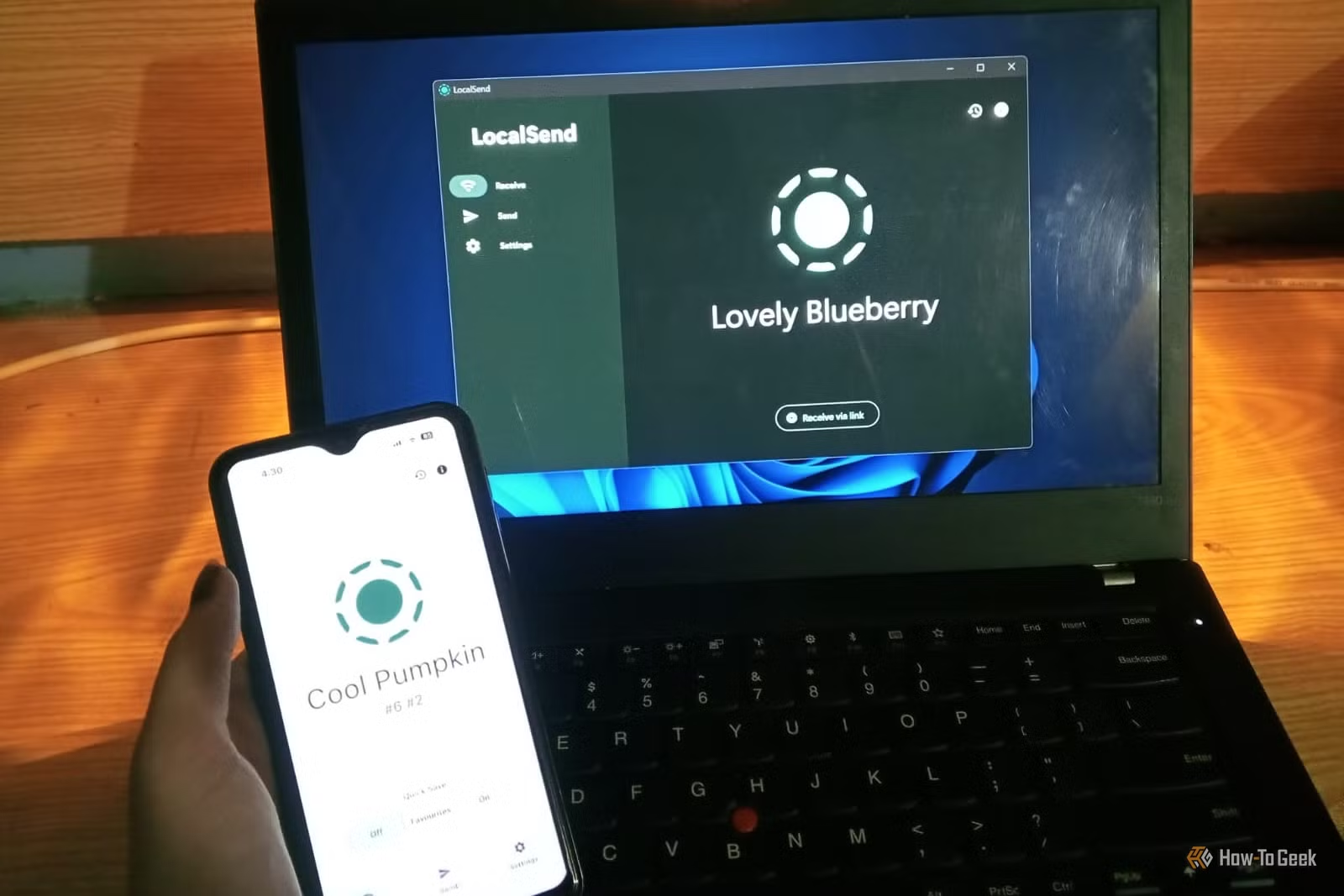
Open Source File Sharing Tool LocalSend Bridges Linux Windows And Phones
LocalSend offers cross-platform file transfers across Linux, Windows, macOS, Android, and iOS over local networks, cutting out cloud storage and cables without locking users into a single brand ecosystem.
Be the first to comment
Join the argument. No password, just your email or a passkey.