Windows 11 may soon let Android phones double as wireless second monitors — not as a mirroring tool, but as an extended desktop space. The capability, codenamed 'Extend display', appears in new code inside Microsoft’s Link to Windows app, spotted by Windows Latest and reported by How-To Geek.
This isn’t screen mirroring. It’s desktop extension: part of the Windows desktop would render on the Android device, turning it into a functional secondary display. The code references a dedicated 'Phone as Display' system with initiation options from either the PC or the Link to Windows app. Video codecs named include H.264 and HEVC. Display metadata like resolution and refresh rate are also referenced, confirming the PC encodes its desktop as video, which the Android device decodes and displays.
No hardware specs, connection method, or latency figures are disclosed. The code does not clarify whether Extend display will rely on Wi-Fi, USB, or both. Nor does it list supported resolutions, refresh rates, or minimum Android versions. A session reportedly times out after 60 seconds if the first video frame fails to appear, and may terminate if the PC locks, the connection drops, or the phone’s display receiver crashes.
Practicality remains questionable. A phone’s small screen limits productivity gains, perhaps fitting only a messaging pane or quick reference window. Tablets fare better: Samsung’s existing Second Screen feature already supports Galaxy tablets for similar use cases. Third-party tools like spacedesk require separate PC drivers and mobile apps, adding friction. Integrating this into Link to Windows could simplify setup, but only if Microsoft ships it.
Compatibility is another open question. Current Phone Link features like screen mirroring work only on select Android models, including devices from Samsung, OPPO, Realme, ASUS, Vivo, iQOO, Honor, OnePlus, and Xiaomi. Whether Extend display inherits that limited support is unknown. Microsoft’s official support page makes no mention of the new feature.
There is no announced launch date, no beta timeline, and no pricing, because there is no product yet. This is pre-release code, not a shipping feature. It signals intent, not availability.
For now, users still need external monitors, docking stations, or third-party apps to expand their Windows workspace. But if Microsoft ships Extend display, it could reshape how people use Android devices alongside PCs, especially those with larger tablets or foldables.
The next step is confirmation: a public preview, developer documentation, or a Windows Insider build with the feature enabled.
CDFiled by The Computing Desk
Laptops, desktops, processors, graphics cards and the operating systems that run on them.
More from this desk →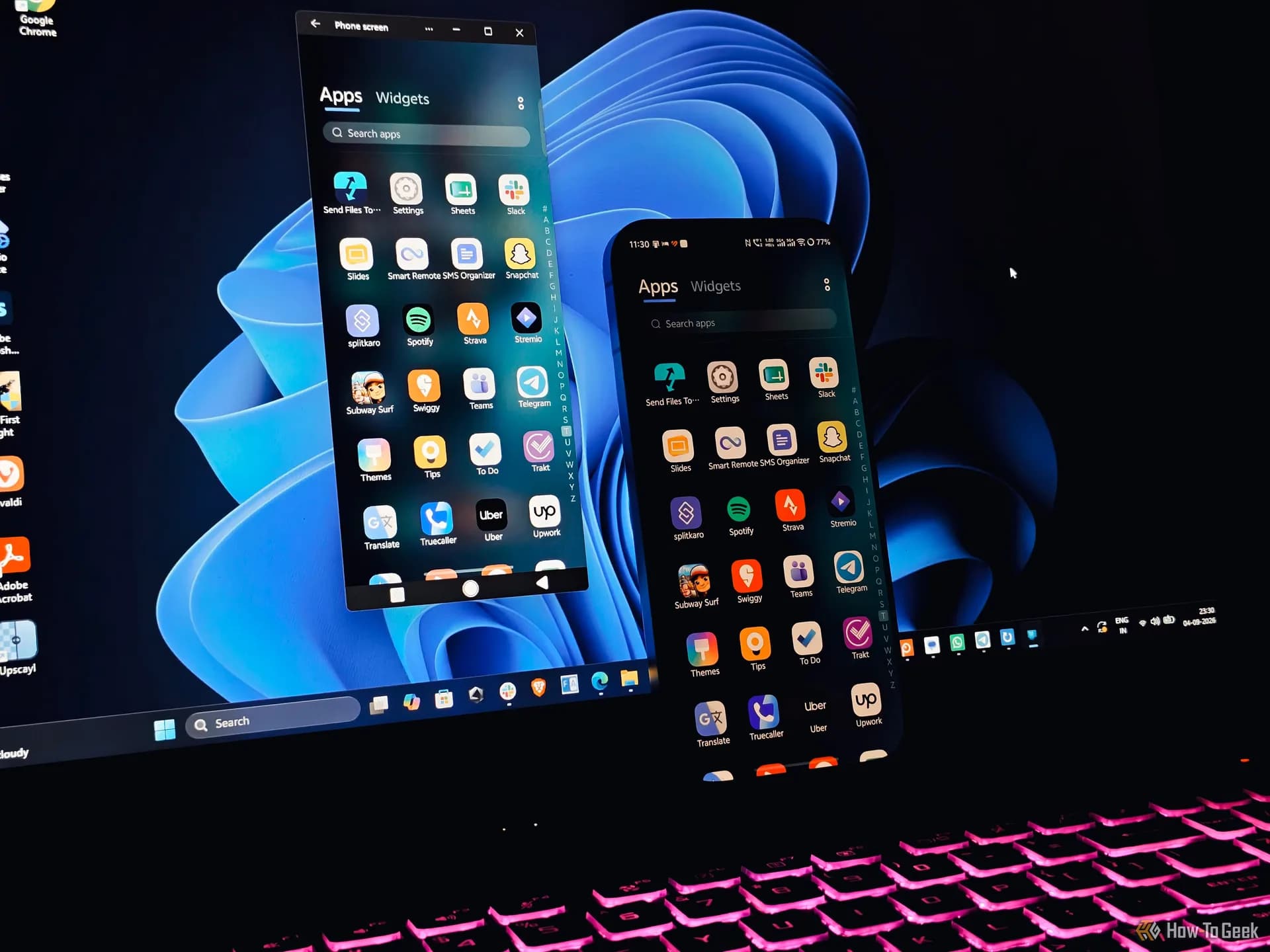


Be the first to comment
Join the argument. No password, just your email or a passkey.