Microsoft has started wiring Windows 11 to support a new chip instruction set that Intel and AMD have spent years developing together, well before the processors that need it reach store shelves.
The change showed up in Windows 11 Insider Preview Build 29695.1001, released through the Experimental (Future Platforms) channel, where Windows enthusiast Xeno spotted a new toggle on X. The setting reads "Let Windows use APX for better performance," and switching it on requires a restart. APX stands for Advanced Performance Extensions, an addition to the x86-64 instruction set that Intel first introduced in 2023 and has since developed jointly with AMD through the x86 Ecosystem Advisory Group.
The headline change in APX is a doubling of general-purpose registers, from 16 to 32. Registers are the small pockets of memory built directly into a processor core, the fastest storage a chip has, and the more data that fits there, the less a CPU has to reach into slower system memory to keep working. APX also adds three-operand instruction forms and new conditional operations, both aimed at cutting down wasted instruction cycles.
Intel's own estimates, drawn from prototype simulations run against SPEC CPU 2017 Integer workloads, point to roughly 10 percent fewer memory loads, more than 20 percent fewer memory stores, and about 10 percent fewer instructions on APX-optimized code. Those are lab figures from simulated testing, not benchmarks from shipping chips, and Intel has been careful to frame them that way.
Microsoft's side of the work has been underway for a while. The company has already added processor feature detection and extended-state definitions to the Windows SDK, plus APX register handling and debugging support in WinDbg, the tool developers use to diagnose crashes at the code level.
On Intel's roadmap, APX support is expected to land in the consumer Nova Lake lineup and in Diamond Rapids Xeon server chips, both previously reported as APX-capable. AIDA64 has already built an APX-optimized SHA3 benchmark aimed at that hardware. AMD's path is less certain. Its upcoming Zen 6 architecture has no documented APX support in GCC 16, the open-source compiler toolchain developers use to check what a chip's instruction set actually supports, which points to Zen 7 as AMD's likely entry point. AMD hasn't confirmed that timeline.
None of this will do anything for CPUs already in laptops and desktops today. APX needs both a compatible processor and software recompiled to actually use the new instructions, so there's no free performance bump waiting in a driver update. Microsoft hasn't said when APX support might graduate out of the experimental channel into a mainstream Windows 11 release, and the Future Platforms track isn't tied to any specific version number.
For now, the toggle is a signal rather than a product. The real test comes once Nova Lake and Diamond Rapids ship and developers start compiling real applications against APX, something that will take both new silicon and new code before anyone can measure what the gains actually look like outside a lab.
CDFiled by The Computing Desk
Laptops, desktops, processors, graphics cards and the operating systems that run on them.
More from this desk →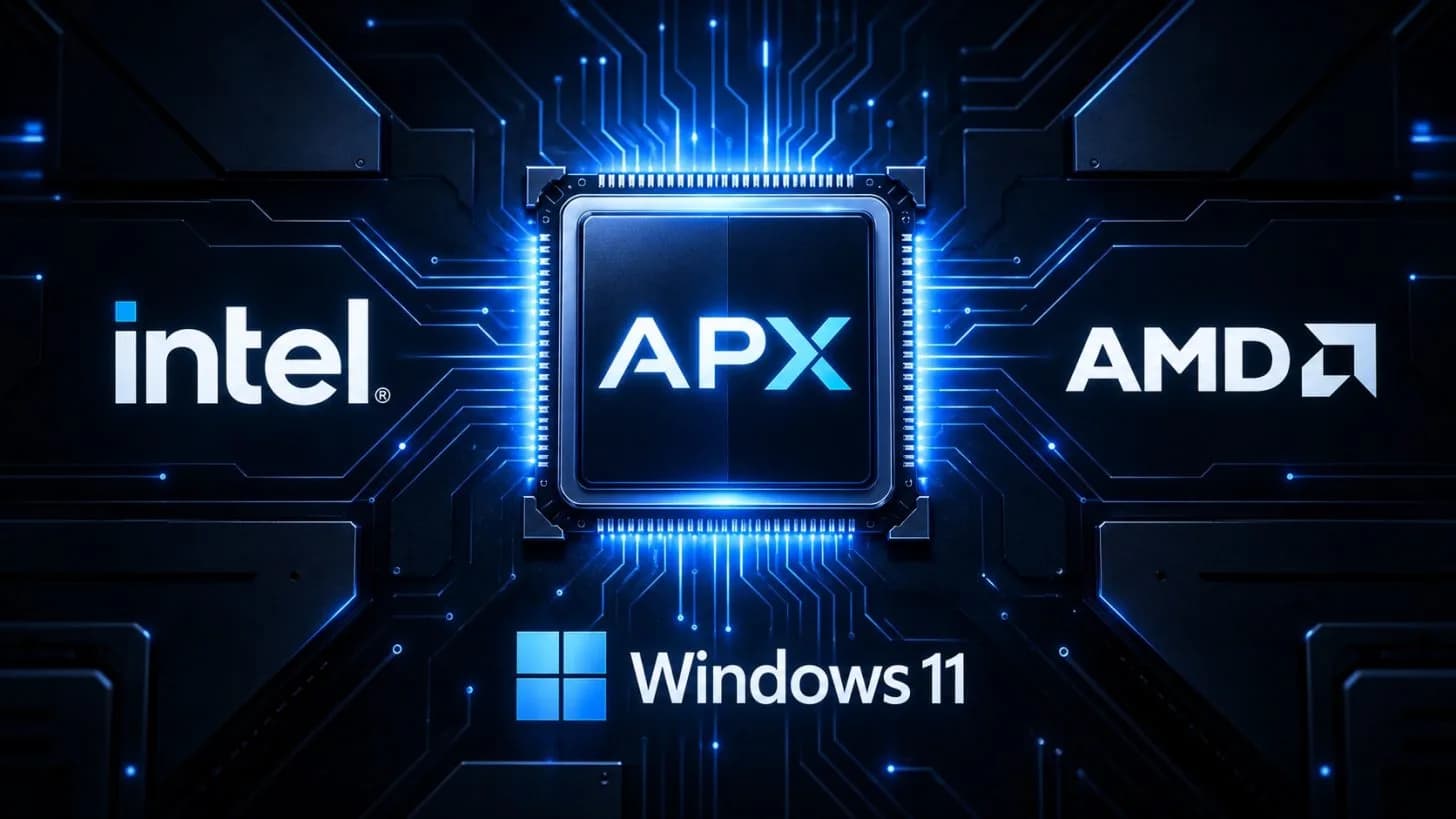


Be the first to comment
Join the argument. No password, just your email or a passkey.