The bootloader trap
Dual-booting Windows and Linux has long been an essential routine for developers, accompanied by the familiar dread of an operating system patch wiping out a bootloader. Partitioning a single solid-state drive between Windows 11 and an environment like Ubuntu frequently turns sour when routine Windows updates clobber GRUB tables. Recovering access typically demands a separate live USB drive and manual command-line repairs, an exercise that wastes time and strains patience.
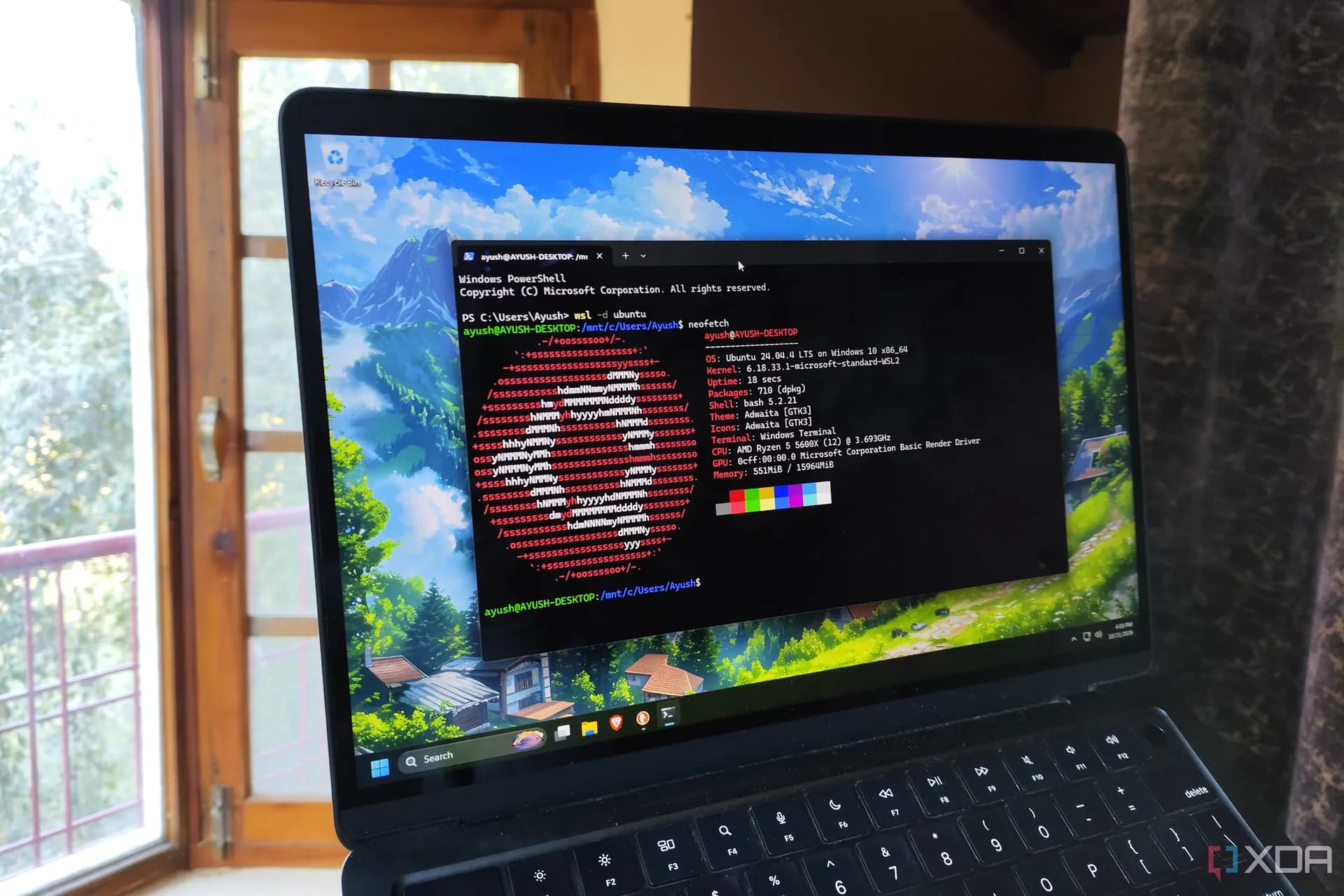
Rising solid-state drive prices make adding a dedicated secondary storage drive an expensive workaround for that vulnerability. That reality has pushed more programmers toward the Windows Subsystem for Linux (WSL), which eliminates partition headaches by running Linux distributions within a dynamically managed virtual disk. A complete installation containing the core WSL engine and an Ubuntu distribution occupies less than 15GB on the host drive. Instead of locking away 100GB or more behind an arbitrary partition boundary, the subsystem expands its storage footprint only as project dependencies grow.
Hardware access and day-to-day workflow
Resource overhead previously forced developers onto bare-metal hardware. Traditional virtual machines on platforms like Hyper-V draw heavily on host memory and processor cycles, and they often lack clean paths to use dedicated graphics silicon. WSL addresses that barrier with direct GPU acceleration. Heavy computational workflows, such as Python data scripts and local artificial intelligence models, can directly harness graphics cards like an Nvidia GeForce RTX 3080 Ti without significant performance penalties.
Be the first to comment
Join the argument. No password, just your email or a passkey.