AMD is finally bringing its machine-learning upscaler to lower-power hardware. FidelityFX Super Resolution 4, previously locked to desktop graphics cards, will arrive on APUs, gaming handhelds, and mobile platforms before 2026 wraps up.
The timeline comes directly from AMD's Jack Huynh, speaking to Korean outlet The Elec. According to Huynh, the company will widen the rollout of the AI-driven upscaler across its full hardware stack, specifically calling out laptop chips and portable devices.
That marks a sharp pivot in how AMD treats mobile silicon. When FSR 4 first arrived alongside the RDNA 4-based Radeon RX 9000 series, it stayed confined to top-tier hardware. AMD took more than a year just to clear it for older desktop hardware like the RDNA 3-powered Radeon RX 7000 line. Desktop gamers on RDNA 2-based Radeon RX 6000 hardware are still waiting, with their update slated for early 2027.
Now, mobile devices get to skip the queue.
Cutting down the model for integrated silicon
Putting machine-learning reconstruction on an APU requires a different playbook than running it on a desktop card with copious power and dedicated silicon. AMD is putting together a lighter, tuned model tailored for integrated graphics chips to deliver sharper frames without driving up latency.
That balance matters on battery-constrained hardware. Modern integrated graphics like the RDNA 3.5-based Radeon 8060S and Radeon 8050S rely on INT8 precision, unlike the hardware found in dedicated RDNA 4 boards. These chips simply do not have the raw horsepower to muscle through heavy reconstruction passes.
If the lighter model works, the impact on portable gaming will be immediate. Handheld gaming machines and slim laptops for gaming live and die by aggressive upscaling to keep modern titles playable at acceptable refresh rates. The current trade-off usually means blurry edges or jittery artifacting on lower resolutions.
Huynh did not name specific chip families or game partners during the disclosure, nor did he provide an exact calendar date beyond the end-of-year window. Whether existing handhelds get instant day-one patches or need updated platform drivers first will become clear as the rollout nears.
CDFiled by The Computing Desk
Laptops, desktops, processors, graphics cards and the operating systems that run on them.
More from this desk →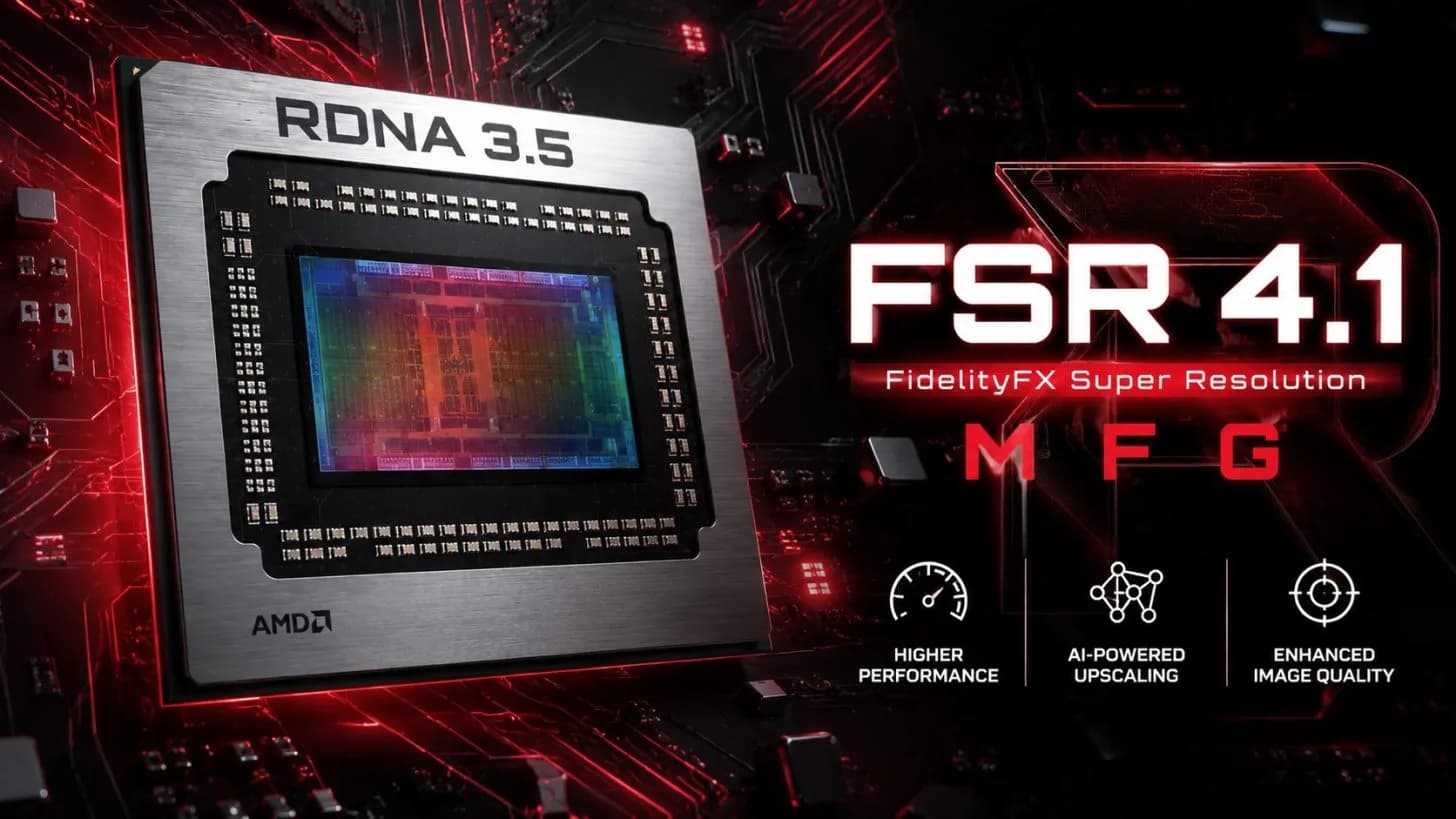
Be the first to comment
Join the argument. No password, just your email or a passkey.