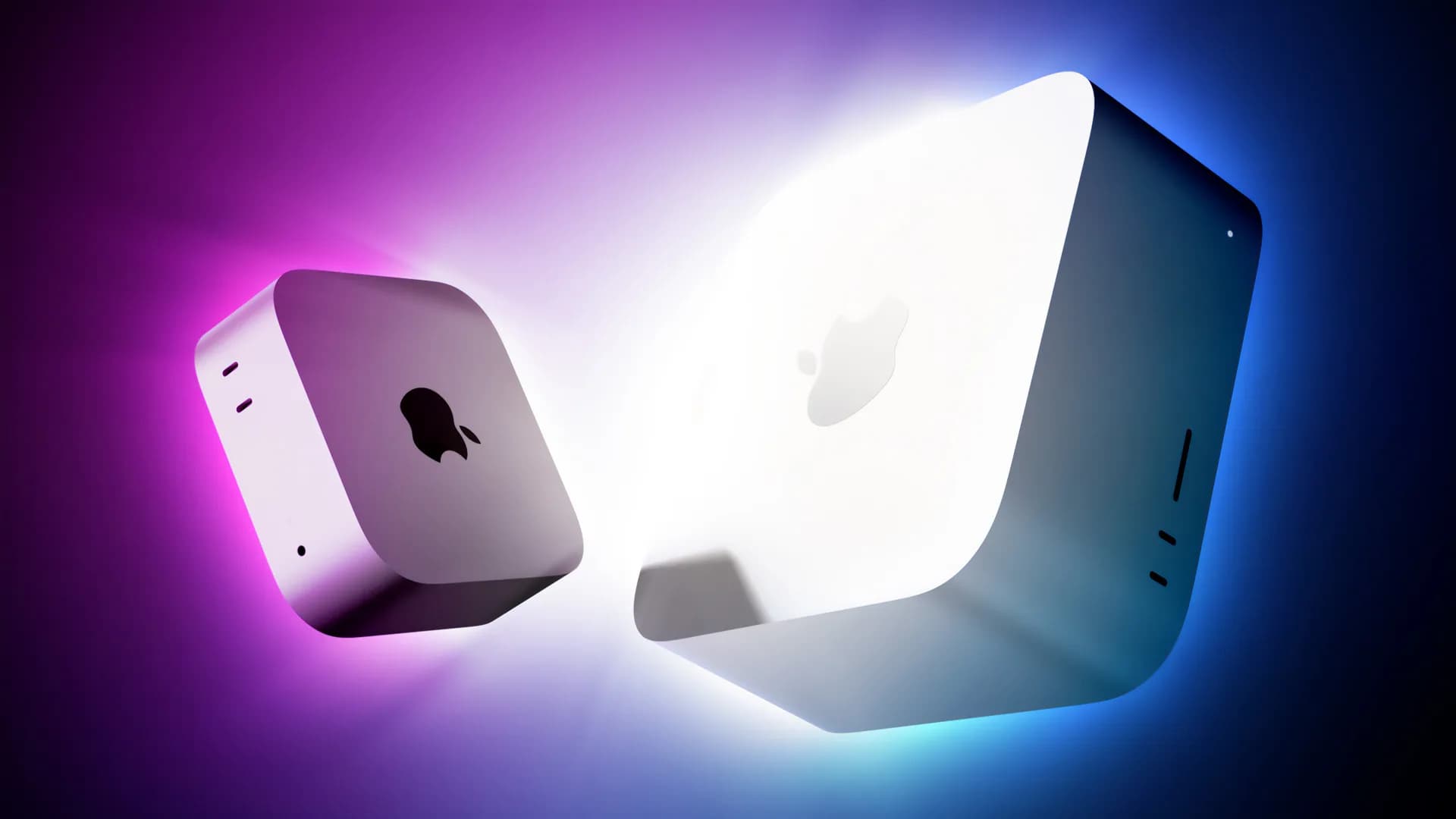
Running Meta's new Muse Spark Open model locally on Apple hardware is technically possible, but it comes with a punishing hardware bill. The open-weight software requires a minimum of two M5 Ultra Mac Studios outfitted with 512GB of unified memory each, or four separate machines packing 256GB apiece.
At a starting price of $5,499 for a base M5 Ultra Mac Studio, linking multiple systems together pushes the deployment cost into the tens of thousands of dollars. The steep requirement stems directly from the footprint of the AI model. Meta built Muse Spark Open with 816 billion parameters, keeping 42 billion active during live calculations. According to Apple's research, the compressed model weights demand around 493GB of room before any operational overhead is even factored in. That immediately exceeds the capacity of any single desktop Apple currently sells.
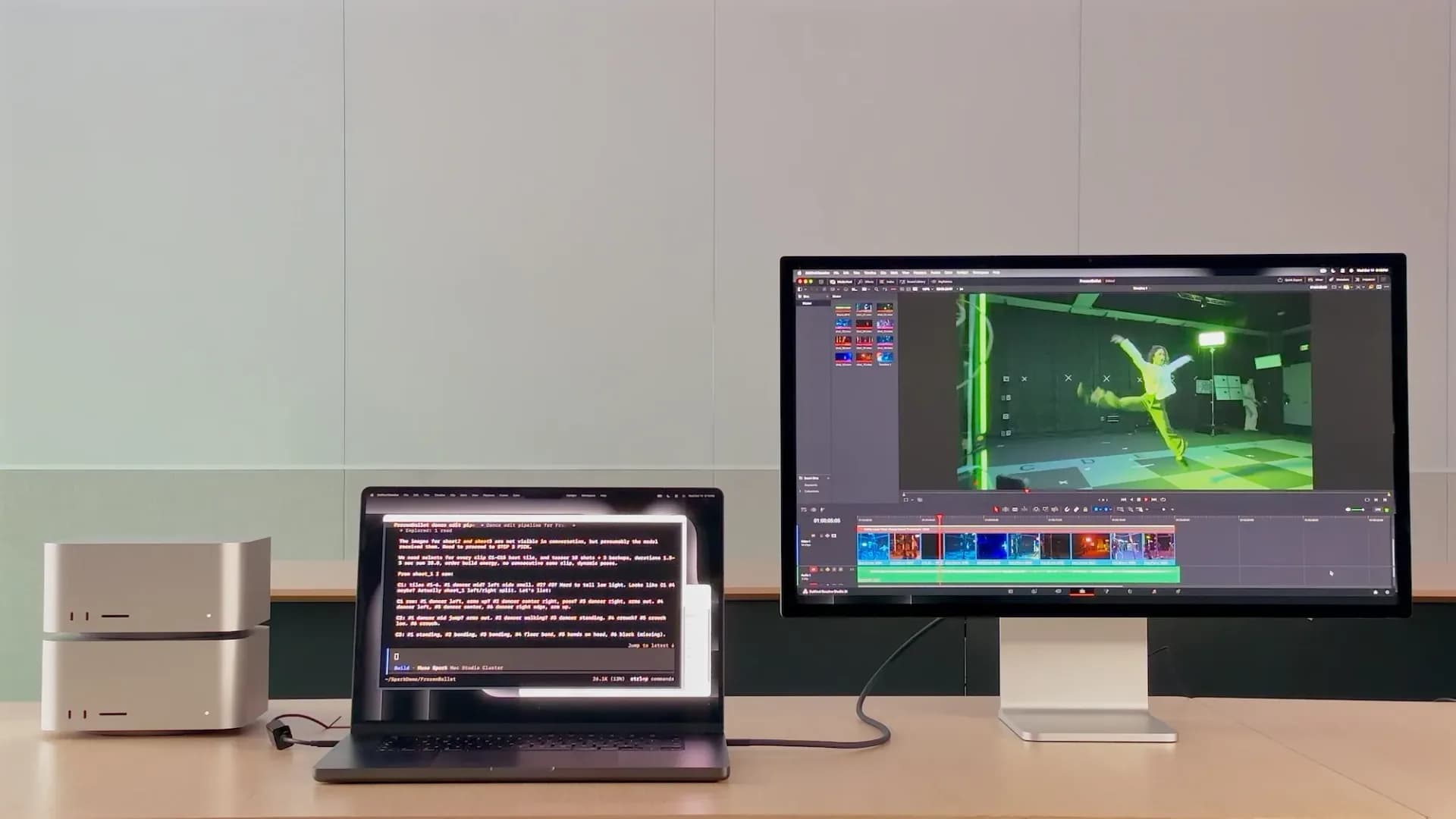
To bypass that physical ceiling, Apple updated its open-source MLX framework. The revised software distributes the model's computations across separate macOS devices connected through Thunderbolt 5 cables. The setup relies on remote direct memory access (RDMA) to let systems trade data directly with minimal CPU drag, while also hooking into the GPU Neural Accelerators on the M5 Ultra chip.
High-Bandwidth Clustering
The M5 Ultra provides 1.2TB/s of memory bandwidth, giving pooled machines enough speed to handle heavy multi-step tasks. In Apple's own testing benchmarks, a cluster of four M5 Ultra Mac Studios produced over 36 tokens per second at an 8,192-token context length. Real-world output speeds will inevitably fluctuate based on the specific job and prompt size, but the benchmark confirms the clustered architecture can process instructions at a usable pace.
Meta showed off the clustered hardware by automating complex developer jobs without pinging remote cloud instances. In one demonstration, Meta used its Muse Code tool to edit Ice Cubes, an open-source Mastodon client built for iOS, resolving bugs, adding fresh features, and compiling a clean build entirely on local silicon. A separate demo handed control of DaVinci Resolve over to Muse Spark Open, which parsed through raw video clips, picked out relevant segments, and cropped the footage for vertical viewing.
The collaboration highlights a practical shift for both tech giants, which have spent years clashing over user tracking and App Store rules. For Apple, it shows the compute limits of Apple Silicon. For Meta, it provides an on-premises path that avoids renting external GPU clusters.
Whether the model operates consistently across broader production environments remains unproven outside those targeted demos. Meta distributes the weights under its own custom license, which permits broad zero-cost testing but puts restrictions on commercial use. For engineers who want to test the software without buying a fleet of high-end desktops, Meta has hosted the weights on Hugging Face with compatibility for Nvidia, Intel, and AMD chips, alongside hosted cloud API options.
For shops looking to set up an on-premises rig right away, four-machine 256GB configurations can be purchased now. Desktops with the maximum 512GB unified memory tier will follow when Apple starts shipping that option in late October.
CDFiled by The Computing Desk
Laptops, desktops, processors, graphics cards and the operating systems that run on them.
More from this desk →

Be the first to comment
Join the argument. No password, just your email or a passkey.