Building an iPhone keyboard for an endangered tongue takes years before the first word is ever typed. For iOS 27, Apple expanded its roster of Indigenous North American writing systems, bringing typing support for Blackfoot, Comanche, and Northern East Cree to mobile screens.
The additions build on last year's release of iOS 26, which rolled out software keyboards for Haitian Creole and Nez Perce. Apple's mobile operating system now covers more than 200 distinct languages and regional variants, a catalog that began targeting Native American communities in 2010 when Cherokee first arrived on iOS.
Preserving those vocabularies carries immense urgency for tribal leaders. In the Cherokee Nation, only about 1,500 fluent speakers remain, and most are older than 70. Principal Chief Chuck Hoskin Jr. Pointed out that modern revitalization requires putting mother tongues directly where children spend their hours: on smartphone displays.
Getting a language onto glass is not a matter of quick translation. The work begins inside Unicode, the standards body where tech firms including Apple and Google coordinate with linguists. Proposing character sets, verifying them, and encoding them into the standard routinely spans three to five years. Unicode CEO Toral Cowieson noted that the consortium now catalogues over 157,000 characters, all maintained by an outfit with just four full-time staff members.
Once standardized, software engineers must design platform fonts so missing symbols do not render as blank rectangles. Then comes orthography — mapping the phonetic realities of spoken speech into digital inputs.
In many Indigenous languages, glottal stops lacked digital representations, forcing writers to swap in question marks. When building native software keyboards, engineers consult directly with native speakers to decide how characters behave under human thumbs.
Different writing systems require rethinking standard touch behavior. Nez Perce, or Nimipuutímt, does not use uppercase letters. Apple adapted its layout by turning the Shift key into a modifier that reveals an accented secondary tier, bypassing the need to hold down individual keys. For Cherokee, where characters represent consonant and vowel combinations in a syllabary, Apple recently introduced dynamic vowel keys across the bottom row. Touching a consonant instantly alters those lower keys to display valid combinations.
Digitizing these systems carries friction. Indigenous communities have pushed back against Silicon Valley companies seeking commercial ownership over cultural assets. Apple software engineer Chirasree Mandal stated that the company does not take ownership of the linguistic data gathered during these collaborations, leaving sovereignty with the tribes.
Those customized layouts are live across eligible hardware running iOS 27, with community-led character updates continuing through subsequent software builds.
MDFiled by The Mobile Desk
Phones from leak to launch to price cut: what was announced, what it costs where, and when it goes on sale. Indian launches and prices included, not appended.
More from this desk →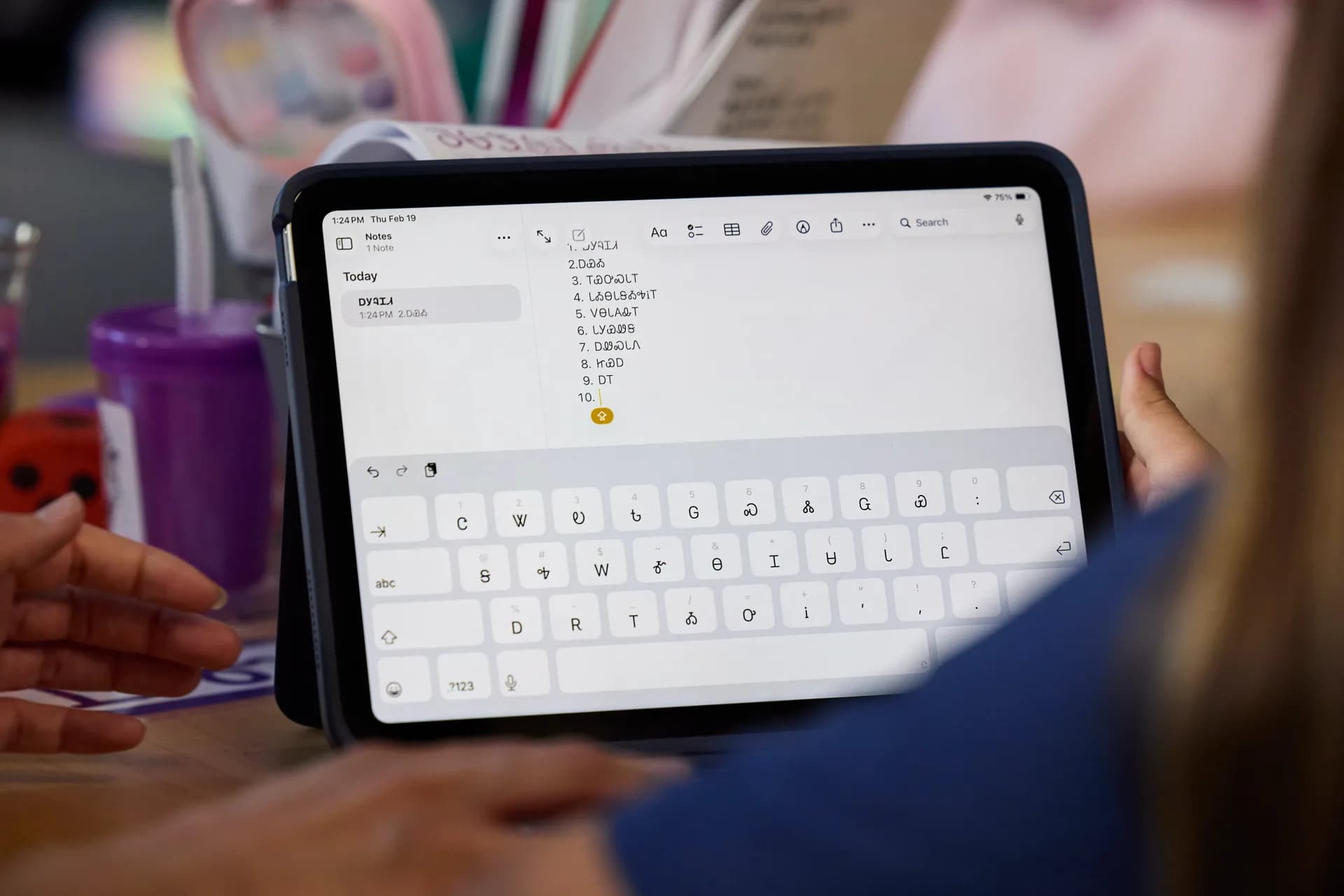
Be the first to comment
Join the argument. No password, just your email or a passkey.