Apple has spent years watching serious iPhone photographers reach for third-party apps because the stock Camera app had no real manual mode. With the iPhone 18 Pro, that changes. The built-in app now offers a variable aperture, adjustable shutter speed, manual white balance, and a new version of Photographic Styles, putting it in direct competition with Halide, the paid pro camera app that has filled that gap since 2017.
Macworld ran the two side by side on an iPhone 18 Pro and the picture that emerges is closer than you'd expect, with one big exception.
Aperture control, but does it matter
The iPhone 18 Pro's headline camera feature is a physical variable aperture, something no previous iPhone has had. Apple's Camera app offers four fixed stops, f/1.48, f/1.8, f/2.8 and f/4.0, plus an automatic mode that picks a value anywhere in that range. Halide Mark III goes further, giving users a slider with more than 250 micro-steps across the same f/1.48 to f/4.0 span, so you can dial in something like f/3.33 that Apple simply doesn't offer.
Macworld's testing, though, found that extra precision barely shows up in the final photo. The iPhone's sensor is small enough that the difference between adjacent stops is hard to spot, and some critics have already questioned why Apple bothered with a mechanical aperture at all. The granularity matters more to photographers locking shutter speed and ISO for a specific exposure than to anyone shooting casually.
On shutter speed, Apple's app can go as fast as 1/16,000th of a second. Halide, per Macworld's tests on the same phone, tops out at 1/2,000th. White balance runs the other way slightly: Apple offers five presets outside auto mode, Halide four. Apple also has an exclusive called Focus Tracking, which keeps a lock on a moving subject, something Halide doesn't replicate, though both apps support focus peaking to show which parts of a frame are sharpest.
Where Halide still wins
The clearest gap is ISO. IOS has never let users manually set ISO, the setting that controls how much a sensor amplifies its signal, and Apple's new Camera app still doesn't change that. It auto-adjusts ISO even in manual mode, effectively running a shutter-and-aperture-priority system rather than full manual. Halide has a dedicated ISO slider, which is the one control serious shooters will still miss in Apple's app. Halide also includes finer framing guides, including a golden ratio overlay, that Apple's app lacks.
On styling, Apple's redesigned Photographic Styles includes 15 palettes with adjustable intensity and nondestructive editing, meaning you can change your mind after the shot and the result still works with Live Photos. Halide offers nine looks that bake into the image permanently unless you're shooting RAW, and it has no Live Photos support.
Halide costs $9.99 a month, $19.99 a year, or $69.99 as a one-time purchase, on top of whatever an iPhone 18 Pro itself costs. For most people, Apple's native app now covers enough ground that the case for paying extra comes down to one feature: a manual ISO slider that iOS still refuses to hand over to its own camera app.
MDFiled by The Mobile Desk
Phones from leak to launch to price cut: what was announced, what it costs where, and when it goes on sale. Indian launches and prices included, not appended.
More from this desk →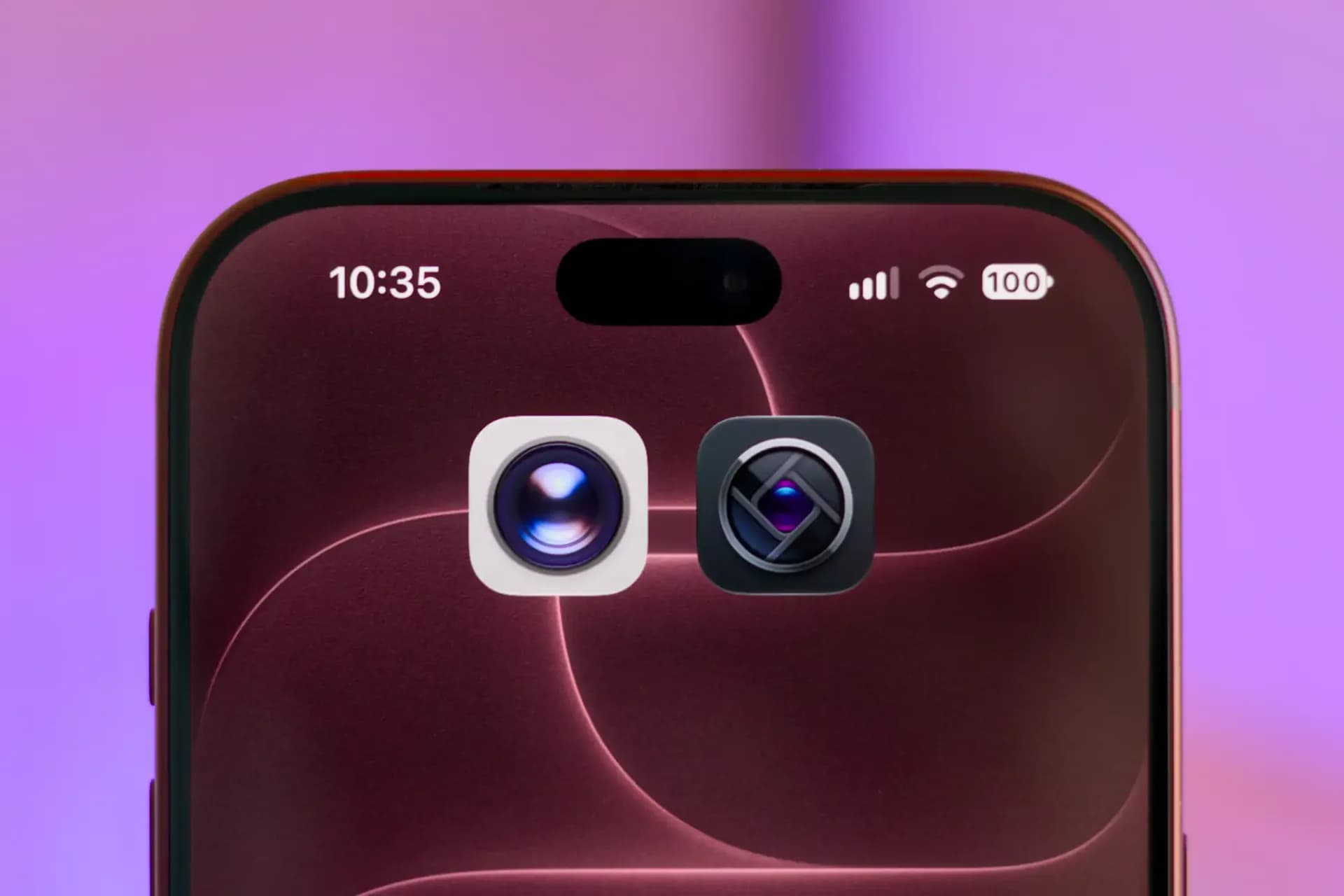
Be the first to comment
Join the argument. No password, just your email or a passkey.