A web developer spent a weekend using Claude AI to construct an interactive browser sandbox that lets players obliterate any live website with a stickman.
The project, dubbed Destroy Any Website, comes from TypeScript programmer Hugo, known on Reddit as u/HugoDzz. Hugo used Anthropic's Opus 5.5 flagship model to plan the architecture and assemble the code. Entering any standard web address converts the page into a two-dimensional destructible stage. Players guide a stick figure across the layout, blasting apart paragraphs, banners, and buttons.
While early internet users might recall desktop vandalism utilities like Desktop Destroyer from the early 2000s, Hugo built this version entirely for modern web browsers. The game engine runs on TypeScript alongside Canvas 2D for rendering. For real-time multiplayer lobbies and synchronized state tracking, the developer tapped Cloudflare Durable Objects, with Cloudflare Workers running the back-end infrastructure.
Guided by Opus 5.5
Hugo turned to Claude Opus 5.5 to bounce architectural decisions back and forth, weigh technical trade-offs, and map out the deployment steps. The AI model also generated code snippets and helped program custom visual effects. Still, Hugo noted on Reddit that the model required more hands-on course correction than anticipated to get the mechanics functioning properly.
The resulting game functions across desktop browsers and mobile touchscreens. On desktop, players get dedicated keyboard shortcuts to cycle through weapons and interact with the environment.
The arsenal features ten distinct weapons. Players can swap between standard pistols, shotguns, and submachine guns, or escalate to rocket launchers, flamethrowers, combat drones, and a magic wand. Each tool inflicts damage differently on web page layouts. Beyond weapons, the game offers three switchable stage backdrops: Mountain Dusk, Sunny Land, and Cities.
Progression tracking and cosmetic character skins, including seasonal Halloween outfits, unlock behind an account sign-in. Creating a profile lets players preserve their records rather than resetting every session.
The browser game serves as an example of small-scale software prototyping where developers lean on AI assistants to handle tedious scaffolding rather than bloating an existing product with unwanted machine-learning features.
ADFiled by The AI Desk
Models, assistants and the companies and chips behind them, reported from what was released and what was claimed, with the difference kept clear.
More from this desk →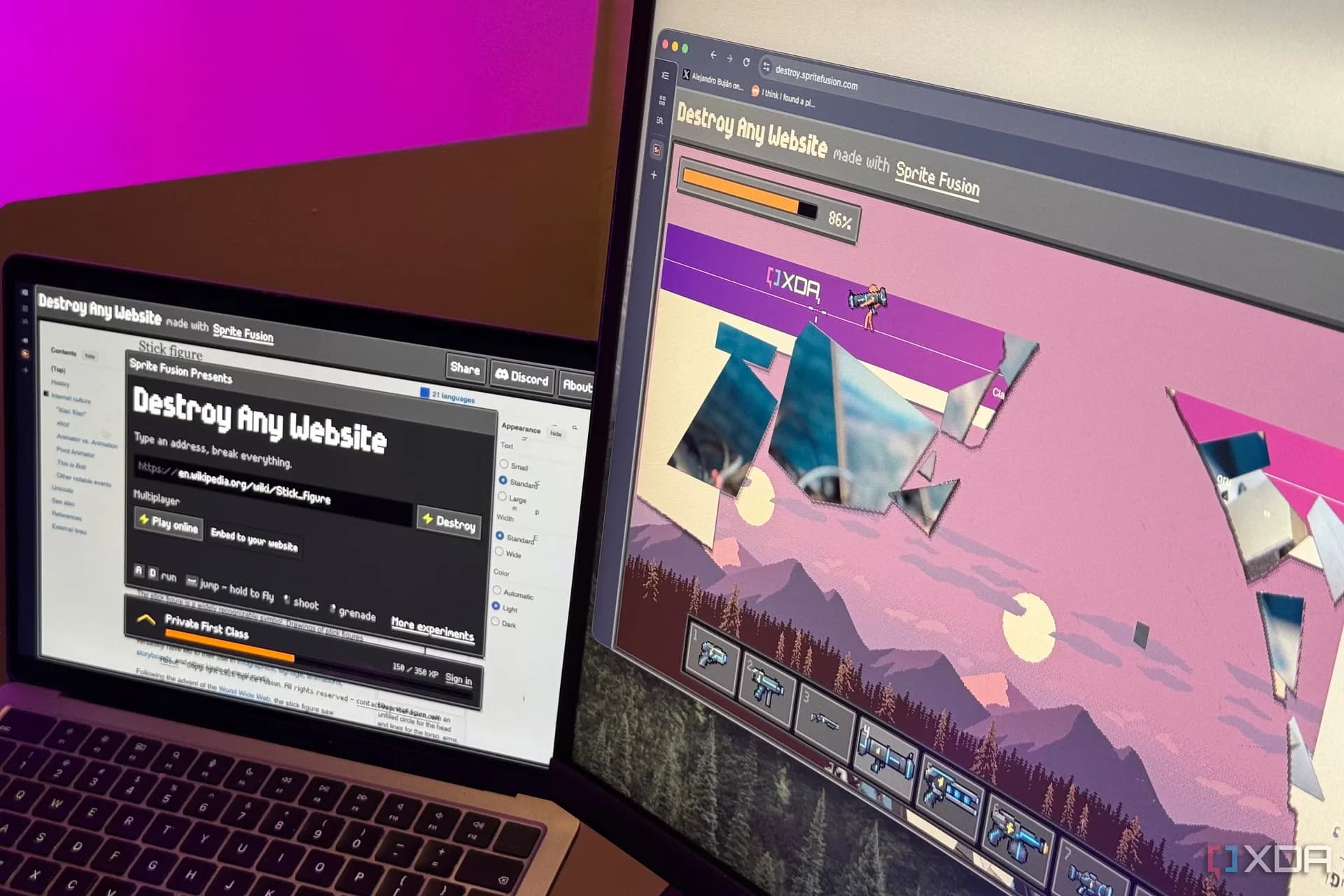



Be the first to comment
Join the argument. No password, just your email or a passkey.