Building a functional website through terminal-based coding agents comes down to a choice between polished visual presentation and raw operational speed. In a hands-on comparison conducted by How-To Geek, Anthropic's Claude Code and OpenAI's Codex CLI were given identical instructions to build a personal portfolio page from a resume, and the two systems demonstrated starkly different strengths.
The test tasked both command-line assistants with asking clarifying questions, researching background details online, making independent design choices, and assembling a complete portfolio landing page.
Anthropic's tool relied on Sonnet 5.5 set to xHigh effort. It opened with an interactive terminal survey featuring multiple-choice prompts before browsing the web for background context. Getting to the finished site took Claude Code about 30 minutes and consumed around 245,000 tokens. The resulting site sported an editorial layout with an ink-navy backdrop, marigold highlights, and switchable light and dark display modes. How-To Geek found the visual output modern and visually distinctive, though the written text lagged behind, leaning on generic phrasing and fixating on home server hardware specs rather than actual side projects.
Codex CLI took an entirely different route while running GPT-5.6 Terra at the same xHigh effort tier. OpenAI's tool finished the task in just over 20 minutes, chewing through roughly 90,000 tokens — nearly a third of the computing budget Claude required. The outlet observed that Codex conducted wider online background research and asked more focused intake questions. It also wrote considerably stronger text with genuine personality.
Where Codex stumbled was the visual composition. Despite choosing similar color accents and typography to Claude, Codex output a conservative layout that How-To Geek described as feeling like an unremarkable corporate template, missing the punch required for an individual portfolio.
The outlet gave the nod to Claude Code, pointing out that text is far simpler for a non-programmer to revise by hand than CSS grid alignments or visual themes. A developer or graphic artist who already knows how to adjust layouts might prefer Codex for its concise runtime, lower token consumption, and superior initial drafting.
Both command-line utilities can adjust their default output through custom configuration files, tool connections, and precise prompting prompts. But straight out of the box, Anthropic prioritized aesthetics at the expense of speed and token overhead, while OpenAI delivered an efficient, copy-focused build wrapped in mundane styling.
ADFiled by The AI Desk
Models, assistants and the companies and chips behind them, reported from what was released and what was claimed, with the difference kept clear.
More from this desk →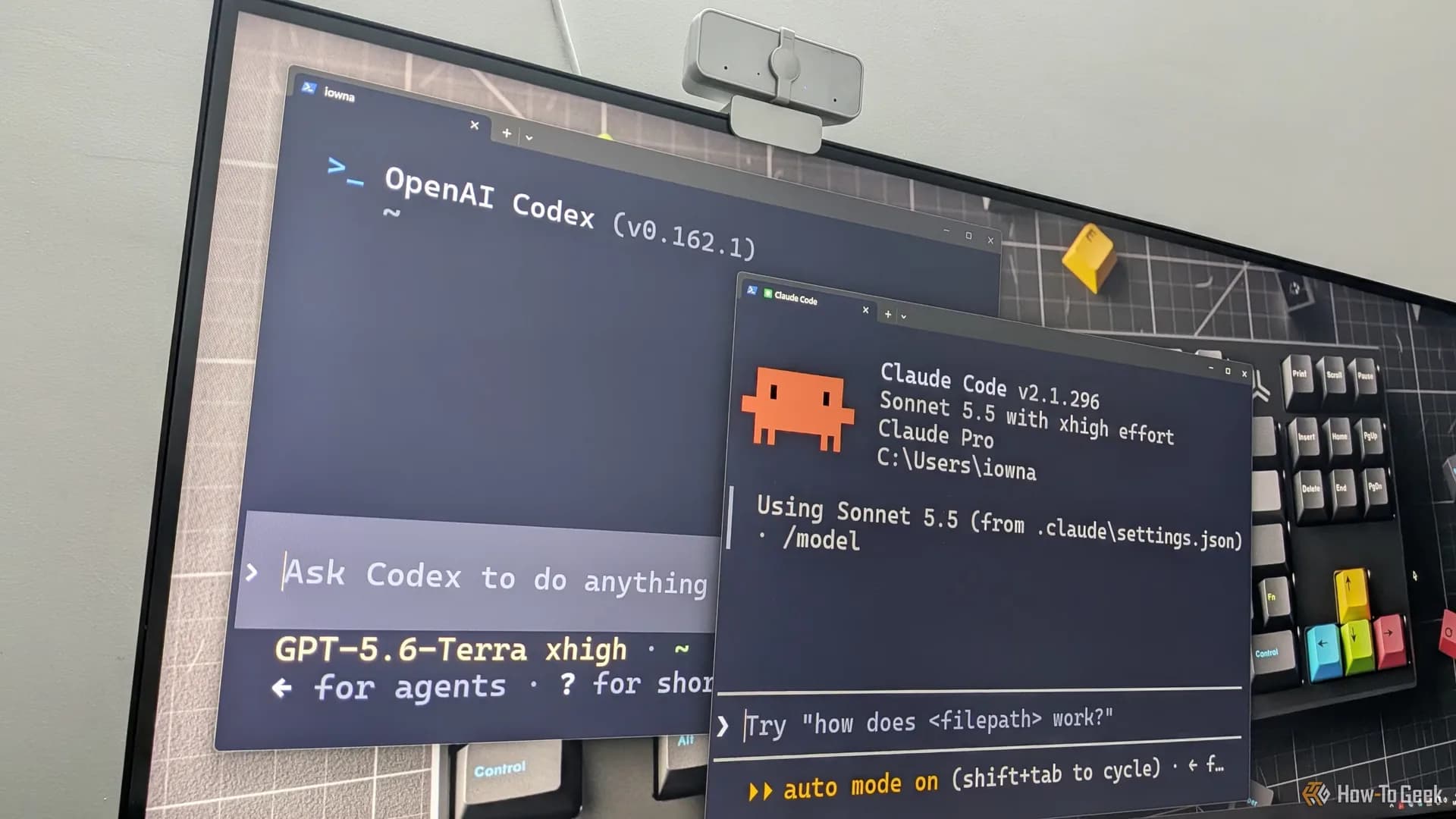


Be the first to comment
Join the argument. No password, just your email or a passkey.