The first wave of Googlebooks has landed, and the early performance numbers show an older ARM processor pulling ahead of Intel's newest silicon.
In head-to-head testing conducted by Android Headlines, the Dell XPS Googlebook beat the Lenovo Googlebook 15 across both processor and graphics benchmarks. Dell built its machine around Qualcomm's Snapdragon X Elite, while Lenovo picked Intel's eight-core Core Ultra 5 325. Dell currently sells the XPS Googlebook for $999 in the United States, configured with 16GB of LPDDR5X RAM and 512GB of SSD storage. Lenovo equipped its laptop with matching memory and storage capacities, keeping the silicon and chassis dimensions as the primary variables.
Synthetic Scores and Graphics
Android Headlines ran both machines through Geekbench 7 and 3DMark Wildlife Extreme. On Geekbench 7, Qualcomm's chip secured roughly a 7 percent advantage in single-core performance and finished approximately 19 to 20 percent higher in multi-core metrics compared to the Core Ultra 5.
The Intel Core Ultra 5 325 relies on four efficiency cores running at 3.4GHz and four performance cores reaching 4.4GHz, with a single core able to push to 4.5GHz. Qualcomm counters with a 12-core layout featuring four cores at 3.42GHz alongside eight cores clocked at 4.01GHz. While Intel holds higher peak clock speeds on paper, the extra physical cores on the Snapdragon gave Dell an edge in multi-threaded workloads.
The difference widened substantially during graphics evaluation. In the one-minute 3DMark Wildlife Extreme run, the Adreno graphics inside Qualcomm's package beat Intel's integrated graphics by roughly 71 percent. Android Headlines pointed out that the Snapdragon X Elite is not Qualcomm's latest hardware, having been superseded by the Snapdragon X2 Elite over a year ago, yet it still outclassed Intel's newer mid-tier processor in synthetic GPU power.
Daily Use and Compatibility
Synthetic stress does not tell the entire story on a laptop. Android Headlines reported that general day-to-day work felt largely indistinguishable between the two machines.
Thermal behavior differed immediately. Android Headlines observed that the fan on the Lenovo Googlebook 15 kicked in much more aggressively than the cooling setup inside the Dell XPS Googlebook. That happened despite the Lenovo offering a larger 15-inch enclosure that theoretically provides better room for heat dissipation.
Software architecture presents another dividing line. Googlebooks run Android software, which developers design primarily for ARM instruction sets. The Snapdragon chip runs those binaries natively. Intel's x86 architecture requires translation, making the Snapdragon variant better positioned for broad app compatibility without translation hitches.
Personal ergonomics still divided the hardware. Android Headlines favored the typing experience on Lenovo's keyboard and preferred its size over the Dell enclosure. Dell and Lenovo represent two of five Googlebooks entering the market, with full retail availability rolling out across storefronts this month.
CDFiled by The Computing Desk
Laptops, desktops, processors, graphics cards and the operating systems that run on them.
More from this desk →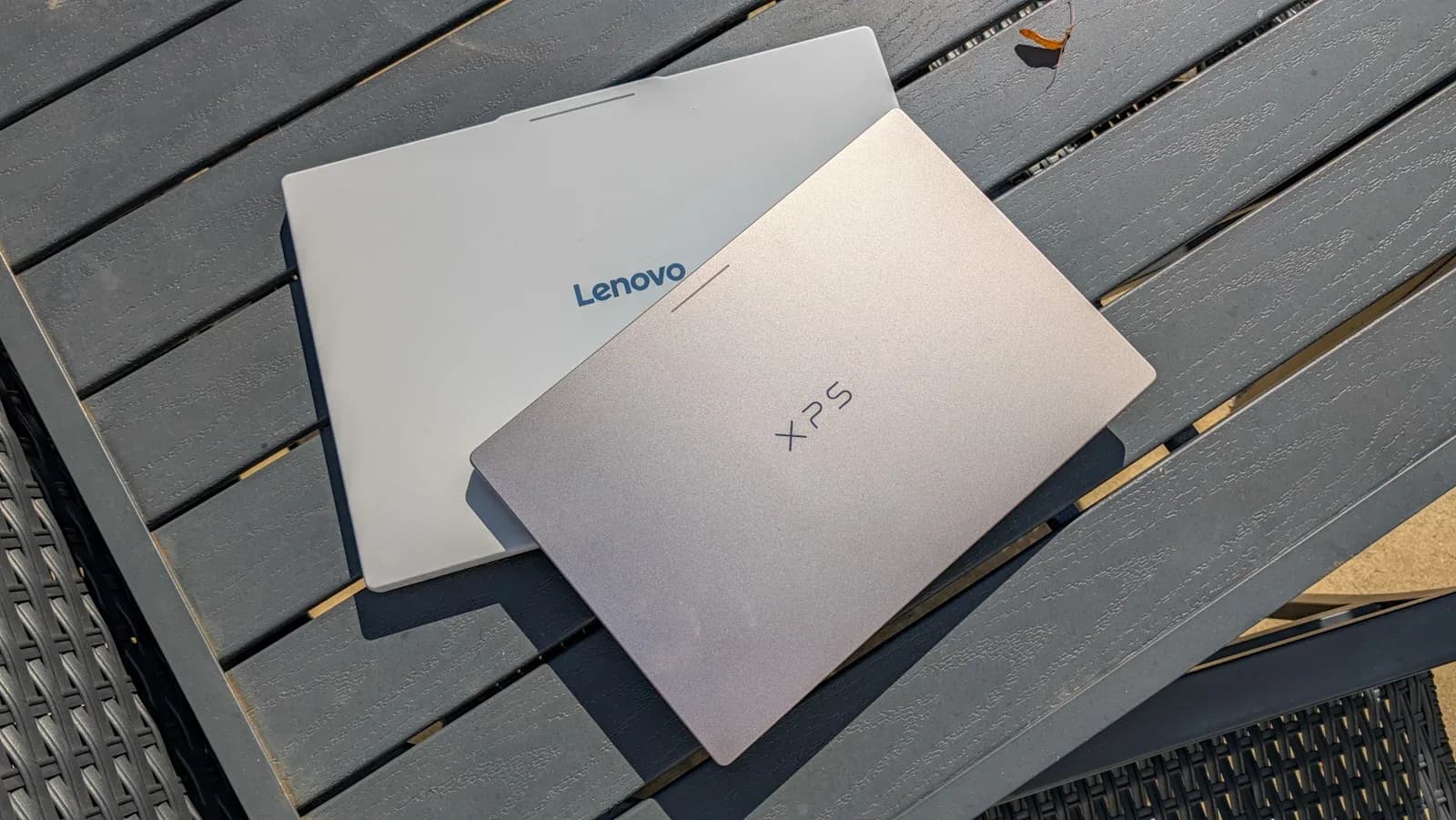


Be the first to comment
Join the argument. No password, just your email or a passkey.