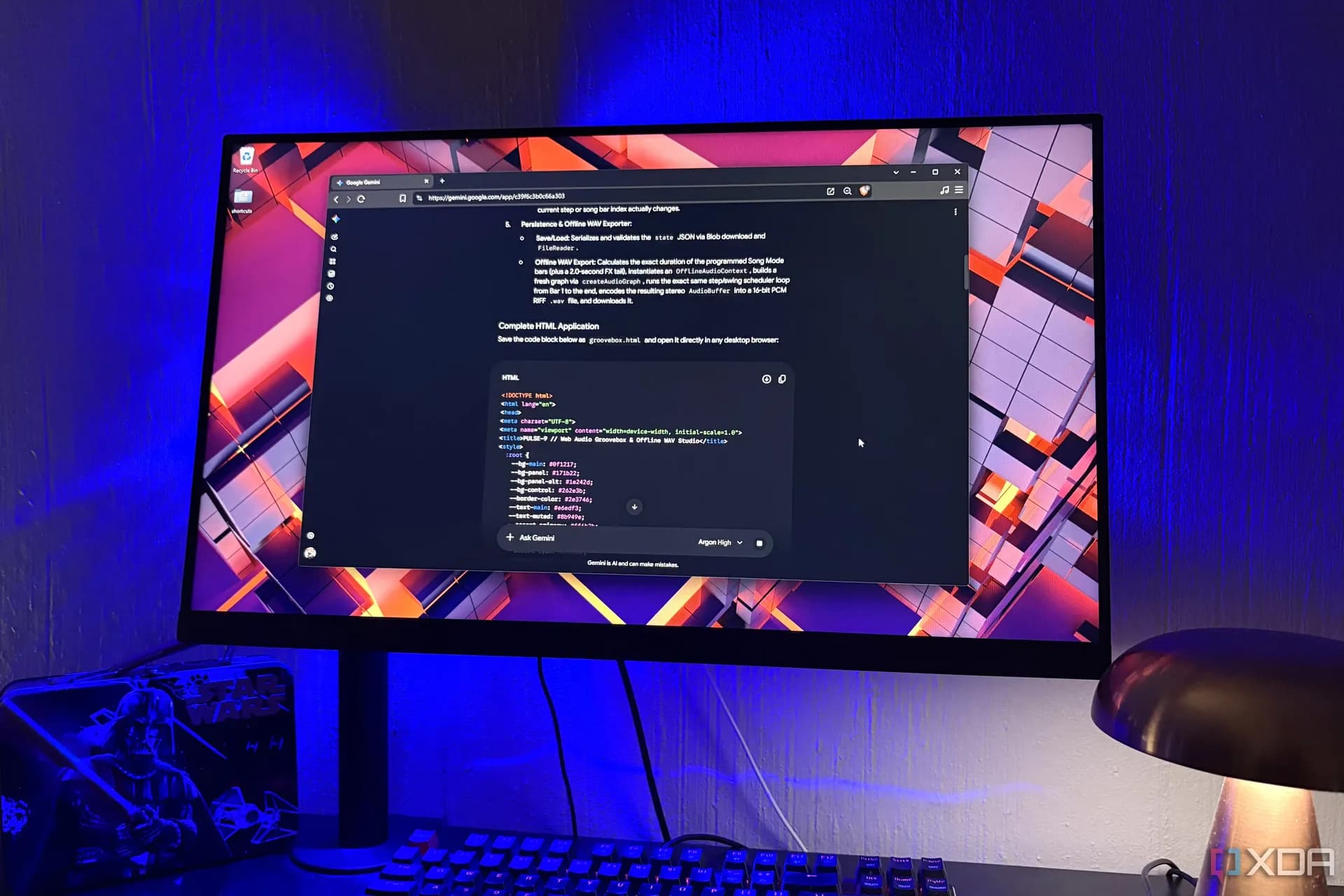
Gemini 4 Hydrogen is live — and it’s built for doing, not just thinking. Google has rolled out the new model globally as a free, default option in Gemini for most users, positioning it as the practical sibling to Gemini 4 Carbon: faster, lighter, and tuned for real-world tasks like coding interactive websites, analyzing documents, or building budget tools, all from a single prompt.
No coding skills required. No follow-ups. Just working HTML, CSS, and JavaScript delivered in one go. It’s not a prototype.
It’s not a demo. It’s shipping now, and it’s free. In India and the US, there is no separate price tag, no subscription tier, no waitlist. If you’re signed into Gemini and see the model picker (or if Hydrogen appears automatically), you’re already using it.
Tom’s Guide confirmed the rollout is global, though free-tier users may not always see Hydrogen listed explicitly, logging out and back in can trigger the switch. The model doesn’t replace Carbon. It splits the workload. Carbon handles deep reasoning, multi-step logic, and heavy analysis.
Hydrogen handles execution: turning intent into functional interfaces, fast. Amanda Caswell, Tom’s Guide’s AI Editor, tested it with a single, dense prompt, “Build me a fully functional, interactive website that helps me figure out where my money goes every month”, and got back a mobile-friendly, calculation-driven budget dashboard with sliders, live totals, savings suggestions, and sample data baked in.
Every button worked. Every change recalculated instantly. Cancel a $15 subscription? The ‘money left’ total updated by $15.
Reduce groceries? The pie chart shifted. The savings recommendations adjusted. That interactivity, not static output, but working software, is the differentiator.
And it’s not limited to finance. Caswell notes the same approach could generate a meal planner, chore tracker, or fitness dashboard. But here’s what’s not happening: Google isn’t hosting your app. The generated code runs locally in the preview or must be exported and deployed elsewhere.
Sharing it with your spouse means copying files, pasting into a code editor, or uploading to a hosting service, no one-click publish. Security also remains your responsibility. As Caswell cautions: “Be sure your app is secure before sharing financial information.” There’s no mention of encryption, sandboxing, or backend validation in the prompt or output.
This is frontend-only, client-side logic, powerful, but not enterprise-grade. So who benefits first? Not developers. Not researchers.
People who need a tool now, without learning to code, small-business owners building a simple quote generator, teachers making an interactive quiz, parents tracking extracurriculars. The barrier isn’t skill anymore. It’s awareness. Hydrogen doesn’t ask what framework you prefer.
It picks one. Doesn’t ask which chart library to use. It embeds Chart.js or equivalent. Doesn’t wait for design specs.
It delivers something usable, modern, and responsive, then tells you if anything failed verification. That shift, from assistant to builder, changes what ‘AI productivity’ means. Not summarizing a PDF. Not drafting an email.
Building the thing you need, in full, in one shot. Gemini 4 Hydrogen is live. It costs nothing. And it works today.
ADFiled by The AI Desk
Models, assistants and the companies and chips behind them, reported from what was released and what was claimed, with the difference kept clear.
More from this desk →

Be the first to comment
Join the argument. No password, just your email or a passkey.