Google quietly launched Playground this week, a new entry in Google Labs that turns a text prompt into a working, playable video game inside your browser. Type something like "Tetris but with cute pigs instead of blocks," hit build, and the AI generates a stable, if rough, version of your idea within minutes.
Playground works like a chatbot for game design. You describe what you want, the system builds a first pass, and you keep issuing follow-up instructions to fix bugs, add features or change the look. You can upload photos, videos or models as visual references, or let the AI generate everything from scratch. Reporters at Wired and Tom's Guide both tried it this week and came away with a handful of small, scrappy games rather than anything resembling a finished product.
The Wired writer built three titles in a single day: Pork Drop, a pig-themed Tetris clone. Dinner Darling, a timed cooking game about hosting a chaotic dinner party. And Neon Don, a top-down arcade shooter starring a grizzled, recently divorced ex-cop who shouts lines like "Keep shooting! Brenda took everything else away!" at the player. Neon Don took the most iteration, with the AI adding boss generation, enemy variety and a snark system for in-game dialogue as the writer kept prodding it.
At Tom's Guide, a reporter used ChatGPT to brainstorm concepts before feeding them into Playground, producing an endless runner called AI Commute, along with two more games titled Three Clues and Neon Outrun. That writer described the generation pipeline as running through design, asset creation, implementation, a QA check and a final build stage before a game becomes playable, a process that took a few minutes per title.
A limited allowance, and a crowded field
Playground throttles how much you can build. Every new game and every change to an existing one eats into a usage allowance that refreshes periodically, according to Wired's reporter, who said further updates to their games would have to wait until October 14 when the allowance reset. Tom's Guide noted that Google offers a paid AI Plus plan that raises that limit, though its reporter stuck to the free tier.
Google isn't alone here. The company's approach echoes Horizon Create, the AI game generator Meta announced in September, and a separate Meta tool called Pocket that Tom's Guide had already tried. Vibe coding, where plain language replaces actual programming, has spread from software prototyping into game design over the past year, and Playground is Google's clearest attempt to claim a piece of that trend.
Playground's home page organizes finished games into sections like Editor's Picks and Popular Games, and lets anyone sign in with a Google account to play user-made titles, including the rough ones made for this story. A Unity Spark integration, mentioned on the platform but not yet available to try, is expected to let creators build more complex games than the prompt-only tool currently allows.
Neither Wired nor Tom's Guide treated their creations as anything beyond curiosities. Both reporters said the games that other, presumably more skilled, Playground users have built looked considerably more polished than their own.
ADFiled by The AI Desk
Models, assistants and the companies and chips behind them, reported from what was released and what was claimed, with the difference kept clear.
More from this desk →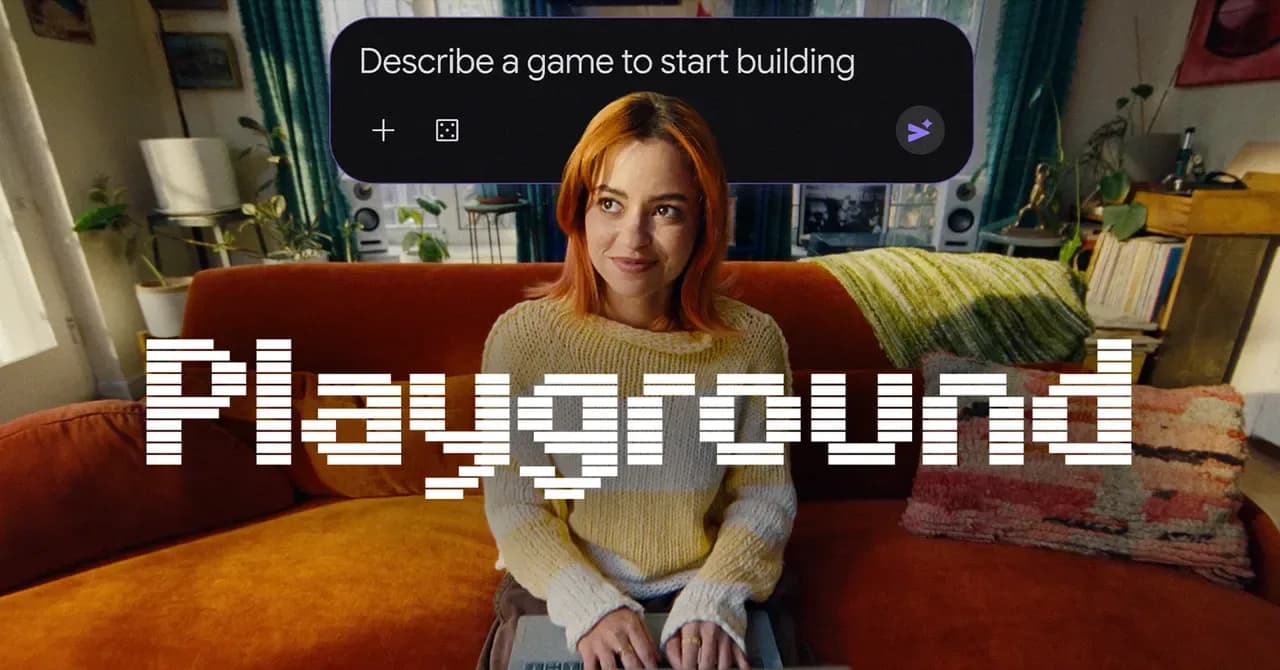

Be the first to comment
Join the argument. No password, just your email or a passkey.