Google said Thursday that Universal Cart, a tool that lets shoppers collect and track products across Search and the Gemini app, has arrived in the US. The company first showed it off at Google I/O in May, and according to The Next Web it was originally slated for a summer debut before landing on Oct. 15.
The pitch is simple: find something, drop it in the cart, and it stays there whether you come back through Search, the Gemini app, or another device. Universal Cart pulls from Google's Shopping Graph, which the company says holds roughly 60 billion product listings across retailers, so a single cart can mix items from Nike, Sephora, Target, Ulta Beauty, Walmart, Wayfair and independent Shopify stores. Each merchant stays the seller of record and still handles order confirmations and customer support.
Google is also leaning on the cart to do some of the legwork shoppers usually do themselves. It can send an alert when a saved item's price drops or when something out of stock comes back, read Google Wallet to suggest which card earns the best rewards for a given purchase, and surface promo codes before checkout.
Payment itself runs through Google Pay and is tied to the Universal Commerce Protocol, an open standard Google introduced in January to let AI agents and retailers handle checkout together. It sits alongside Google's Agent Payments Protocol, which lets AI agents make purchases within limits a user sets, and which launched in September 2025 with more than 60 partners including PayPal and Mastercard.
What Universal Cart does not have yet is a European release. Google's own roadmap names Canada, Australia and the UK as the next markets, and makes no mention of the EU, according to The Next Web.
That gap lines up with Google's legal troubles on the continent. The European Commission hit the company with an €890 million fine in July under the Digital Markets Act, €460 million of it tied to self-preferencing its own listings in shopping, hotel, transport and sports results, and gave Google 60 days to change course or face daily penalties of up to 5% of Alphabet's average global turnover. Nick Fox, Google's search chief, said in September that the required changes 'degrade the user experience for Europeans.' Separately, a Stockholm court ordered Google to pay Klarna's PriceRunner nearly $2 billion in July over the Commission's 2017 Google Shopping case, and EU fines against the company now total more than €9 billion. Idealo and Moltiply are among comparison-shopping services pursuing their own damages claims, worth €465 million and €2.97 billion respectively.
A cart that sits inside Google's own search results, carries rival retailers' products, and takes the payment is close to the kind of self-preferencing regulators have already fined Google for. Gemini Spark, the Google product first tied to the Agent Payments Protocol, has reached more than 160 countries but remains unavailable in the EEA, Switzerland and the UK, and Google has not said why.
Google has not given a timeline for bringing Universal Cart to Europe. Amazon and OpenAI are both building similar agentic shopping tools of their own, and for now Google's version stops at the US border, with Canada, Australia and the UK next in line.
TBFiled by The Tech Business Desk
Big tech, startups, earnings, regulation and policy — the decisions that shape the products.
More from this desk →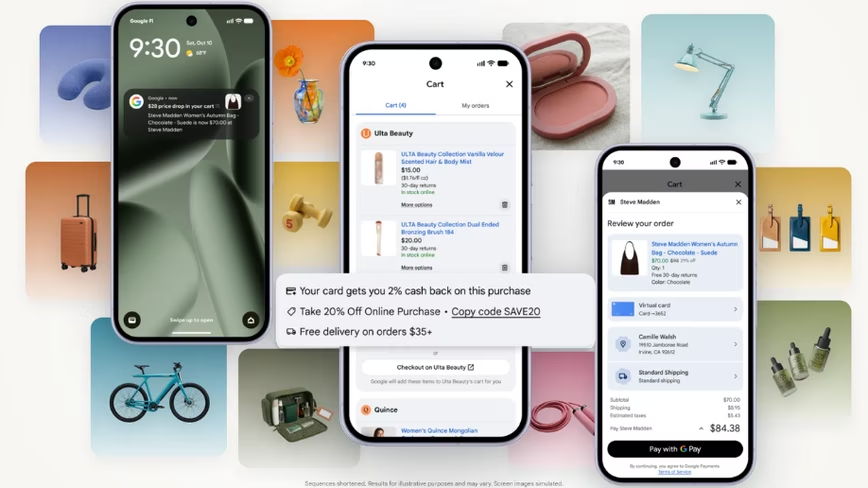


Be the first to comment
Join the argument. No password, just your email or a passkey.