HP's rebranded flagship gaming laptop runs its Nvidia RTX 5090 harder than most rivals do, according to a review from Notebookcheck. The catch is a power adapter so large it gets its own mention in the headline.
The HyperX Omen Max 16 is HP's top 16-inch gaming machine, the successor to last year's Omen Max 16 and part of a rebrand that folds the Omen name into HP's HyperX gaming brand, announced at CES earlier this year. Notebookcheck's test unit came with a Core Ultra 9 290HX Plus CPU, a 175 W GeForce RTX 5090, and a 2.5K, 240 Hz OLED display, priced around $4,200. Amazon was listing a similar configuration at $4,400 when Notebookcheck published its review on October 10. Cheaper configurations are expected to ship with an RTX 5080 instead.
The headline finding is graphics power. In Unleashed mode, Notebookcheck measured the RTX 5090 pulling close to its full 175 W target, while the reviewer noted that most competing gaming laptops tend to cap graphics draw around 140 W or lower. Total graphics power across the laptop's three performance modes came in at 89 W on Balanced, 142 W on Performance, and 169 W on Unleashed, per Notebookcheck's measurements.
The size tax
That output comes with weight. Notebookcheck found the new chassis slightly thicker and heavier than the 2025 Omen Max 16, and the AC adapter itself is bulkier than most 460 W bricks tend to be, a direct consequence of running both a high-wattage CPU and a 175 W GPU at once. The review credits the firmer, less flexible chassis with feeling more durable than HP's thinner Omen Transcend 16 line, even if it's less portable.
Fan noise scales with that power draw too. Notebookcheck logged 39.1 dB(A) on Balanced mode, 54.4 dB(A) on Performance, and 61.8 dB(A) on Unleashed, numbers high enough that the review recommends headphones once the fans spin up past 60 dB(A). Speaker output measured at 77.8 dB, which Notebookcheck rated as linear across bass, mids and highs but not loud enough to cut through the fan noise during gaming.
Display gains, familiar quirks
The OLED panel is a clear step up from last year's model. Notebookcheck measured HDR brightness near 1,100 nits, supporting HDR1100, against roughly 600 nits on the outgoing Omen Max 16's panel. Resolution, refresh rate and color coverage, QHD+, 240 Hz and full DCI-P3, carry over. Nvidia's G-Sync variable refresh only works in discrete graphics mode, and switching between integrated, discrete and Advanced Optimus graphics modes still requires a reboot. Notebookcheck also measured display flicker at 1439.8 Hz at 100% brightness and below, a frequency high enough that the review says most users sensitive to PWM shouldn't notice it.
Notebookcheck's reviewer, Allen Ngo, received the test unit on loan from the manufacturer or retailer, with no advance copy of the review shared ahead of publication. HP hasn't announced further configurations beyond the RTX 5090 and RTX 5080 options Notebookcheck references, and no wider international pricing or availability details appear in the review.
RRFiled by The Reviews Roundup Desk
What the reviews are saying: verdicts on new devices from the outlets that tested them, summarised and credited to each. This desk does not test products itself.
More from this desk →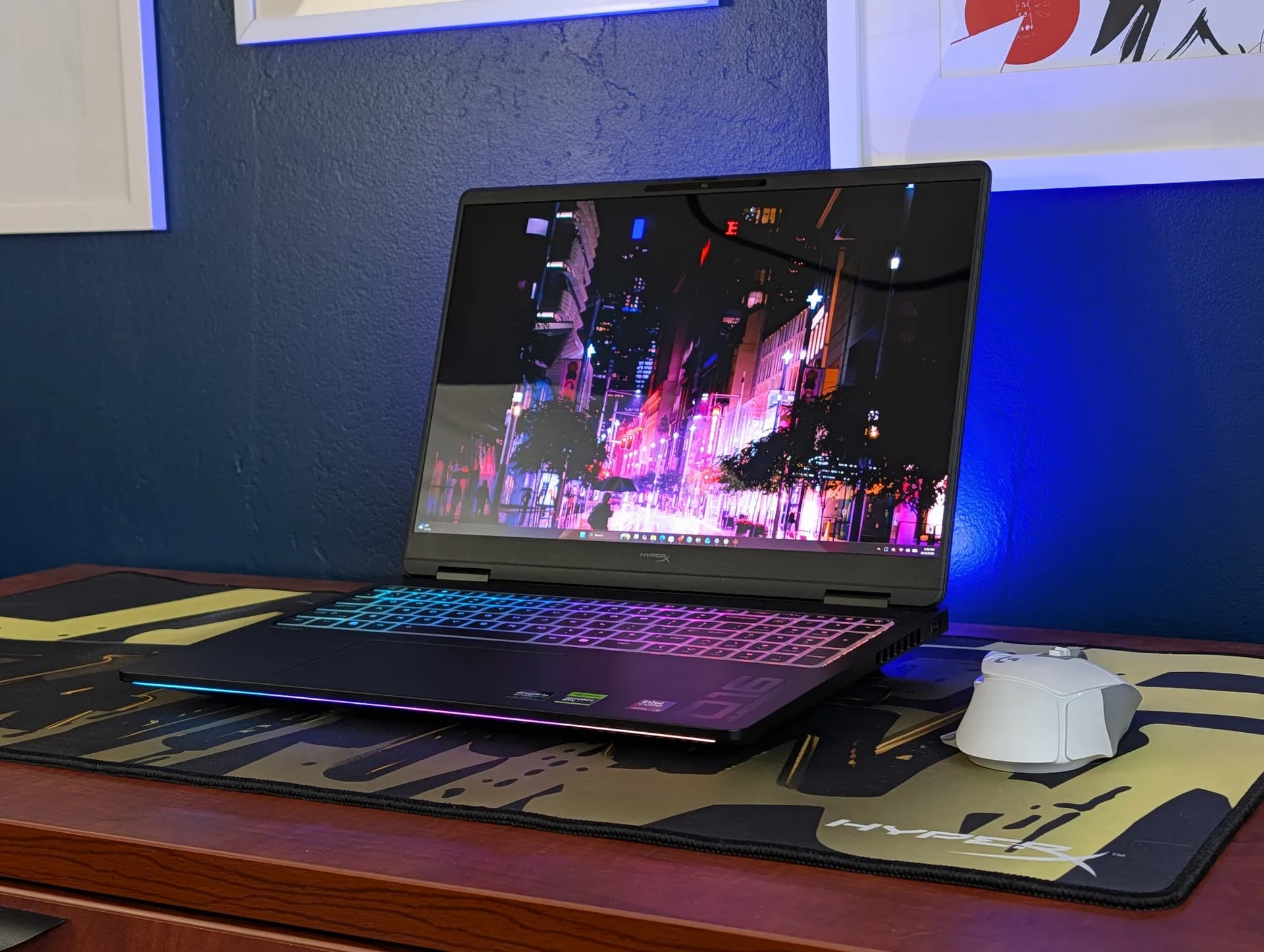
Be the first to comment
Join the argument. No password, just your email or a passkey.