MacOS 27.2.1 has booted to desktop on a stock Ubuntu 24.04 install — without virtualization, without Rosetta-style translation, and without running macOS inside a VM. The trick? XNU Linux, an experimental open-source project that embeds Apple’s XNU kernel directly into the Linux kernel on ARM64 systems. It’s not emulation.
It’s not Wine. It’s the macOS kernel running inside Linux, side-by-side with native Linux processes on the same CPU cores. And it works, at least in lab conditions, on very specific hardware. The creator, Heyang Zhou, posted a screenshot confirming the macOS 27.2.1 desktop running under Ubuntu.
That version number matters: this isn’t a proof-of-concept for ancient macOS. It’s targeting current, unpatched builds, including the latest public macOS release as of late November 2026. XNU Linux doesn’t reimplement macOS APIs. It uses Apple’s own open-source XNU kernel code, the same core that powers macOS, iOS, and visionOS, and stitches it into a modified ARM64 Linux kernel.
The result is two kernels cohabiting: Linux remains the host, but XNU handles macOS system calls, process scheduling, and memory management for macOS binaries. No hypervisor sits between them. No second OS instance spins up. Just one kernel image, with XNU loaded as a module.
Hardware support is narrow by design. XNU Linux requires ARM64 CPUs with Pointer Authentication (PAC) and 4K page support, features present on Apple Silicon (M1 and newer) and select server-grade chips like those in Nvidia’s DGX Spark. It has been tested only on bare-metal DGX Spark hardware and on Apple Silicon Macs where Linux runs inside a VM (using krunkit or tart).
XNU itself still runs directly inside Linux, no nested virtualization. You also need your own licensed copy of macOS. There’s no bundled installer, no prebuilt ISO, and no GUI setup. It’s a GitHub repo aimed at kernel developers and low-level tinkerers, not end users.
The project is explicitly experimental. XDA Developers notes “be ready for any and all weirdness”. There’s no mention of GPU acceleration, driver support, networking stack integration, or app compatibility beyond booting the desktop. No benchmarks.
No performance claims. No roadmap for x86_64, Intel Macs, or consumer laptops. This isn’t a macOS-on-Pixel announcement. It’s a kernel-level proof that XNU can be repurposed, not as a standalone OS, but as a subsystem within Linux.
For now, it’s a technical curiosity with real implications: if refined, it could let Linux distributions run macOS productivity tools, developer utilities, or even Final Cut Pro workflows, without leaving the terminal or rebooting. But that’s years away, if ever. Right now, it’s a working demo on M1 Macs and DGX Spark rigs.
The GitHub repository is live. The macOS 27.2.1 desktop screenshot is real. And the next step, if any, depends on whether kernel maintainers, Apple engineers, or security researchers decide this kind of tight kernel interop is worth stabilizing, auditing, or blocking.
CDFiled by The Computing Desk
Laptops, desktops, processors, graphics cards and the operating systems that run on them.
More from this desk →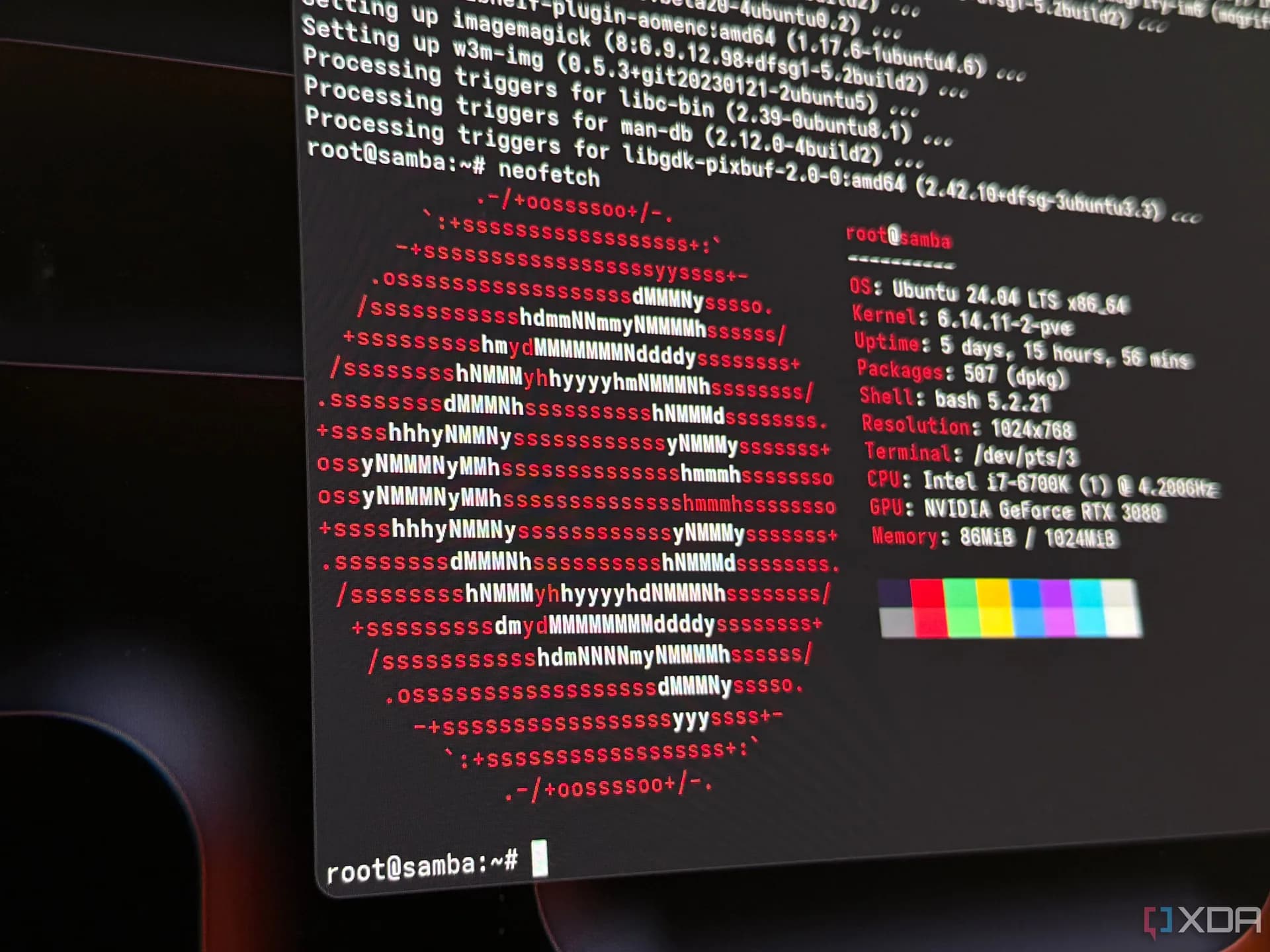
Be the first to comment
Join the argument. No password, just your email or a passkey.