Microsoft has published a four-tier Windows AI PC roadmap — unannounced publicly but detailed in internal planning documents now reported by Wccftech, that maps memory, chip architecture, and AI capability across consumer, prosumer, and workstation segments. The plan is not a product launch, nor does it announce new hardware. It’s a strategic hardware taxonomy: how much RAM a PC needs to run what kind of AI task, locally, and which chips will deliver it.
And it confirms Copilot+ isn’t dead, it’s being restructured into tiers, with the baseline now set at 8 GB and the ceiling at 128 GB+, scaling all the way to personal supercomputers. This is Microsoft’s blueprint for who gets what kind of on-device intelligence, and when. Tier 0 starts at 8 GB of RAM.
These are entry-level Windows PCs built on Intel Core Series 3 “Wildcat Lake”, AMD Ryzen 100/200 series, or Qualcomm Snapdragon C/X/X Plus SoCs. They’re meant for basic local context, think Teams background blur, simple text summarization, or voice command routing, not reasoning or model execution. At $500 in the US, they’re aimed at education, budget business deployments, and emerging markets.
But Wccftech notes 8 GB is already tight for modern multitasking. These machines won’t run Copilot+ features. Tier 1 begins at 16 GB and caps at 64 GB. This is the Copilot+ zone.
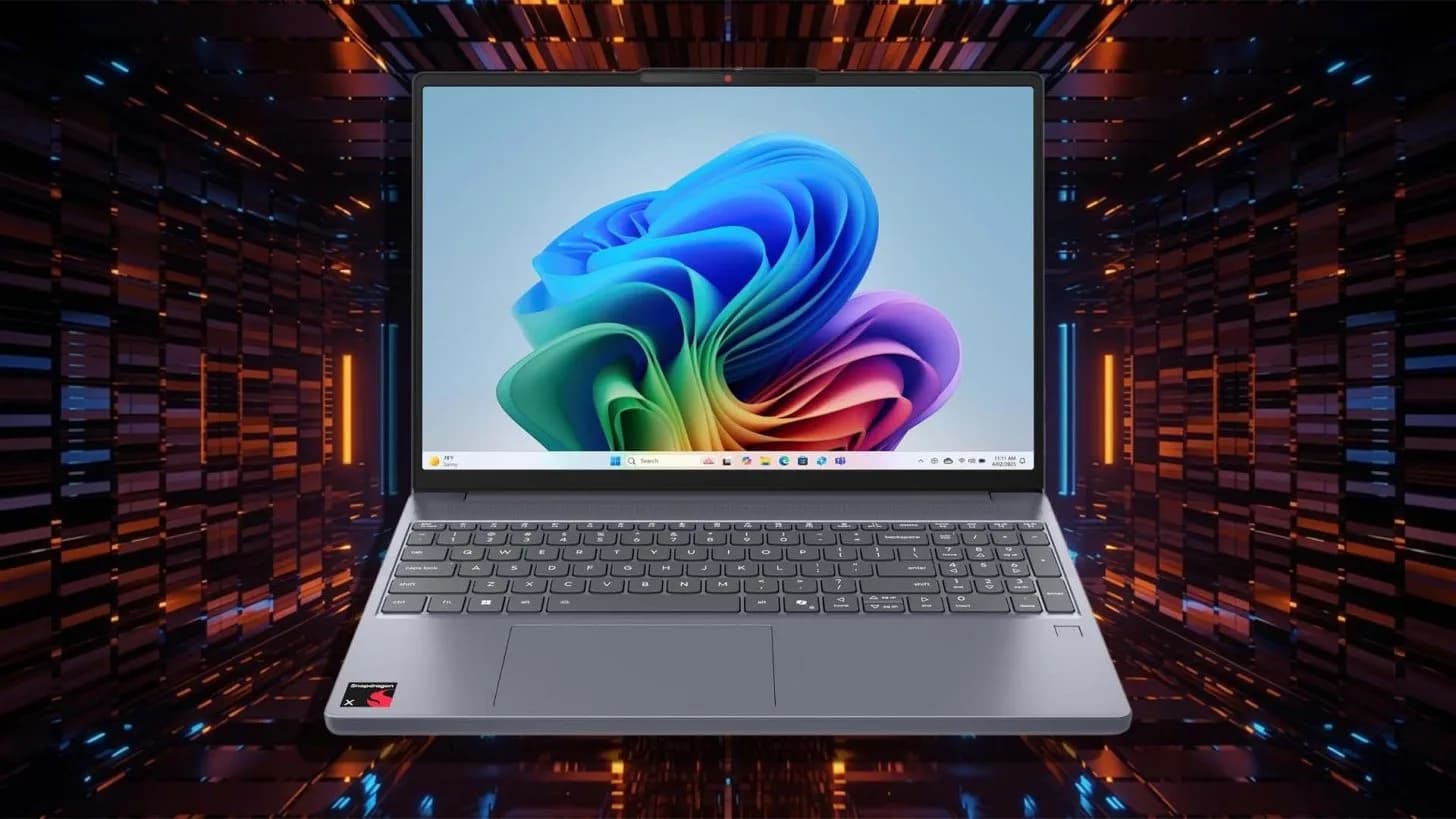
Devices here support local question answering, delegated tasks (like auto-filling forms across apps), and long-running background AI, no cloud round-trip needed for many workflows. Chips include Intel Core Ultra Series 3 “Panther Lake”, AMD Ryzen AI 400 “Gorgon Point”, Snapdragon X2 Plus/Ellite, and upcoming Nova Lake and Medusa Point parts.
NVIDIA RTX Spark “N1X” also appears, its first confirmed inclusion in a Microsoft AI PC tier. Tier 2 kicks in at 128 GB+. These are builder and pro-AI workstations: local model training, fine-tuning, and serving. AMD Ryzen AI MAX+ 400 and NVIDIA RTX Spark are listed as available now.
Intel Core Ultra Next and Snapdragon Next are flagged as future options. Tier 3 is where things get extreme: personal supercomputers. Think server-grade silicon, Intel’s Crescent Island GPUs (160–512 GB per GPU), NVIDIA’s GB300 in DGX Station form, and AMD’s unnamed Threadripper Halo Station. No price or availability window is given.
Just scale. Microsoft calls Windows “the home for hybrid intelligence.” That phrase matters. It signals no single deployment model, cloud-only, edge-only, or device-only, but layered delegation: some AI runs on your laptop, some on your local server, some upstream. The roadmap doesn’t replace Copilot+ branding.
It absorbs it, making Copilot+ a minimum spec within Tier 1, not the ceiling. What’s missing? Any mention of release dates, OEM partnerships, or software timelines. No confirmation that “Nova Lake” or “Medusa Point” are shipping, or even taped out.
No pricing for Tier 1 or above beyond the $500 anchor for Tier 0. And no word on how Windows 12 or 13 will enforce or expose these tiers to users. What’s clear is this: Microsoft is betting that AI capability will be defined less by a logo and more by memory bandwidth, NPU throughput, and local model weight limits, and that those specs will stratify the PC market like clock speed once did.
Next step? Watch for OEMs to align their 2027 lineup announcements with these tiers, especially Tier 1 devices hitting shelves ahead of the next major Windows update.
CDFiled by The Computing Desk
Laptops, desktops, processors, graphics cards and the operating systems that run on them.
More from this desk →

Be the first to comment
Join the argument. No password, just your email or a passkey.