OpenAI pushed out GPT-6.2 versions of both Astra and Sol on Tuesday, bringing the two models to ChatGPT Work and Codex at the same time. The company says the update is less about raw capability and more about getting tasks done with fewer output tokens, which in practice means users should bump into their usage limits less often.
Astra remains the model OpenAI wants people reaching for on their hardest problems. One example the company gave: hand it a screenshot of a slide, and GPT-6.2 Astra can use that image as a template, matching the layout, the colors, even the font size, for the rest of a presentation. Inside Codex, OpenAI says Astra has gotten better at making and testing changes across an existing codebase, with "early testers" reporting cleaner code style and tighter tests with fewer rounds of revision.
Sol closes the gap at a fifth of the cost
The more interesting story might be Sol, OpenAI's cheaper model built for everyday coding and writing rather than frontier-level reasoning. On Cognition's FrontierCode 2.0, a benchmark that checks whether a model's changes to a real codebase are clean enough for a maintainer to actually merge, OpenAI says Sol came within half a point of Astra when both were run at maximum reasoning effort. The catch, or rather the selling point, is that Sol got there at roughly one-fifth the cost of Astra.
That's the gap anyone typing "gpt 6 astra vs sol" into Google is probably trying to understand: Astra still wins on raw output quality for complex, multi-step work, but Sol is now close enough on coding tasks that the price difference is doing most of the talking.
Ultrafast mode and what it costs
Both models are live today in ChatGPT Work and Codex for Plus, Pro, Enterprise and Edu users. The bigger change is in how fast you can run them. OpenAI's $200-a-month Pro plan now gets Ultrafast mode on Sol for the first time, while the $500-a-month Pro tier gets Ultrafast on both Astra and Sol. Enterprise and Edu workspaces can get the same once an admin switches it on.
OpenAI says Ultrafast generates tokens at up to 4.5 times the standard rate, on either model, though it eats into your usage allowance faster. Users can toggle between speeds from the model picker.
Developers building through the API get a straightforward price change rather than a speed one. GPT-6.2 Astra's standard input and output pricing is 20% lower than the original GPT-6 Astra, answering the "gpt 6 astra cost" question with an actual discount rather than a new number to learn. Sol, meanwhile, keeps the same pricing it had as GPT-6.1 Sol.
The release caps a fast run for OpenAI's current model lineup. Astra launched in September to open the GPT-6 generation, and Sol got bumped to GPT-6.1 only a few weeks later at DevDay. Two major updates in roughly ten weeks sets a pace that competitors building their own coding and agent tools will have to answer, and OpenAI hasn't said when GPT-6.2 capabilities might trickle down to free or lower ChatGPT tiers.
ADFiled by The AI Desk
Models, assistants and the companies and chips behind them, reported from what was released and what was claimed, with the difference kept clear.
More from this desk →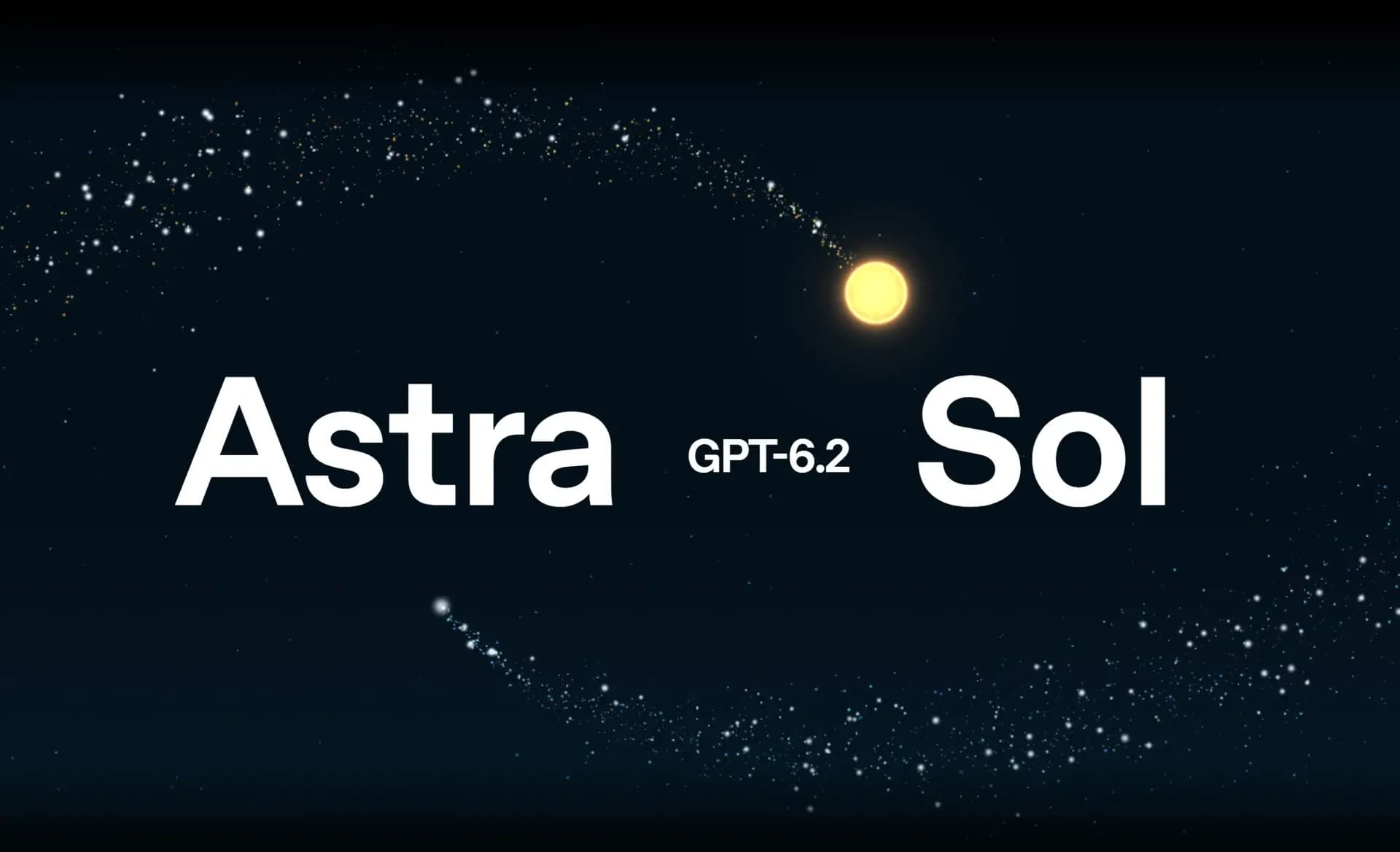
Be the first to comment
Join the argument. No password, just your email or a passkey.