OpenAI pushed out GPT-6.1 Terra on Monday, the latest entry in a model lineup that has grown confusing enough to need its own decoder ring. The pitch is simple even if the naming isn't: get close to the performance of OpenAI's costlier models while charging a lot less to run.
Terra arrives about a month after GPT-6.1 Sol and roughly four months after GPT-5.6 Terra launched over the summer. OpenAI says the new version costs half as much to call through its API as that earlier Terra model, and about half what GPT-6.1 Sol costs to run, despite landing performance that in several tests comes close to Sol and, in some cases, edges out GPT-6 Astra, the company's current heavyweight model.
Where Terra fits in OpenAI's lineup
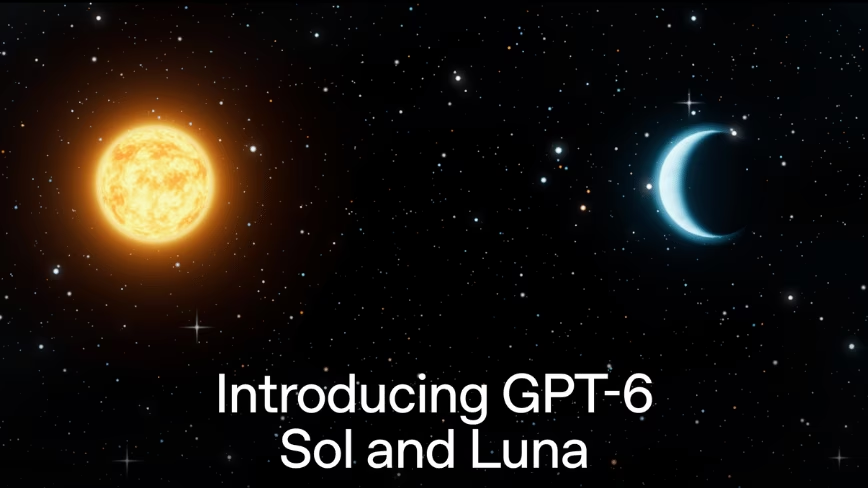
For anyone who has lost track, GPT-6 Astra is still the top-end option, though OpenAI has held off on shipping a 6.1 update to it over unspecified concerns. GPT-6.1 Sol is effectively a cheaper stand-in for Astra, and GPT-6 Luna sits at the budget end, built to keep costs down rather than chase peak performance. GPT-6.1 Terra is meant to land between Sol and Luna, aiming for a balance of the two rather than maxing out either.
The efficiency gains aren't just about price. OpenAI says Terra completes computer-use tasks, the kind where a model has to operate software or a browser on a user's behalf, three times faster than the current Astra and Sol models. That matters for anyone running agent-style workflows where speed compounds across dozens of steps.
Fewer wrong answers, lower error rates
On accuracy, OpenAI says Terra posts meaningfully lower error rates than GPT-6 Luna, the model it is closest to on price. That's notable because cheaper models typically trade accuracy for cost, and Terra appears to be narrowing that gap rather than just splitting the difference.
Put together, the numbers make Terra look like the model OpenAI wants developers defaulting to if they were already happy with Sol's output but wanted a lighter bill. It isn't positioned as a replacement for Astra, and OpenAI hasn't claimed it beats Astra outright, just that it can match or exceed it in specific tests while charging far less through the API.
Who gets it, and when
Access to GPT-6.1 Terra started rolling out the same day it was announced, through ChatGPT Work and Codex, OpenAI's coding-focused tool. It's limited for now to Plus, Pro, Enterprise and Edu subscribers, so free-tier ChatGPT users aren't getting it yet.
OpenAI hasn't said whether Terra will expand to other ChatGPT tiers or to the regular API catalog beyond Work and Codex, nor has it given a timeline for the delayed GPT-6.1 Astra update. Developers already building on Sol or Luna now have a third option to weigh, and the real test will be whether Terra's cost savings hold up once it's running at scale outside OpenAI's own benchmarks.
ADFiled by The AI Desk
Models, assistants and the companies and chips behind them, reported from what was released and what was claimed, with the difference kept clear.
More from this desk →

Be the first to comment
Join the argument. No password, just your email or a passkey.