Oppo is sticking with add-on glass for its top camera phone. The Find X10 Pro Max supports a dedicated Hasselblad Teleconverter Kit that clamps over the periscope module, according to testing by GSMArena. The kit brings an optical zoom multiplier of 3.28x to the phone's native 70mm equivalent telephoto lens, yielding a total focal length of 230mm.
That puts the setup at roughly 10x magnification compared to the handset's primary 24mm camera. But the physical setup comes with noticeable trade-offs.
The hardware rig uses a bayonet mechanism that locks into a metal plate, which then slides onto an included protective case. GSMArena found the sliding plate requires substantial force to install, making the locking latch almost redundant, though the rig feels sturdier than the older Find X9 Pro kit. The metal bracket covers both the ultrawide and main cameras. Swapping back to a wider focal length means taking off the entire plate, not just unscrewing the telephoto barrel.
Combined with the case, plate, and front cap, the assembly weighs 216g. That is 3g heavier than last year's setup, mostly because the case is thicker. Oppo trimmed weight elsewhere: the lens barrel dropped 6g, and the redesigned tripod collar weighs 64g down from 72g.
Fixed Output and Software Quirks
The teleconverter does not behave like a standard camera toggle inside the default app. ColorOS handles it as a distinct shooting mode with photo and video recording. GSMArena noted that Pro manual controls are effectively unusable with the kit attached, as opening that menu leaves the viewfinder flipped upside down.
Output is locked to 12.6MP stills. In testing, images captured at 10x proved very sharp, aided by the native optics. The minimum focus distance sits at roughly 105cm from the front element, or 116cm from the handset body. That provides shallow depth of field for tight close-ups, though the long 230mm focal length is awkward for portraits. Out-of-focus specular highlights did not render circular, and busy backgrounds stayed somewhat distracting.
Digital crops pushed past the optical limits hold up surprisingly well. The outlet found 20x shots retained clean architectural lines, and 40x hybrid digital zoom — a massive 920mm equivalent, remained usable in daylight and low-light environments.
Vivo continues to push competing mobile teleconverters that fit multiple phone models with friendlier mounting systems. Oppo's system remains tied tightly to a single handset generation, meaning buyers will have to weigh whether carrying extra glass is worth the awkward setup.
MDFiled by The Mobile Desk
Phones from leak to launch to price cut: what was announced, what it costs where, and when it goes on sale. Indian launches and prices included, not appended.
More from this desk →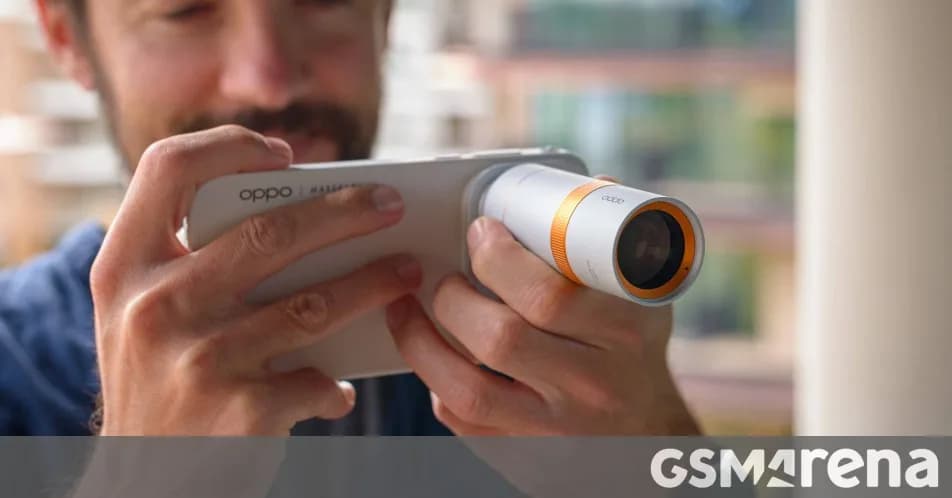

Be the first to comment
Join the argument. No password, just your email or a passkey.