Oppo plans to release ColorOS 17 to existing smartphones on October 29, opening its wider distribution just days after the operating system debuts on new hardware.
The update arrives first on the Find X10 and Find X10 Pro Max, which launch globally on October 21 and reach India on October 22. Existing handsets join the queue the following week. First in line on October 29 are the Find N6 foldable, the Find X9 Ultra, Find X9s, Find X9 Pro and the standard Find X9. A day later, on October 30, the company expands distribution to the Find N5, the Find X8 family, and the Reno 16 lineup, including the Reno 16 Pro, Reno 16, Reno 16c, Reno 16 F and Reno 16 FS.
More hardware follows through November, when the rollout extends to the Reno 15 and Reno 14 ranges alongside select F-series and K-series models. Remaining K-series models, more Reno variants, and several Oppo tablets will see updates through the opening quarter of 2027. Stated dates represent when deployments open, meaning individual handsets across different territories will see OTA alerts at varying times.
Under the Hood Changes
Visually, Oppo is calling its revised aesthetic Living Flow Design. It layers springier physics onto controls, letting buttons stretch, squash, or recoil under finger taps. The company is pairing those cosmetic touches with structural changes to how graphics work.
A setup Oppo terms Unified Rendering Architecture bundles distinct rendering jobs into a single pipeline. Oppo claims the change cuts rendering strain by 25 percent while trimming RAM consumption by 30 percent. Multitasking gets its own tweak through an altered Laminar Flow Engine, which the manufacturer says preserves 25 percent more active processes suspended in memory. Cold launches for the native photo gallery allegedly bring up thumbnail previews 50 percent quicker, alongside a claimed 55 percent bump in app startup consistency.
On-Device Defense and Automation
Security and automated tools round out the package. The headline privacy feature is AI Call Guard, built to sniff out synthetic speech patterns and facial manipulation directly on the phone rather than dispatching audio off-premises. For data that does leave the device, Oppo is routing tasks through a Private Computing Cloud guarded by end-to-end encryption. The company asserts that internal staff cannot inspect customer packets, while post-quantum encryption protocols protect transmission lines.
Daily task handling runs through AI Mind Pilot, which gains an Agent Mode capable of categorising media files by date or subject and stitching vacation albums into short video clips. A companion workspace, AI Mind Space, ingests web clips and documents to build travel itineraries plotted against destination maps.
The full deployment runs until early 2027 across the broader catalogue.
MDFiled by The Mobile Desk
Phones from leak to launch to price cut: what was announced, what it costs where, and when it goes on sale. Indian launches and prices included, not appended.
More from this desk →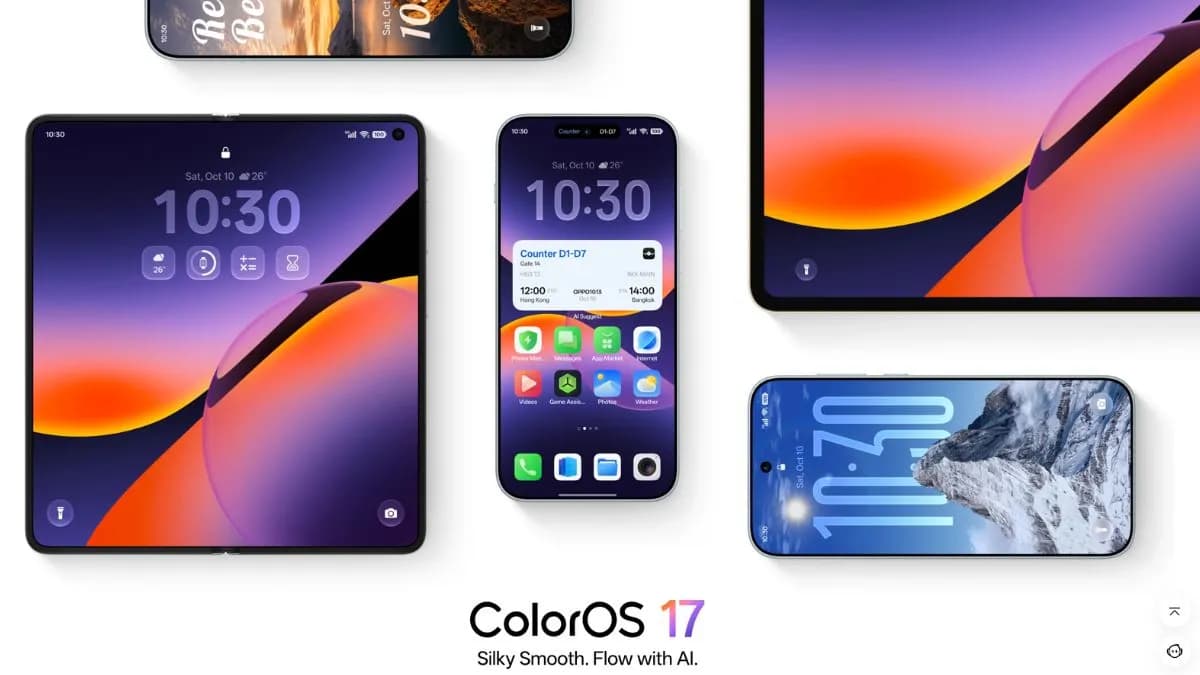



Be the first to comment
Join the argument. No password, just your email or a passkey.