Tiny 2.1 is real. It boots from a 1.44MB floppy disk. It runs on an Intel 486DX or Pentium under MS-DOS. It answers questions — about 3,500 of them, one character at a time.
And its GitHub repository says it was written by Fable 5.2 and trained by Opus 5.5. Not simulated. Not emulated. Native.
The developer behind it, WollyMonjac, calls it “a tiny question-answering transformer written in Turbo C 2.0.” That’s not retro-styled software. It’s actual Turbo C 2.0 code, compiled for 16-bit real-mode DOS, with no dependencies beyond the BIOS and the PC speaker. The full executable occupies just 435KB on disk. It needs 540KB of conventional memory to run.
Its architecture has four layers, a hidden width of 96, and exactly 367,000 parameters. Weights are quantized to 8-bit integers, one scale factor per row, shrinking the trained model file to 380KB. Accuracy? 61% on 780 unseen test prompts. That’s up from 6% in version 1.0.
It doesn’t hallucinate less than bigger models, WollyMonjac warns plainly: “it makes things up confidently” outside its narrow fact set. But within that set? It delivers answers in plain text, shows a live neural activity monitor, displays a confidence meter, and, yes, reads responses aloud using synthesized robot speech piped straight to the PC’s internal speaker.
No sound card required. This isn’t a demo or a proof-of-concept that leans on modern tooling behind the scenes. The build chain is DOS-native. The inference loop is single-threaded, character-by-character, with no GPU, no Python, no PyTorch.
It’s a deliberate inversion: today’s AI stack, Fable 5.2 for code generation, Opus 5.5 for training, used to compress intelligence into hardware that predates the web. The project doesn’t carry a price. It’s open source, hosted on GitHub, and built for anyone with a working 486 or early Pentium rig, or a DOSBox setup that can emulate one faithfully enough to drive the speaker.
No Indian or US retail pricing exists. No launch date was announced. There is no “global rollout.” It ships as-is: a single.EXE, a floppy image, and a README that names its AI co-authors. What comes next?
WollyMonjac hasn’t said. But the repo is live. The floppy boots. And somewhere, right now, a 1994-era PC is answering trivia questions, in robot voice, using weights shaped by Opus 5.5.
CDFiled by The Computing Desk
Laptops, desktops, processors, graphics cards and the operating systems that run on them.
More from this desk →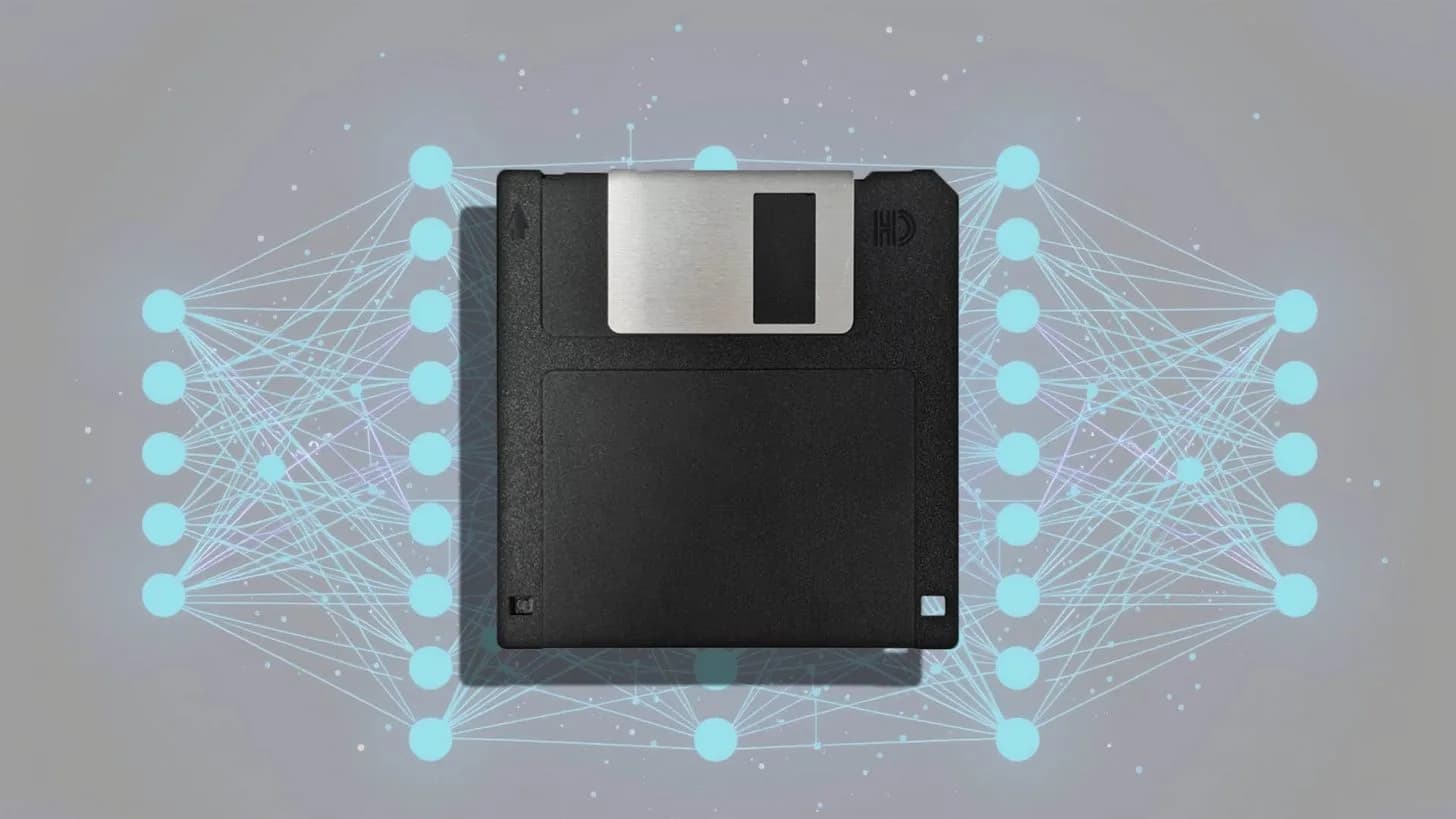

Be the first to comment
Join the argument. No password, just your email or a passkey.