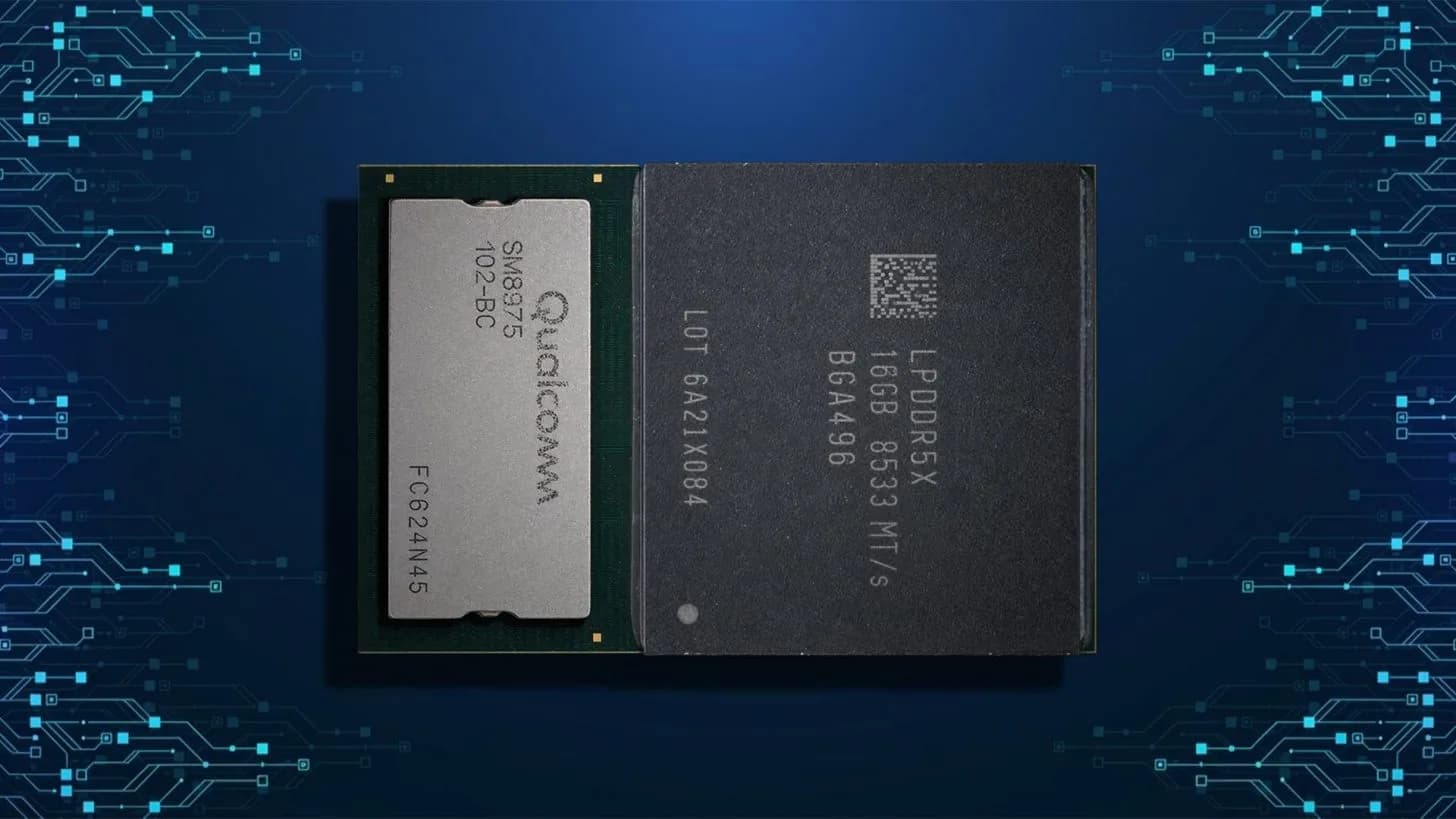
Samsung's next flagship chip may have a real argument against Qualcomm for once, at least on paper.
Yonhap News Agency and ChosunBiz are reporting fresh benchmark numbers for the Exynos 2700, Samsung's upcoming system-on-chip, and the figures reportedly come straight from Samsung's own internal testing. That's an important caveat. None of this has been independently verified, and Samsung hasn't confirmed anything publicly.
According to the reports, the Exynos 2700 hit roughly 13,000 points in Geekbench 6.5's multicore test. The Snapdragon 8 Elite Extreme Gen 6, tested inside a Xiaomi 18 Pro Max, reportedly scored around 11,000 in the same test, a gap of about 20 percent in Samsung's favor. The lead narrows slightly to 15 percent in Geekbench 7.
The margin grows a lot wider against Qualcomm's non-Extreme chip. Compared with the standard Snapdragon 8 Elite Gen 6 running in a Xiaomi 18 Pro, the Exynos 2700 is said to lead by 44 percent in Geekbench 6.5 and 36 percent in Geekbench 7.
On graphics, the claims are messier. In one demanding workload, the Exynos 2700 reportedly posted a 20 percent peak-performance edge over Qualcomm's top chip. But in a separate test built around basic graphics processing inside heavier 3D games, that advantage reportedly shrank to around 5 percent. The reports don't name which GPU benchmarks were used, and there's no power draw or sustained-performance data attached to any of these numbers, so how the chip behaves after ten minutes of actual gaming is still a mystery.
What's inside it
Earlier leaks have filled in some of the architecture picture. A die shot published by SemiAnalysis points to a reworked 10-core CPU layout: 1+4+1+4, with two prime cores instead of the single-prime-core setup Samsung used on the Exynos 2600. That's reportedly an Arm C2-Ultra core clocked up to 4.24 GHz paired with a C1-Ultra core at 3.36 GHz, backed by eight C1-Pro and C2-Pro cores. An earlier Geekbench AI listing had already hinted at this configuration and the higher clocks.
The chip is also tipped to carry an Xclipse 970 GPU with eight Work Group Processors, 24MB of system-level cache, and support for LPDDR6 memory. Production reportedly started on Samsung's second-generation 2nm SF2P process, with an initial run said to be about 10 percent bigger than the Exynos 2600's. An upgraded Heat Path Block packaging design is meant to help the chip manage heat, which has been a recurring sore spot for Exynos chips in the past.
Qualcomm, for its part, has separately pushed back on unrelated claims that its current flagship runs hot. Whether that friction carries into how Samsung frames the Exynos 2700 against Qualcomm's chip remains to be seen.
The Exynos 2700 is expected to show up in at least some Galaxy S27 models next year, though it's still unclear whether Samsung will put it in the Galaxy S27 Ultra or keep that model on Snapdragon silicon, as it has in recent generations. Samsung's Unpacked event, whenever it lands, should settle that question.
CDFiled by The Computing Desk
Laptops, desktops, processors, graphics cards and the operating systems that run on them.
More from this desk →

Be the first to comment
Join the argument. No password, just your email or a passkey.