Small drones run out of battery fast, and keeping them airborne usually requires ground crews to swap cells by hand. Three American defense and hardware specialists want to cut humans out of that recharge loop entirely. Sesame Solar, Target Arm, and AG3 Labs introduced their Persistent Drone Operations Nanogrid on Thursday, packing power generation, mechanized arms, and modular aircraft into a single mobile deployment unit.
The package targets a long-standing military headache: keeping unmanned systems running when conventional electrical grids or fuel deliveries do not exist. The US Army previously noted that field units lack standard protocols to feed spare power to drone crews in remote outposts. The new Nanogrid addresses that by letting aircraft take off, land, replenish, and store themselves without crew intervention.
Power comes from Sesame Solar's Mobile Power Hub. The station pairs solar panels and onboard battery storage with solid-state, low-pressure hydrogen technology. Because the hydrogen canisters travel safely across ground, maritime, or aerial routes without high-pressure hazards, units do not need regular deliveries of diesel or gasoline to stay operational. When scaled up, operators can tether anywhere from two to a dozen Nanogrids together, creating a broader microgrid to juice tactical radios, wearable packs, and accompanying gear.
Target Arm supplies the mechanical muscle with Ralar, a robotic apparatus built to catch and fling aircraft. Ralar mounts directly to boats or roving ground vehicles, handling launches and recoveries without forcing drivers to hit the brakes. Built-in storage magazines feed aircraft in and out of active mission rotations while handling battery top-ups beneath protective armor.
In the air, AG3 Labs handles flight duties using its SPADE airframe, a lightweight Group 1 drone. Crews can swap its hardware modules on the fly for surveillance, signal relaying, or armed strike payloads. SPADE can fly solo or mesh into autonomous swarms managed by a single technician. "Operators shouldn’t need a different drone for every mission," said Nick Smock, cofounder and head of growth at AG3 Labs, pointing to field-swappable components as the key to scaling fleet size.
Beyond military strike and reconnaissance drills, the companies pitch the setup for civilian emergencies, border patrol, and grid inspections. The commercial push aligns with federal efforts to pull drone supply chains away from foreign manufacturers and back to domestic factories. Field trials and procurement dates have not been shared yet, but the three partners are already pitching the hardware to defense buyers looking to keep swarms in the sky indefinitely.
GDFiled by The Gadgets Desk
Audio, wearables, cameras, tablets, chargers and every other device worth carrying or plugging in.
More from this desk →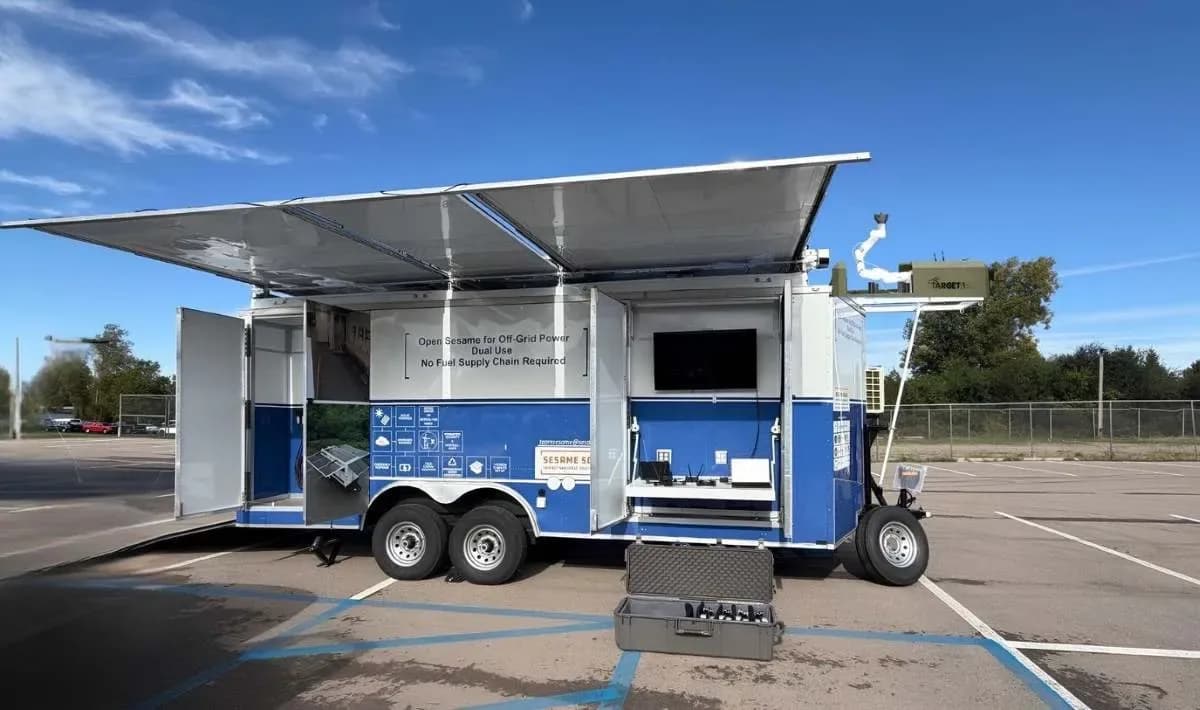

Be the first to comment
Join the argument. No password, just your email or a passkey.