Classic iPods still have plenty of admirers, but living with ancient 30-pin connectors, dying batteries and mechanical hard drives gets tiring fast. A new open-source project aims to modernize those retro devices from the inside while keeping their exterior intact.
Hardware designer Sean from Certain Things has published initial plans for the Sprout mainboard on CrowdSupply. The replacement circuit board slots into third- and fourth-generation full-size iPods as well as first- and second-generation iPod mini units. Once swapped in, the device keeps its factory casing, original screen, Click Wheel and 3.5mm headphone port, but the underlying electronics get completely overhauled.
The project breaks down into two hardware routes. The Sprout Pico variant relies on the same microcontroller found inside the Raspberry Pi Pico 2 W. It focuses on offline playback, reading files from a microSD card slot and routing sound through an updated digital-to-analog converter. It also adds a Bluetooth radio for wireless earbuds and supports digital audio output straight through its newly added USB-C port.
For larger iPod enclosures, Certain Things is preparing the Sprout Pi. This build swaps the simpler microcontroller for a Raspberry Pi Compute Module Zero and tacks on Wi-Fi connectivity. That extra computing muscle allows the portable player to stream tracks over Spotify and Apple Music, beam audio through Apple AirPlay, and run custom third-party applications.
Both versions ditch the proprietary Apple dock connector in favor of USB-C for charging and data. Battery endurance gets a major jump as well. The iPod mini version packs a 1,200 mAh cell rated for around 20 hours of playback between recharges. The larger iPod model carries a 2,500 mAh battery intended to deliver roughly 40 hours of listening time.
Installing the kit will not require a soldering iron or specialized tools, according to the creator. The original software gets swapped out for custom code, though the navigation interface is built to mirror the classic iPod look and feel.
All schematics and firmware files will land on GitHub under an open-source license, giving hobbyists room to assemble or modify boards independently. Assembled kits are scheduled to go up for order on CrowdSupply once Sean completes the development phase.
GDFiled by The Gadgets Desk
Audio, wearables, cameras, tablets, chargers and every other device worth carrying or plugging in.
More from this desk →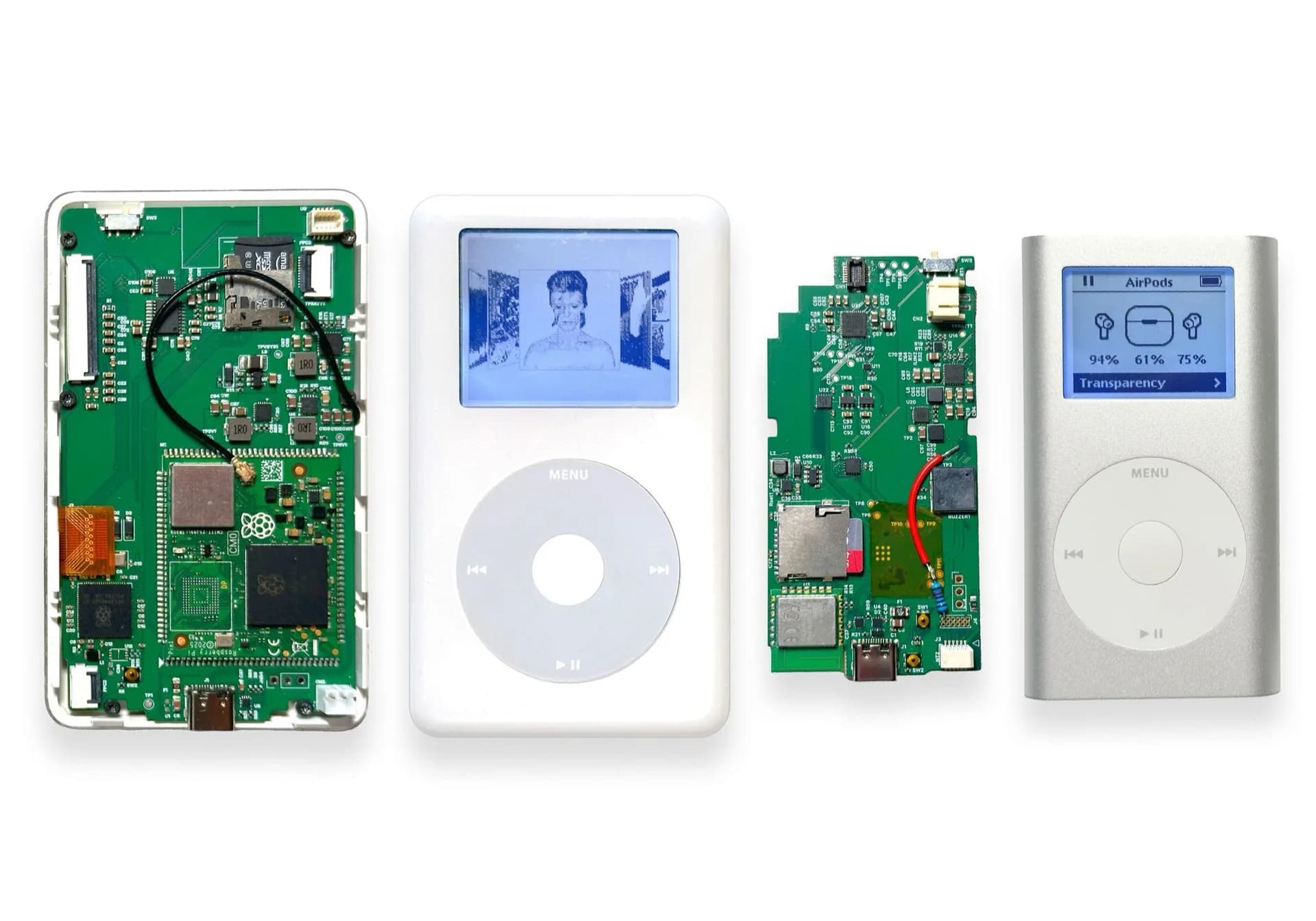


Be the first to comment
Join the argument. No password, just your email or a passkey.