What Hi-Fi has reached its 50th year in publication. Marking the milestone, former editorial staff have opened up the title's production history from the late 1980s, detailing an era when the British audio magazine operated without computers, dedicated listening rooms, or in-house testing facilities.
When former editor Simon Davies led the masthead in 1988, desks ran on manual and electronic typewriters rather than digital workstations. Review logistics were entirely physical. External freelancers, including Alvin Gold, Malcolm Steward, Jimmy Hughes, and Paul Miller, evaluated components in their own homes before transmitting drafts across phone lines. Those submissions arrived in the office as continuous rolls of thermal fax paper. Editors sliced the rolls apart, inked corrections by hand, and handed the copy to a typing pool operating IBM golf-ball machines.
Typesetting took place offsite, returning text as columns of bromide that art editors pasted onto layout sheets using Spray Mount. Visuals followed an equally mechanical pipeline. Photographer Steve Waters shot equipment on photographic slides inside a garage. Designers sized those images using optical visualisers, physically adjusting lenses to project slides onto tracing layouts. Motorcycle couriers then shuttled proof bags back and forth on fixed daily runs. A single courier crash risked destroying completed paste-ups or losing one-of-a-kind slides before print deadlines.
The internal office was mostly staffed by general magazine journalists rather than acoustic specialists. Saul David and Dan Houston handled news reporting, Hazel Southam chased music interviews, and Caroline Osborn manually compiled the comprehensive Buying Guide without computer databases. Technical editor Andrew Everard remained the rare in-house specialist who evaluated gear, alongside Keith Howard and Jonathan Kettle across companion publications such as Hi-Fi Answers.
The late-1980s period also reshaped how British hi-fi gear was catalogued for prospective buyers. When Mark Payton arrived as editor after running Practical Caravan, the magazine revamped its annual ceremony. Payton introduced separate price tiers to the awards. That structural change widened the field of winning products, ensuring recommendations directly addressed shoppers across differing budgets rather than solely celebrating top-end gear.
Final quality checks demanded travel down to printing works in Whitstable or Cornwall for press passes. Correcting an error at the print factory required slicing words off offset plates with a scalpel before re-spacing the text. For a publication that eventually adopted dedicated acoustic testing facilities, the retrospective captures an era when technical hi-fi guidance depended on cut paper, adhesive fumes, and frantic motorcycle handoffs.
GDFiled by The Gadgets Desk
Audio, wearables, cameras, tablets, chargers and every other device worth carrying or plugging in.
More from this desk →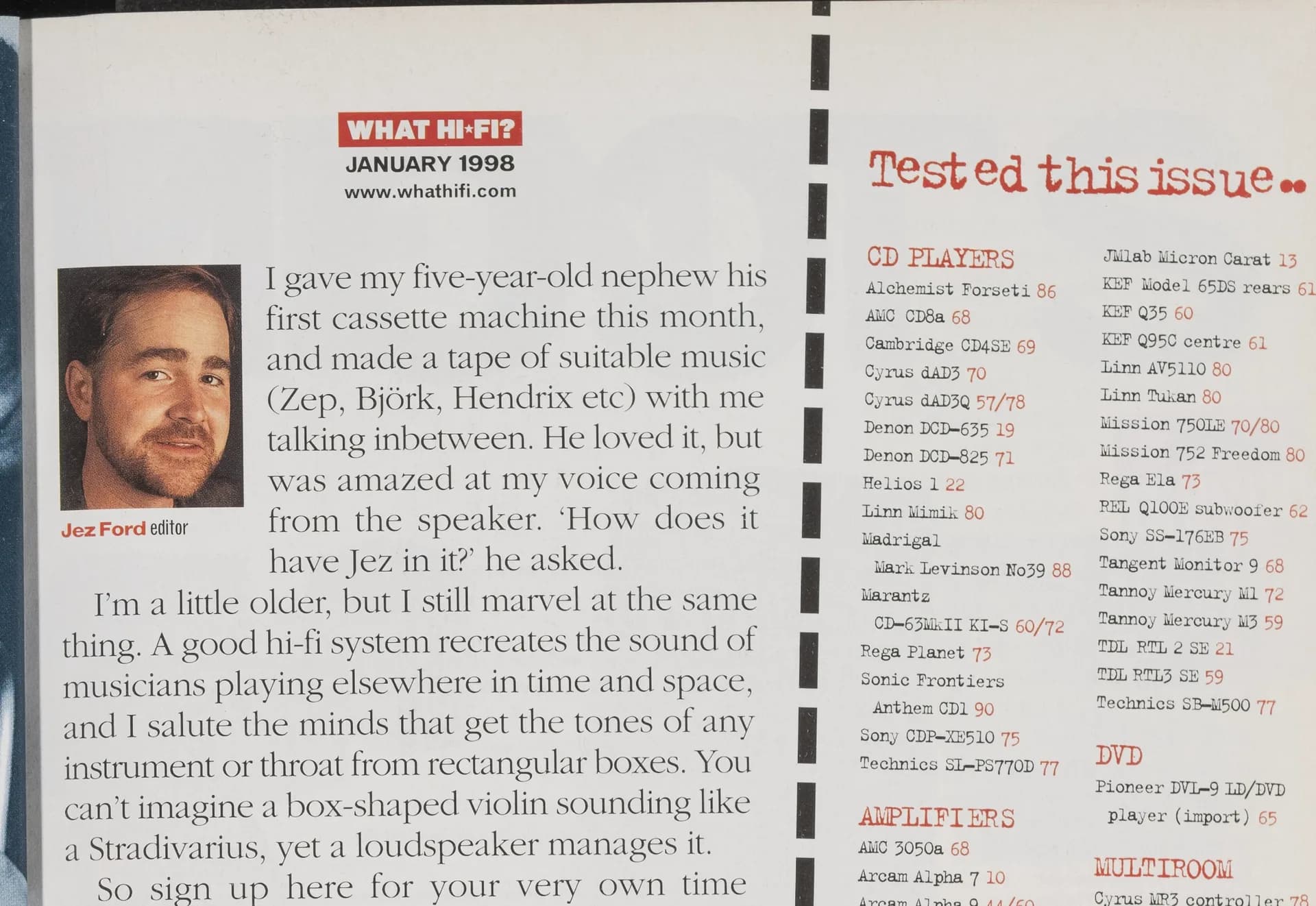
Be the first to comment
Join the argument. No password, just your email or a passkey.