Amazon clocked download speeds over 400Mbps on its Leo satellite internet network during an operational demonstration at a US Army facility in Maryland. Beamed directly to a ground-based Leo Pro terminal hooked to a laptop, the trial pushed past the 400Mbps ceiling Amazon previously listed as the hardware design target.
The Leo Pro dish will serve as the primary receiver for household buyers when the network opens to the public. Amazon also plans to sell a compact 100Mbps dish dubbed the Leo Nano for mobile setups, alongside an enterprise-grade Leo Ultra terminal designed for 1Gbps downlinks and 400Mbps uplinks, which entered private commercial trials a year ago.
Amazon executives still expect commercial availability before the end of the year, according to remarks from Leo vice president Chris Weber in an interview with Ars Technica. What remains unannounced is the exact launch schedule and what Leo will cost consumers. Weber hinted at competitive pricing and possible bundles with existing subscriptions like Amazon Prime, but exact plan tiers and hardware fees are still under wraps.
Leo faces a massive orbital gap
Starlink satellites currently hold an enormous head start. SpaceX has roughly 10,000 active orbiters and counts upwards of 13 million paying subscribers around the world. In the United States, median Starlink internet download speeds sit around 150Mbps according to Ookla metrics, though individual user speed tests periodically spike toward 500Mbps. SpaceX is already preparing upgraded spacecraft capable of gigabit performance to protect its position.
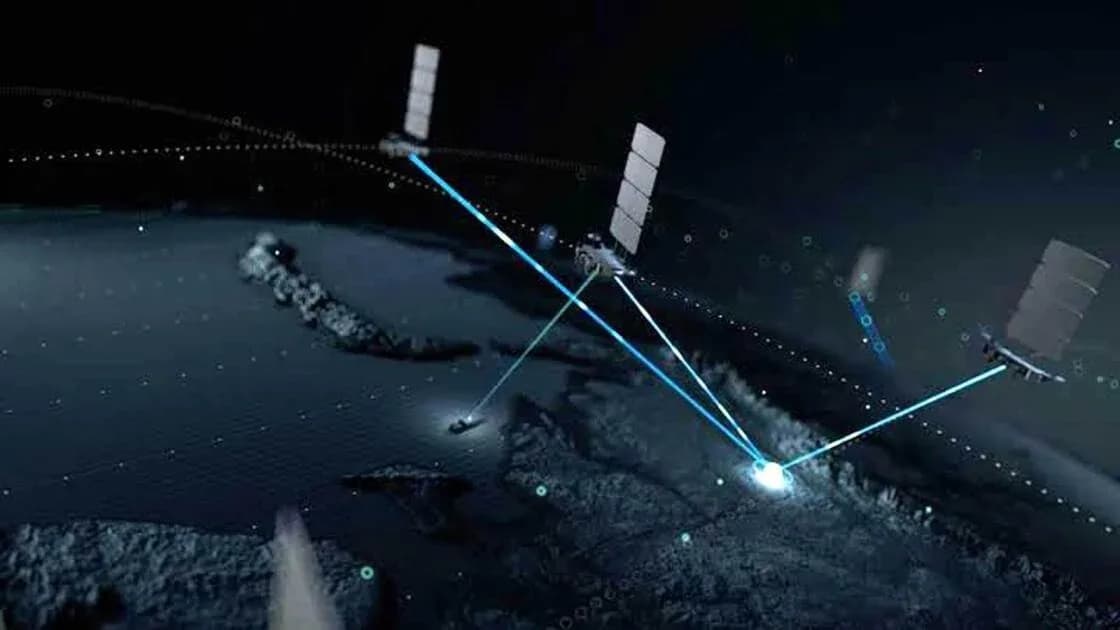
By contrast, Leo is working with fewer than 400 satellites aloft following several launch delays. Building the network capacity required to support millions of home connections will require placing thousands more orbiters into low Earth orbit over the coming years.
Enterprise and military ambitions
Even with a lean constellation, Amazon has pushed aggressively into commercial corridors. The company has lined up contracts with commercial airlines, drawing public barbs from SpaceX boss Elon Musk.
The Maryland army trial points toward another lucrative battlefield. Amazon said it intends to partner with the US Army on subsequent tests covering faster data rates, mobile operating scenarios, and direct integration into tactical military networks.
CDFiled by The Computing Desk
Laptops, desktops, processors, graphics cards and the operating systems that run on them.
More from this desk →

Be the first to comment
Join the argument. No password, just your email or a passkey.