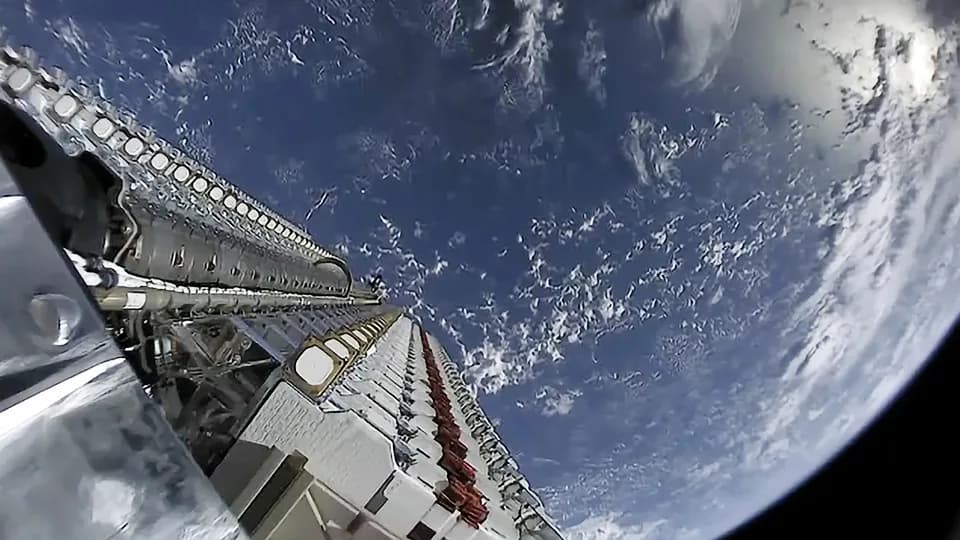
SpaceX wants to blanket low-Earth orbit with 100,000 satellites for its next-generation Starlink network. Radio astronomers want the Federal Communications Commission to stop them.
In a five-page filing submitted to the US communications regulator, the National Science Foundation’s National Radio Astronomy Observatory argued that SpaceX’s regulatory blueprint for its Gen 3 broadband system should be "withdrawn owing to the defects" in how it handles spectrum. The fight centers on the radio frequencies SpaceX intends to claim as it tries to deliver multi-gigabit connections to users below.
To unlock that extra capacity, SpaceX plans to pioneer unused W-band and D-band airwaves between 92 GHz and 275 GHz. But the NRAO told the FCC that three specific chunks — 148.5 to 151.5 GHz, 200 to 209 GHz, and 250 to 252 GHz, clash directly with spectral bands used worldwide by observational outposts. Anything radiating above 120 GHz poses an ongoing headache for ground-based dishes when tens of thousands of transmitters are constantly moving across the sky.
Astronomers point out that those exact millimeter-wave frequencies are essential for detecting faint cosmic signals from protoplanetary disks and early star formation. They also support environmental remote sensing, including atmospheric turbulence tracking and climate observation.
A Tenfold Jump in Orbit
The sheer volume of hardware makes the friction harder to resolve. SpaceX currently manages roughly 10,000 Starlink satellites in orbit. Gen 3 would expand that fleet to 100,000.
The formal pushback marks a sudden fracture in what had been a functional partnership. SpaceX has historically coordinated with the NRAO to shield sensitive receivers, which is why commercial Starlink service remains unavailable inside designated radio quiet zones around facilities in Green Bank, West Virginia, and Socorro, New Mexico.
SpaceX defended its spectrum choices in a July FCC filing, arguing that the 148.5 to 151.5 GHz and 200 to 209 GHz bands are "lightly used." The launch provider insisted it would keep meeting with radio astronomy groups to prevent harmful signal disruption to scientific work. Neither the company nor the observatory responded to requests for comment following the formal objection.
NASA Flags Orbital Congestion
Radio astronomers are not the only ones scrutinizing the application. NASA submitted its own filing to the FCC earlier this month, expressing unease about physical traffic in low-Earth orbit.
SpaceX plans to fly portions of the Gen 3 constellation as low as 323 kilometers above Earth. Because that altitude sits underneath several crewed and scientific missions, Starlink satellites would regularly cross NASA flight paths during orbit insertion and retirement deorbits. NASA stopped short of opposing the license, but it asked regulators to demand collision-avoidance data showing that SpaceX's maneuvers will not delay launches for programs like the Artemis lunar campaign. The agency added that while commercial space innovation remains important, an armada of this scale requires strict technical oversight to preserve long-term orbital safety.
The FCC now has to decide whether SpaceX can proceed by promising further talks, or whether the company must carve contested frequencies out of its blueprint before launching its next constellation.
CDFiled by The Computing Desk
Laptops, desktops, processors, graphics cards and the operating systems that run on them.
More from this desk →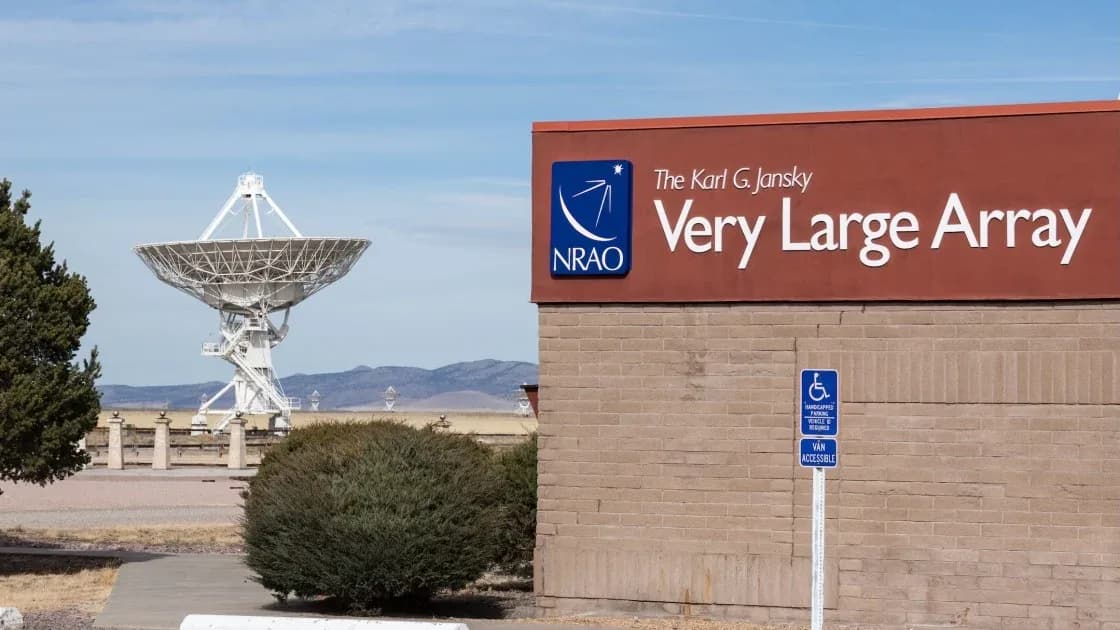


Be the first to comment
Join the argument. No password, just your email or a passkey.