Apple's pitch for the Apple Watch Series 12 and Apple Watch Ultra 4 leans hard on sensors that work far harder than before. During the day, both watches now check heart rate every five seconds instead of every five minutes, and heart rate variability every five minutes instead of every two hours. That's a huge jump in background activity, and it raises an obvious question: does it cost you battery life?
Macworld's German sister publication Macwelt ran a test to find out. A reviewer wore a Series 11 on one wrist and a Series 12 on the other through a seven-hour hike, split evenly between power-saving mode and normal workout mode, then let both watches keep running in the background afterward to track heart rate, show notifications and display the time. The next day, the outlet pulled telemetry logged at 15-minute intervals by watchOS, giving 60 data points across a day that ran from 8 a.m. To 11 p.m.
The numbers matter here because the two watches don't have identical batteries. The Series 12 packs a 1.461 watt-hour battery and burns 14.61 milliwatt-hours per percentage point of charge. The Series 11's 1.403 watt-hour battery, measured at 98 percent of its original capacity, uses 13.74 milliwatt-hours per percent. Slightly different baselines, in other words, before any sensor math comes into it.
What the test found
In power-saving mode, both watches came out roughly even. Background processes on each device logged a steady 900 seconds of activity every 15 minutes regardless of the power setting, and it was the display, dimmed in power-saving mode, that actually saved the energy. Once power-saving mode was switched off, the Series 11 pulled more power, though Macwelt flagged a wrinkle: that watch stayed paired to the iPhone throughout the test and had to push notifications and alerts, while the Series 12 ran unpaired and skipped that overhead.
The more telling window came after the hike. Between 5:30 p.m. And 11 p.m., the Series 12 logged 4,883 seconds, about 81 minutes, of background activity, versus 4,222 seconds, roughly 70 minutes, on the Series 11. That's the extra sensor polling Apple promised, showing up exactly where you'd expect it. And yet the Series 12 used less total energy in that stretch, around 0.190 watt-hours against 0.248 watt-hours on the Series 11, a gap Macwelt put down to the older watch's heavier display use rather than anything to do with sensors.
Macwelt is careful to note that a single day of telemetry from two watches doesn't prove much on its own, only hint at a trend. But on this data, the extra heart rate and HRV readings aren't where the Series 12's battery gets spent. If anything is going to drain it faster than a Series 11, the outlet suggests, it'll be the screen, not the health sensors underneath it.
GDFiled by The Gadgets Desk
Audio, wearables, cameras, tablets, chargers and every other device worth carrying or plugging in.
More from this desk →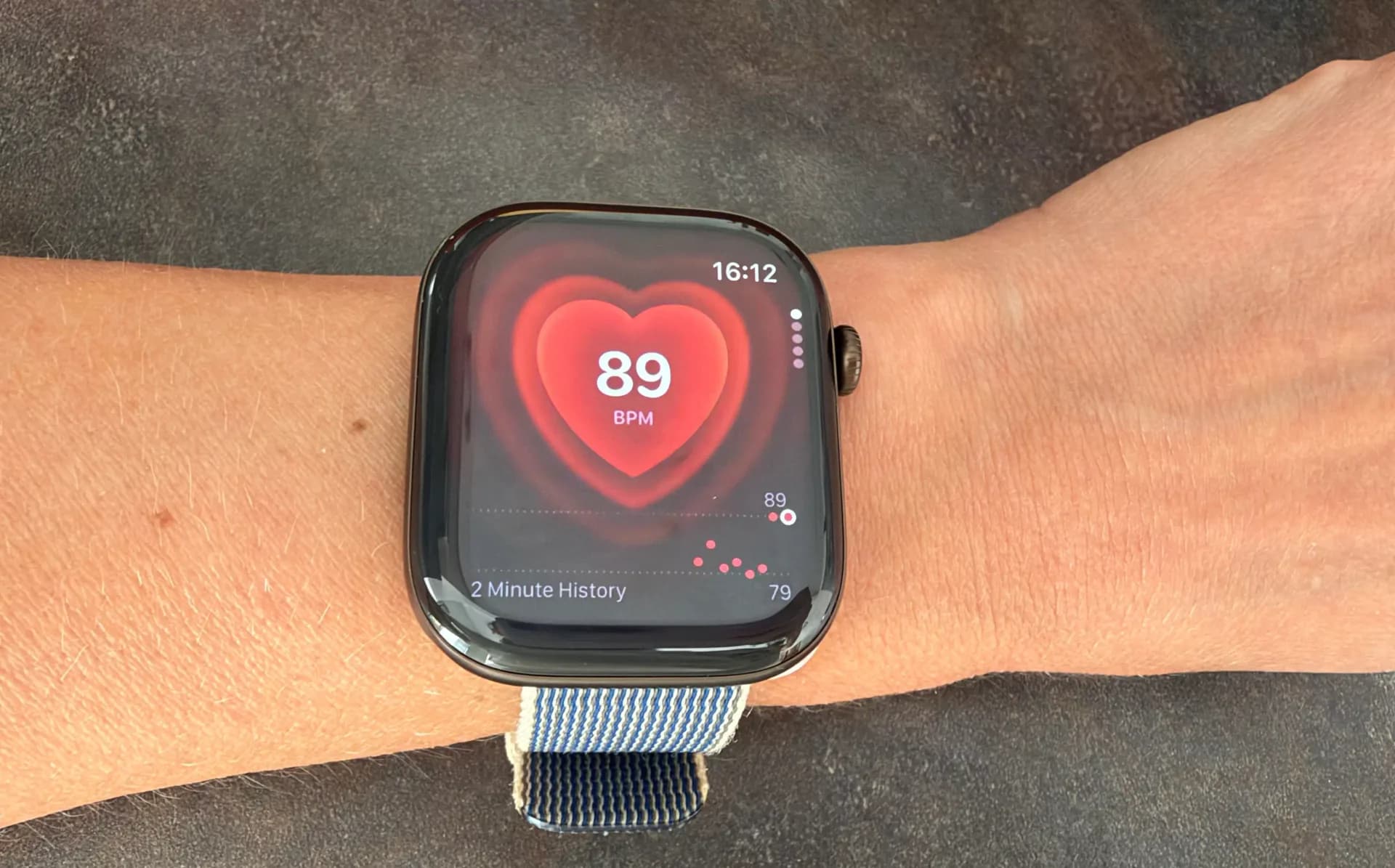


Be the first to comment
Join the argument. No password, just your email or a passkey.