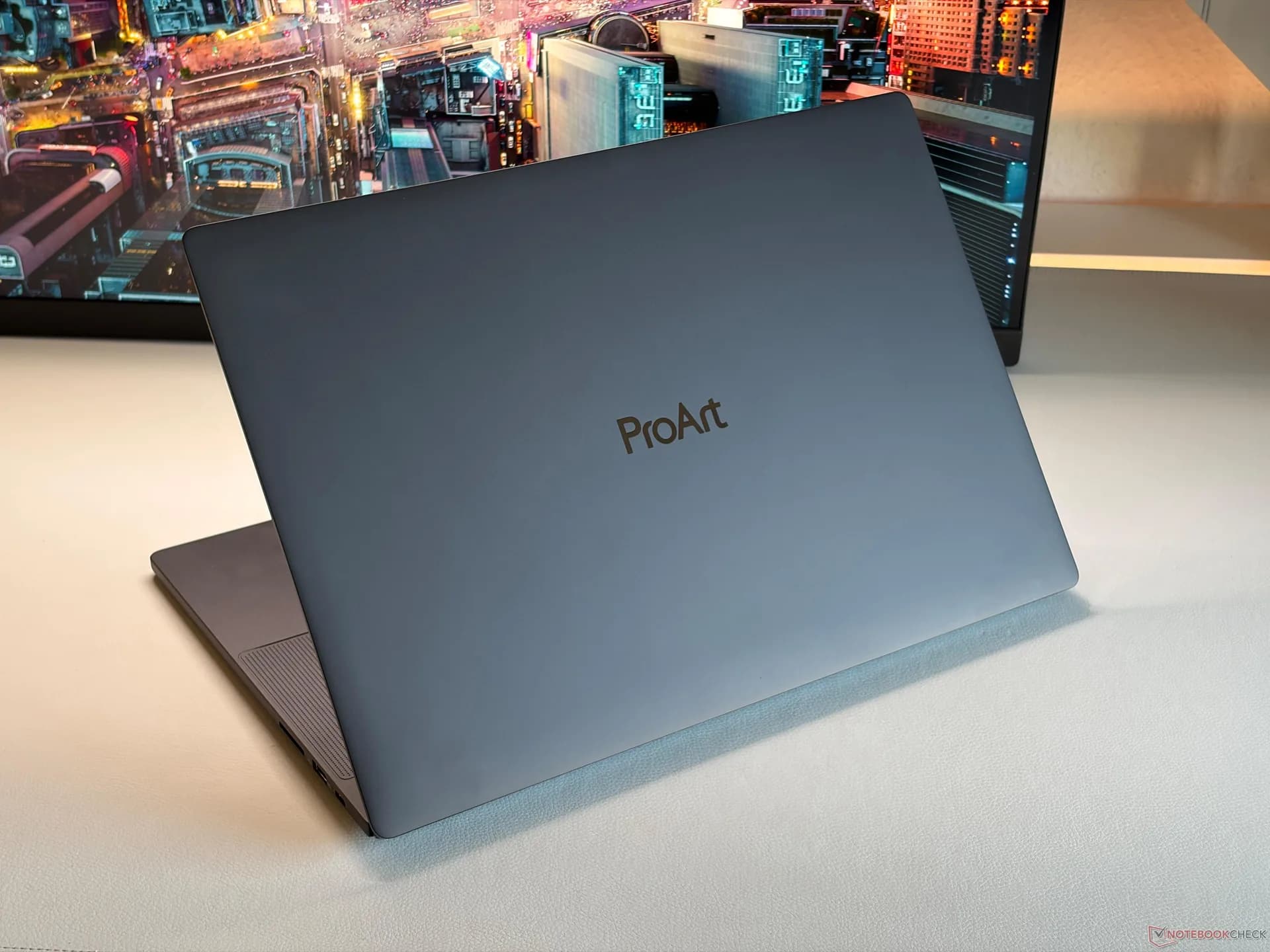
Asus has built a Windows laptop meant to go after Apple's priciest MacBook Pro configurations, and it costs about the same to get there. The ProArt P16, built around Nvidia's new RTX Spark chip, carries a $7,000 price and 128GB of memory, according to an early hands-on from PCWorld, whose reviewer is still working through a full benchmark suite but published initial impressions of the hardware on Thursday.
The RTX Spark chip is Nvidia's push into Arm-based Windows machines built for running AI workloads locally rather than in the cloud. It pairs a Grace CPU with a Blackwell GPU and shares memory between the two rather than giving the graphics chip its own dedicated pool. Asus isn't the only one building around it. Microsoft, Dell, HP and Lenovo all have RTX Spark laptops in the works, PCWorld noted, with the ProArt P16 sitting at the expensive end of that lineup.
What that unified memory means in practice is a little strange. The PCWorld reviewer found the P16 splits its 128GB roughly down the middle by default, with 64GB visible to Windows as system RAM and the rest reserved for the GPU, though the split can be reconfigured for larger projects. That's standard behavior on unified-memory workstations but unfamiliar territory for anyone coming from a conventional laptop with a discrete graphics chip.
A MacBook Pro rival, on paper
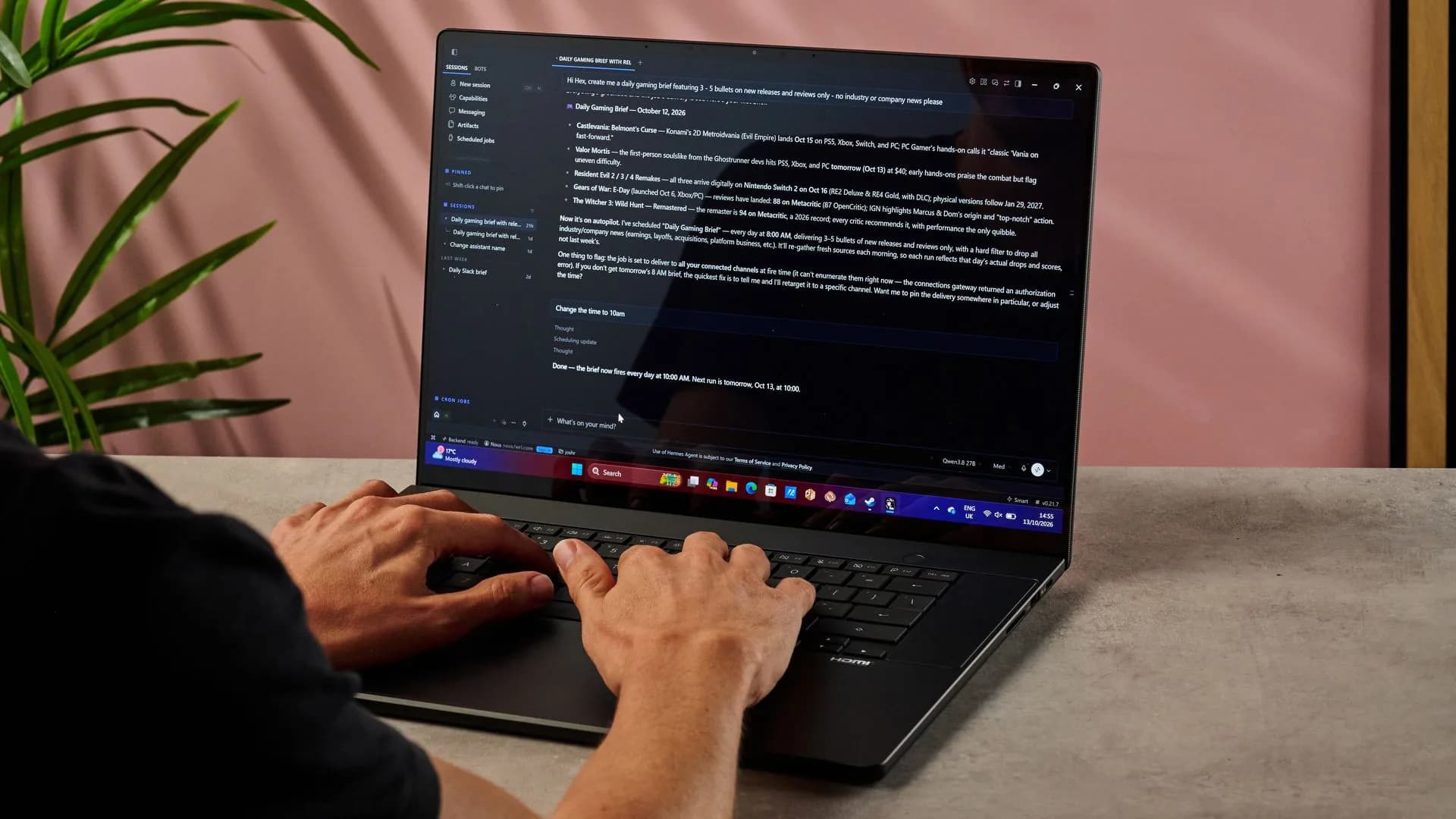
The appeal here is partly in the industrial design. PCWorld described a chassis just 0.51 inches thick and weighing 3.95 pounds, built from rigid all-metal construction with no flex or creak, wrapped around a 16-inch OLED touchscreen running at 3840x2400 resolution, or 283 pixels per inch, at a 120Hz refresh rate. The reviewer called it the sharpest, most imposing machine they'd tested, with deep OLED contrast that holds up well indoors.
Outdoors is a different story. PCWorld's reviewer reported that the glossy finish struggles with reflections in direct sunlight, and that the touch and pen digitizer layer becomes visible at certain angles, breaking the picture into a faint rainbow pattern. Notebookcheck's own independent testing turned up similar graininess from that touch layer, PCWorld said. Indoors, under normal lighting, the effect reportedly disappears.
A Windows Hello presence sensor that dims the display when you look away also drew complaints. The PCWorld reviewer, who says they tend to look down at the keyboard while typing, found the laptop kept dimming and relighting unpredictably and eventually switched the feature off.
On sound, the early verdict was more straightforwardly positive: PCWorld's reviewer praised the six-speaker array for delivering real bass and volume rarely found in a laptop this thin, and noted the system ran quietly even under sustained local AI workloads, though gaming performance wasn't tested in this initial look.
PCWorld says a full review, covering CUDA core counts, token throughput and benchmark comparisons against rival RTX Spark machines, is still in progress.
CDFiled by The Computing Desk
Laptops, desktops, processors, graphics cards and the operating systems that run on them.
More from this desk →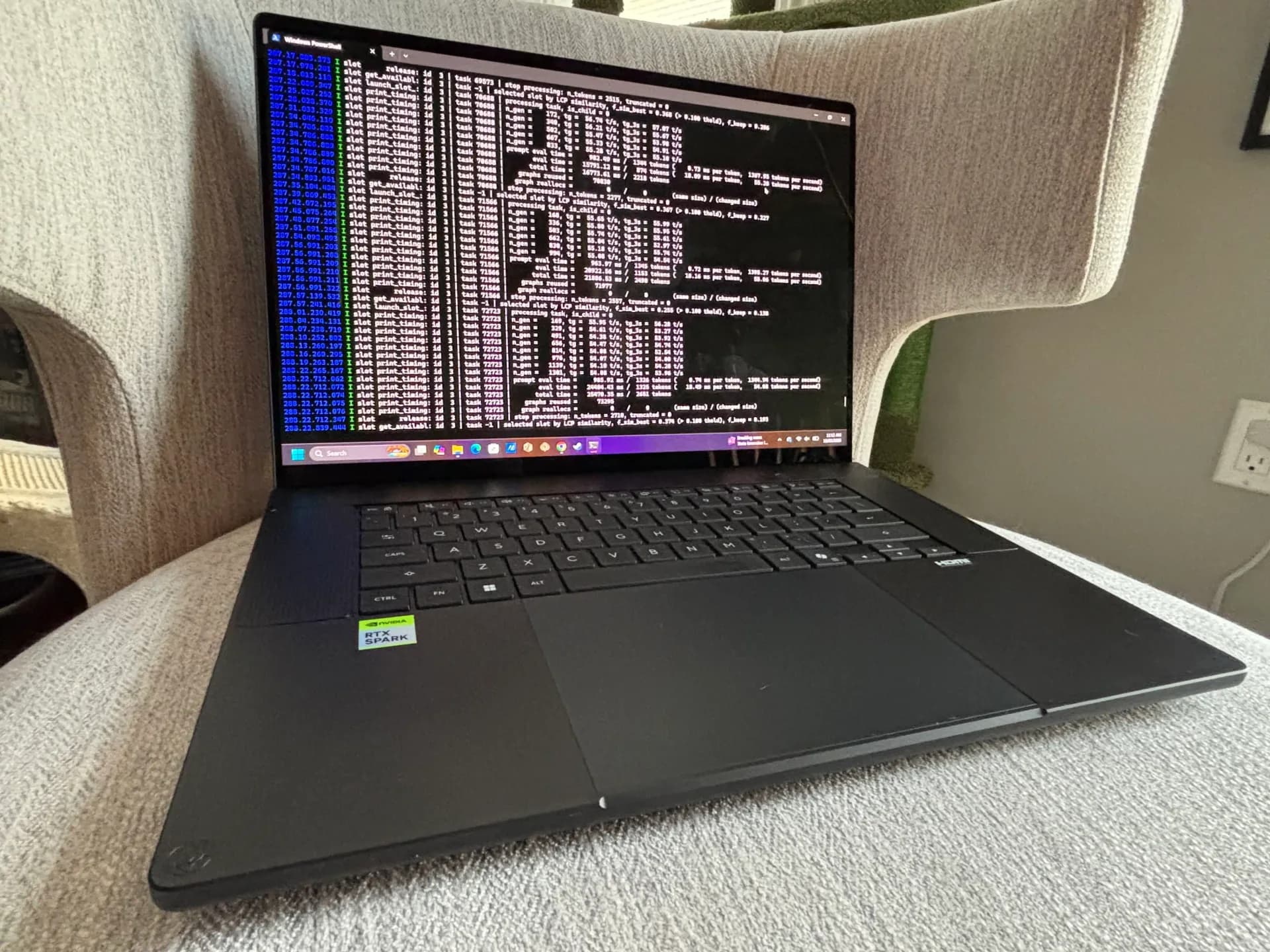

Be the first to comment
Join the argument. No password, just your email or a passkey.