Chuwi has a new gaming laptop, and it is not a straightforward upgrade. The GameBook Max, now listed for order on the company's US storefront, grows the screen to 18 inches but hands back some of the specs that made last year's GameBook stand out.
Start with the display. The original 16-inch GameBook ran a 2560 x 1600 panel at 300Hz. The GameBook Max drops that to 1920 x 1200 at 144Hz, still a 16:10 panel but noticeably softer and slower on paper. More screen real estate, less sharpness and less motion smoothness. That is the trade Chuwi is asking buyers to make.
The chip situation is a mixed bag too. Gone is the Ryzen 9 9955HX from the last-gen model, replaced by a choice of Intel's Core i7-14650HX or Core i9-14900HX. Graphics move from an RTX 5070 Ti with 12GB of VRAM down to an RTX 5060 with 8GB of GDDR7. Chuwi lists a maximum graphics power of 115W for the 5060, split between a 100W TGP and 15W of Dynamic Boost headroom.
That is a real step down in raw graphics muscle. Whether the lower-resolution screen offsets it is another question. An RTX 5060 pushing a 1920 x 1200 panel at 144Hz has an easier job than a 5070 Ti driving 2560 x 1600 at 300Hz, so the on-paper downgrade may not translate directly into a worse gaming experience. Still, expect the GameBook Max to lean on DLSS and Frame Generation to hit that 144Hz ceiling in newer AAA titles.
Elsewhere the laptop is fairly conventional for the category. RAM options run 16GB or 32GB of DDR5, expandable to 64GB across two SO-DIMM slots. Storage starts at 512GB or 1TB on PCIe SSDs, with two M.2 2280 PCIe 4.0 slots for anyone who wants to add more later.
Battery, ports and the rest
Chuwi packs a 77.77Wh battery and ships a 250W power brick, with USB-C Power Delivery charging supported up to 140W. Port selection covers two USB-C connectors, three USB-A, HDMI 2.1, Mini DisplayPort 2.1a and 2.5 Gbps Ethernet, alongside Wi-Fi 6E and Bluetooth 5.2. The chassis measures 21.6mm thick and weighs 2.8kg, an RGB-backlit keyboard and four speakers round out the build, and there's a 720p webcam with a physical privacy shutter.
Pricing lands at $1,799 for the Core i7 configuration with 16GB of RAM and a 512GB SSD, rising to $2,099 for the Core i9 model with 32GB of RAM and a 1TB SSD. Both are listed as available to order on Chuwi's US site now. There's no word yet on Indian pricing or availability, which has lagged for some of Chuwi's past laptop launches.
For a brand better known for budget tablets and mini PCs than high-end gaming rigs, the GameBook Max is a reminder that Chuwi is still figuring out what its gaming line should actually be. Bigger screen, slower screen, less GPU, more memory headroom. Buyers will have to decide which trade-offs matter to them before the next GameBook shows up to trade something else away.
CDFiled by The Computing Desk
Laptops, desktops, processors, graphics cards and the operating systems that run on them.
More from this desk →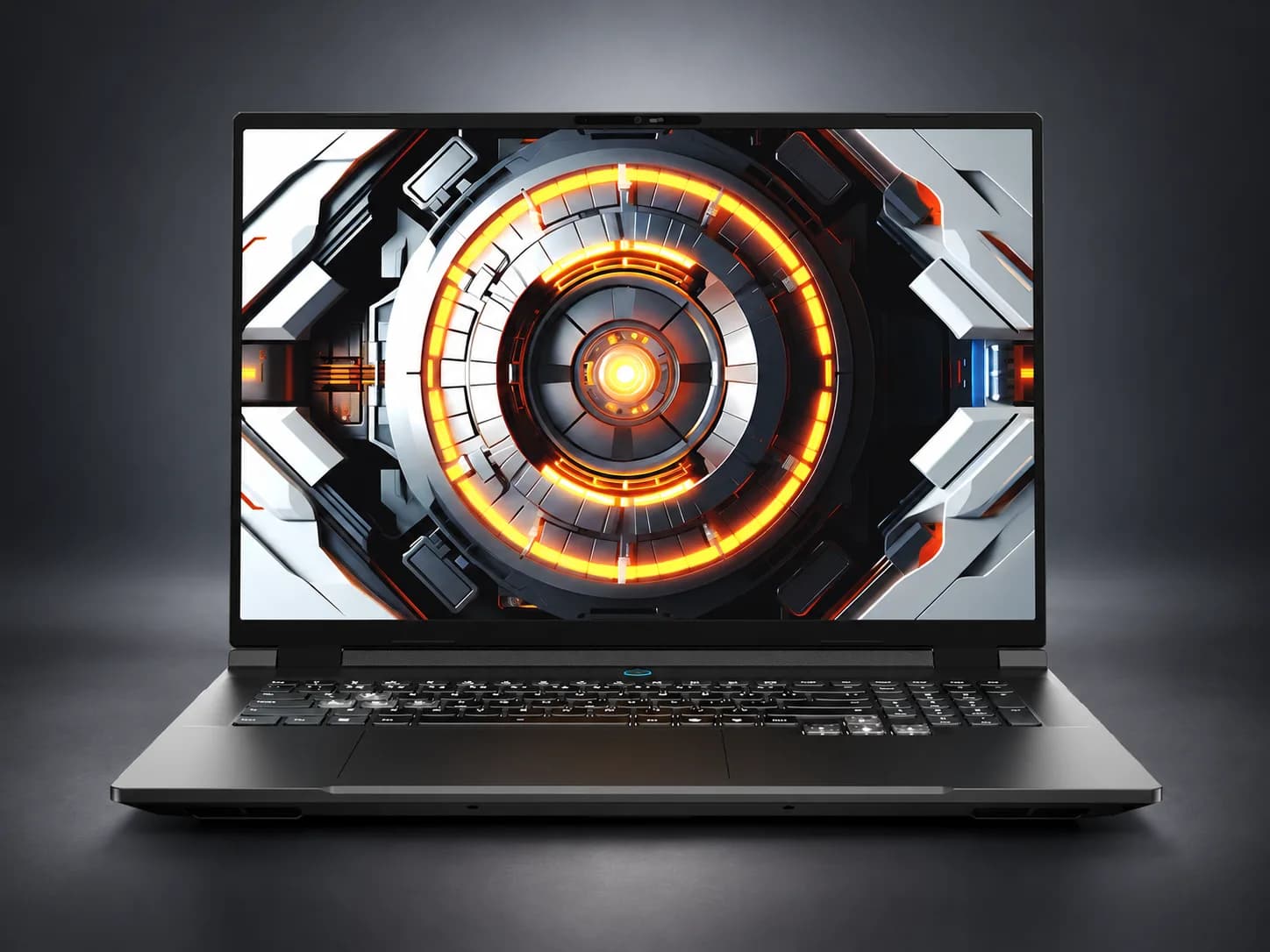
Be the first to comment
Join the argument. No password, just your email or a passkey.